


More news on this day
Rail passengers travelling with Irish Rail this weekend are being warned to expect significant disruption as engineering works trigger multiple train cancellations, reduced frequencies and replacement bus services across several of the network’s busiest routes.
Get the latest news straight to your inbox!
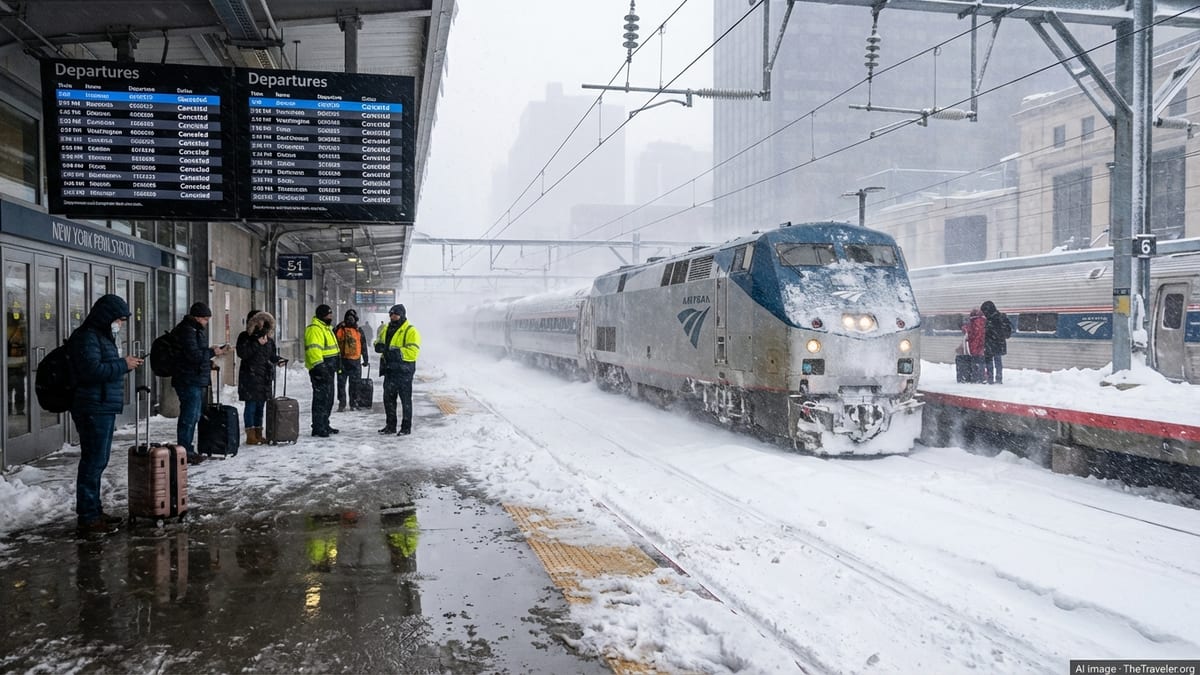
Engineering works drive cancellations across key corridors
Publicly available information from Irish Rail and national transport planners shows that extensive engineering works are scheduled across parts of the network over the coming weekend, with the impact concentrated on intercity links from Dublin and busy regional commuter corridors. The works form part of a multi-year upgrade programme that clusters the most disruptive activity onto selected weekends and bank holidays to avoid weekday peak-time commuters.
According to Irish Rail’s published line improvement notices, recent and upcoming weekends in October 2026 feature track, signalling and infrastructure upgrades on routes serving Cork, Tralee, Limerick, Galway and Sligo, as well as coastal services south of Dublin. On affected sections, trains are being cancelled outright, replaced by buses for part of the journey, or operating to altered timetables.
Transport for Ireland’s service update pages indicate that, where heavy engineering closes a line entirely, replacement coaches are running between designated rail hubs, with onward train connections operating on the open sections of route. In previous recent weekends this has meant bus legs between Dublin Heuston and Portlaoise for Cork services, and between Cork and Mallow for services to and from Dublin, Cobh and Midleton.
The pattern this weekend follows that template, with Irish Rail warning that customers should not assume normal end-to-end train operation even where services continue to appear in timetable searches. Many journeys will involve transfers between rail and bus at intermediate stations, and journey times are expected to be longer than usual.
October focus on Dublin, Cork and southern coastal routes
Engineering and service notices published in recent days highlight a particular focus on the wider Dublin and Cork areas during the October period. Works on the approaches to Dublin, including routes feeding Connolly and Heuston stations, are prompting timetable changes on intercity services to Galway, Limerick, Waterford and the northwest, as well as on DART and commuter operations along the east coast.
Separate notices for the Cork area indicate repeated weekend closures for track and signalling upgrades on the lines from Cork to Cobh and Midleton. Local coverage in Cork has reported full suspension of train services on some recent October weekends between Cork, Cobh and Midleton, with buses substituting all day and knock-on impacts for longer-distance Dublin and Tralee services that share key stretches of track.
Transport information sites also point to weekend works along the Dublin to Rosslare corridor and southside DART tracks between Grand Canal Dock and Bray. On dates where these projects are active, Rosslare Europort services and coastal commuter trains are being diverted, curtailed or replaced by coaches for part of the journey. Passengers using these lines over the October period are being told to expect reduced frequencies and altered stopping patterns.
For many travellers, the result is a more fragmented weekend network centered on a handful of interchange points, including Dublin Heuston, Dublin Connolly, Portlaoise, Mallow and Cork. Rail users planning day trips, airport transfers or onward ferry connections are being urged through public advisories to build in additional time and to confirm exact arrangements for their specific train before departure.
Knock-on effects for Luas and connecting services
The disruption is not limited to heavy rail. Published guidance from Transport for Ireland and the Luas operator confirms that maintenance and rail replacement works are also affecting Dublin’s Red Line over the same mid-October weekend window. On key dates, there is no tram service between Tallaght and Saggart and Heuston, with passengers instead directed to a replacement bus service linking outer suburbs to the city-side section of the line.
These Luas changes are particularly significant for rail passengers who typically use the Red Line to transfer between Heuston Station and the city centre. With trams suspended on the western section, travellers may need to rely on the substitute buses or switch to Dublin Bus and other city services for that connection, potentially increasing journey times and reducing the reliability of tight interchanges with intercity trains.
Service update bulletins also flag that overlapping works on different modes can compound delays. On weekends where Irish Rail services are operating with bus transfers and the Luas is partly closed, passengers travelling to or from locations such as Tallaght, Saggart or the wider southwest of Dublin may face more complex itineraries than usual, involving multiple transfers between bus, tram and train.
For visitors unfamiliar with Dublin’s transport network, these layered changes can be particularly challenging. Advisory notices encourage all passengers to check both rail and tram service updates together, rather than assuming that one mode can automatically be used to compensate for disruption on the other.
Advice for passengers travelling this weekend
Travel information platforms and official timetables emphasise that normal weekday assumptions about frequency and journey times do not apply on heavily affected weekends. Schedules are often rebuilt around worksite access windows, meaning that some early morning and late evening departures are cancelled entirely, while others run at different times or terminate short of their usual destination.
Passengers are being advised through public information channels to plan journeys in advance using real-time journey planners and to recheck details on the day of travel, as late adjustments remain possible if engineering work runs behind schedule or additional safety checks are required. Where bus substitutions are in place, journey planners typically display combined rail and coach options under a single ticket, but boarding points may be in station car parks or adjacent streets rather than directly at the platform.
Information from recent Irish Rail notices indicates that valid rail tickets are accepted on designated replacement buses operating as part of the planned service pattern, with no additional fare required. However, passengers using alternative public transport options outside the arranged rail-replacement network, such as regular interurban buses or local city routes, are expected to buy separate tickets for those services.
Given the scale of the planned work and the resulting cancellations, passengers with time-sensitive commitments such as flights, events or ferry connections are being encouraged by public advisories to consider earlier departures than usual or to explore non-rail options where practical. While the upgrade programme is intended to deliver more reliable and higher-capacity rail services in the long term, the short-term impact for this weekend will be a noticeably reduced and altered timetable across several of Ireland’s busiest rail corridors.