


More news on this day
The United Kingdom has removed its strictest “do not travel” warning for the United Arab Emirates and several neighbouring Gulf countries, easing months of restrictions that disrupted holiday plans, business trips and major transit routes between Europe, Asia and Australasia.
Get the latest news straight to your inbox!
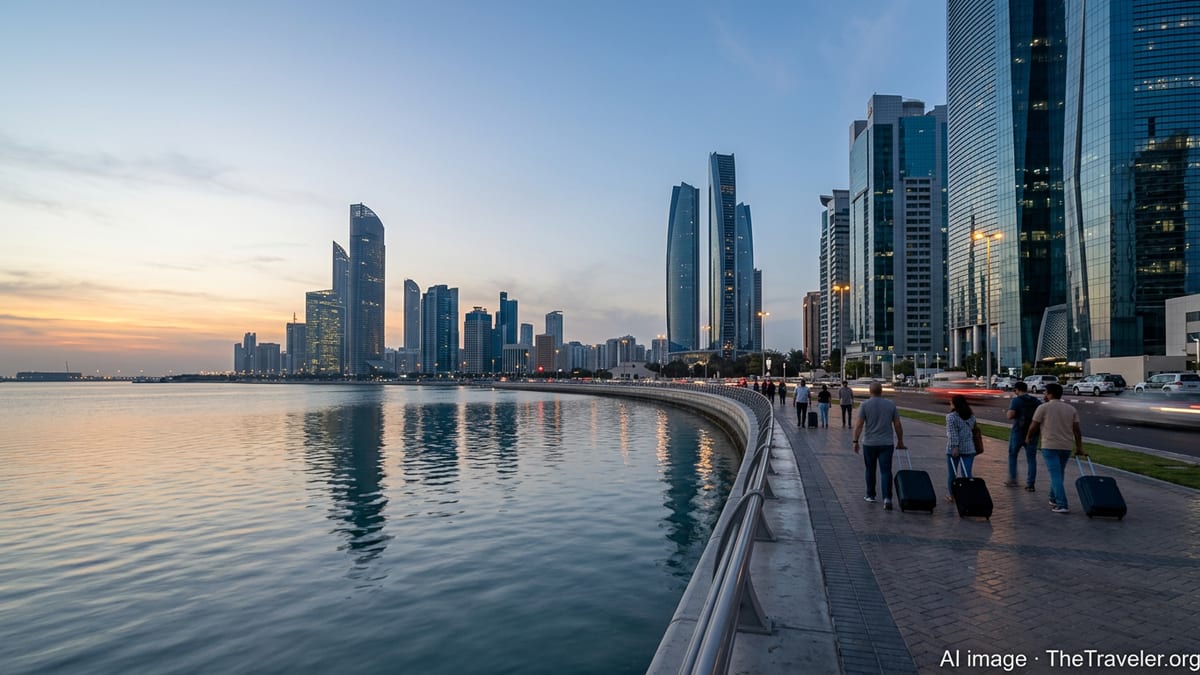
Shift in UK travel advice after regional de-escalation
Recent updates to the UK Foreign, Commonwealth and Development Office travel pages show that the United Arab Emirates and other key Gulf destinations are no longer subject to blanket “do not travel” guidance. The shift follows a period in which Western governments had raised their advisories to the highest level for parts of the Middle East in response to regional conflict and airspace disruption.
Publicly available briefings on the broader Middle East situation indicate that the strictest warnings now focus on countries such as Iran, Iraq, Syria and Lebanon, while Gulf transit hubs are being reassessed at intermediate risk levels. In practice, this means that non-essential travel to the UAE, Qatar, Bahrain, Kuwait, Oman and Saudi Arabia is no longer formally discouraged in the way it was earlier in the year, although a heightened degree of caution is still advised.
Travel industry analyses published over recent days describe a coordinated move by several Western governments to re-align their advisory systems after signs of de-escalation in the conflict and a partial reopening of regional airspace. The UK’s adjustment is part of this wider reset, placing most Gulf states back into categories that allow leisure and business trips to proceed, subject to standard security guidance.
The easing of the UK stance does not remove all concerns about regional volatility, but it marks a significant change in tone compared with the emergency messaging that followed missile strikes, airspace closures and mass flight cancellations earlier in the year.
Major boost for Gulf hubs and long-haul connectivity
The downgrade of the UK warning is expected to provide a notable lift to Gulf-based airlines and airports that rely heavily on long-haul transfer traffic. During the period of “do not travel” advice, itineraries routing through Dubai, Abu Dhabi, Doha and other hubs were heavily scrutinised by travellers and agents, with some carriers reporting a sharp drop in bookings from the UK market.
Market commentary from aviation analysts suggests that the restoration of insurable, non-essential travel to the UAE and neighbouring states should help rebuild confidence in multi-stop journeys between Europe, Asia and Australasia. With many global route networks designed around Gulf hubs, the earlier tightening of travel advisories had added to operational pressures created by restricted airspace and re-routed flights.
Travel trade bulletins highlight that tour operators and online travel agencies can once again promote package holidays to destinations such as Dubai and Abu Dhabi without the overhang of top-tier UK government warnings. While airlines had maintained a skeleton schedule through much of the crisis, demand from British holidaymakers and corporate travellers is widely reported to have lagged due to insurance and risk perceptions.
Industry observers caution that a full rebound is likely to be gradual rather than immediate, as travellers weigh recent headlines against the updated official guidance. However, many in the sector view the UK shift as a necessary precondition for sustained recovery in Gulf-bound tourism and connecting traffic.
Travel insurance and refund rules affected
One of the most immediate consequences of the UK downgrade concerns travel insurance. Under the previous “do not travel” status, many standard policies either excluded cover for trips to the UAE and similar destinations or treated them as invalid if travellers chose to go anyway. This left some UK holidaymakers in a difficult position after booking trips before the escalation in regional tensions.
Information shared by insurers and travel retailers indicates that, with the removal of the top-level warning, mainstream policies are starting to treat journeys to the UAE and other Gulf states as insurable again, albeit with clauses around war, terrorism and known events that remain common in the industry. Travellers are being encouraged in public-facing guidance to check policy wordings carefully, including any lingering exclusions for specific airspace or conflict zones.
The earlier shift to a “do not travel” rating also triggered a wave of refund and rebooking requests under the UK Package Travel Regulations, particularly for package holidays routed through Dubai or Doha. Consumer advice services have documented cases of travellers seeking to cancel on the grounds of significant changes to their trip caused by government advisories and disrupted flights.
With the warning now eased, legal experts quoted in consumer-facing coverage suggest that future refund claims linked solely to government advice may be harder to justify, unless fresh instability leads to renewed restrictions. For bookings made from this point forward, standard contract terms are expected to apply, reinforcing the importance of flexible tickets and comprehensive cover for those heading to or via the Gulf.
What changes for UK leisure and business travellers
For UK residents considering trips to the UAE and neighbouring Gulf nations, the practical impact of the advisory change is most visible in how tour operators, airlines and corporate travel managers are framing upcoming journeys. Travel companies are resuming marketing of winter sun breaks, city stays and stopover packages that had been paused or heavily caveated during the height of the crisis.
Business travel managers are also reassessing policies that temporarily restricted staff from transiting Gulf hubs or attending meetings in cities such as Dubai, Abu Dhabi, Doha and Riyadh. Several travel management firms report, in publicly available commentary, a gradual return of corporate itineraries that use Gulf carriers to connect UK cities with markets in South and Southeast Asia.
Despite the more permissive stance, risk specialists continue to advise careful pre-trip planning. Travellers are being urged in published guidance to monitor official bulletins in the days before departure, build in extra time for potential schedule changes and keep contact details updated with airlines and tour operators. The recent history of abrupt airspace closures and cascading cancellations across the region remains fresh in the minds of carriers and passengers alike.
For those already in the Gulf, the downgrade reduces the likelihood of large-scale government-organised repatriation efforts or sudden blanket calls for residents to leave, but it does not eliminate the possibility of localised security incidents or temporary flight suspensions. Travel experts therefore stress the value of registering contact information with airlines and following airport and carrier announcements closely.
Continuing caution and divergent global advisories
While the UK has eased its position on the UAE and several Gulf neighbours, global travel advice is not uniform. Recent coverage of international policy shifts notes that some countries still maintain higher alert levels or more restrictive language for parts of the Middle East, reflecting differing threat assessments and domestic risk tolerances.
Comparative analyses of travel advisories from North American, European and Asia-Pacific governments show that Iran, Iraq, Syria, Lebanon and parts of Israel and the Palestinian territories remain under the strictest warnings in many systems. By contrast, the UAE and most Gulf monarchies are increasingly grouped into categories that permit travel but highlight the potential for rapid changes in the security environment.
Analysts tracking geopolitical risk believe that the UK’s latest move is designed to balance recognition of improved conditions in Gulf states with an acknowledgement that the broader region remains fragile. In this reading, the updated wording signals that trips to the UAE, Qatar, Bahrain, Kuwait, Oman and Saudi Arabia are once again broadly acceptable, but that travellers should remain alert to developments beyond their immediate destination.
For the global travel industry, the UK decision is another step in a complex, stop-start recovery for Middle East routes that underpin much of the world’s long-haul connectivity. How quickly confidence returns will depend not only on advisory levels but also on the absence of fresh shocks in a region that has seen rapid swings in risk assessments over the past year.