


More news on this day
The United Kingdom is advancing a sweeping overhaul of its rail system, with plans to bring most passenger services into public hands by 2026 and consolidate them under a new national operator, Great British Railways, from 2027.
Get the latest news straight to your inbox!
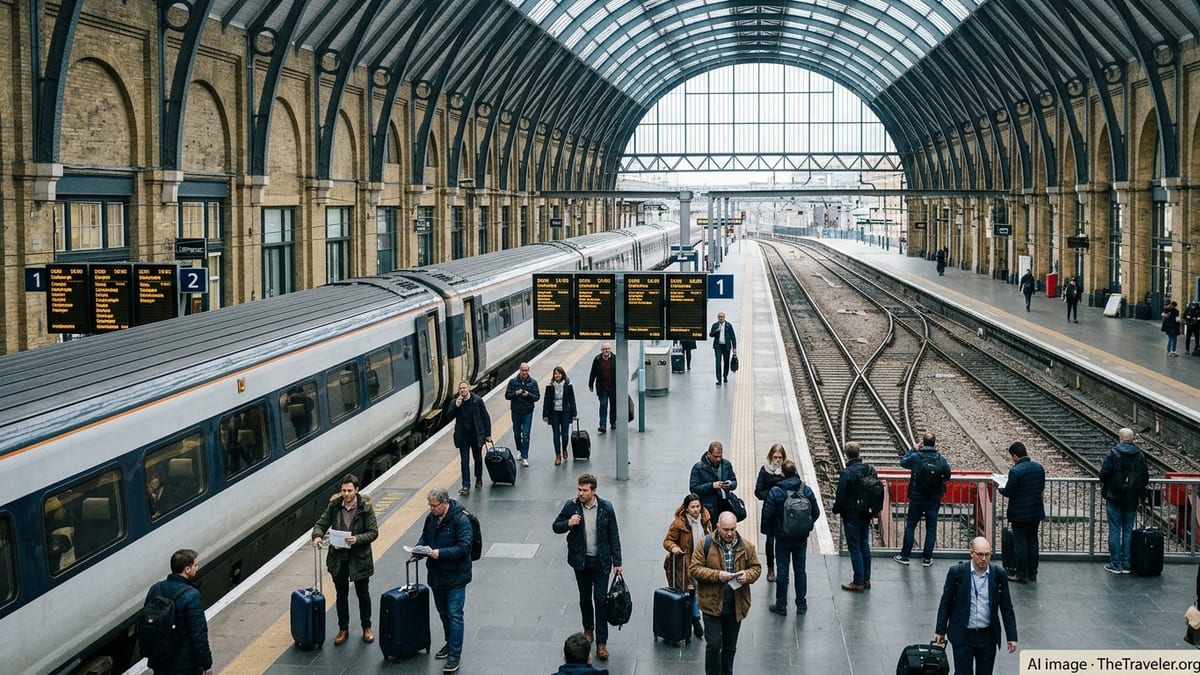
A new public rail era takes shape
Publicly available information shows that the UK government is in the middle of a multi year transition that will see a new, state owned railway body take charge of both infrastructure and most passenger operations across Great Britain. The new entity, Great British Railways, is intended to replace the current fragmented mix of private franchises, emergency contracts and direct operations by the end of 2027.
Reports indicate that the shift is being delivered through two main strands of policy. The first is a public ownership programme that transfers train operating companies into state control as their existing contracts expire, avoiding large compensation payments. The second is legislation to create Great British Railways as an arm’s length public body that will inherit the functions of Network Rail and absorb state run operators into a unified structure.
Government briefings and industry commentary describe Great British Railways as a “guiding mind” for the network, responsible for long term planning, timetabling, infrastructure management and the majority of passenger services. While some devolved and open access operators are expected to remain outside the core structure, the overall effect will be a return to a largely integrated, publicly owned railway for the first time since the mid 1990s.
Renationalising major operators by 2026
The public ownership programme is already reshaping the rail landscape and is scheduled to accelerate through 2026. Several large franchises, including operators on key commuter and intercity routes, have either moved into state hands or have transfer dates set as their contracts reach their natural end. Information compiled from official notices and specialist rail coverage shows that South Western Railway, c2c, Greater Anglia, Northern, TransPennine Express and others are now operated by government owned companies.
Further changes are timetabled for 2026 as remaining private contracts on major routes expire. Published material indicates that West Midlands Trains is among the operators expected to come into public control early in the year, followed by additional long distance and regional companies later in 2026. In each case, services are due to transfer to new, publicly owned operating subsidiaries with broadly the same branding and workforce, but with strategic control exercised by the state.
By sequencing the takeovers in line with existing contract end dates, the government aims to have the bulk of large franchises effectively renationalised by the close of 2026. Analysts note that this approach keeps day to day service patterns intact for passengers while gradually shifting financial and strategic responsibility away from private owners and toward the state.
Industry sources point out that rolling stock will, in many cases, continue to be leased from private companies during the transition, reflecting the complex legacy of the 1990s privatisation. However, the entities that plan and run train services, set timetables and manage stations are increasingly expected to sit within the public sector.
Building toward Great British Railways in 2027
Alongside the renationalisation of operating companies, work is progressing to establish Great British Railways as a single public body to oversee the network from 2027. Government speeches and parliamentary documents describe a staged process that begins with a “shadow” organisation bringing together senior leaders from Network Rail, the Department for Transport’s owning arm and existing public operators.
The full legal creation of Great British Railways is planned through a dedicated Railways Bill. Once enacted, that legislation is expected to transfer Network Rail’s infrastructure role, most passenger operations and key planning functions into the new company. The target set out in policy papers is to complete this consolidation by the end of 2027, at which point Great British Railways would be responsible for the vast majority of tracks, stations and services in Great Britain.
Recent government communications highlight the first visible signs of the new structure on the ground. A new station at Cambridge South, due to open in June 2026, has been publicised as the first Great British Railways branded facility, signalling how future stations may look under the unified system. The station is intended to serve a fast growing employment and research cluster, underlining the role that rail investment is expected to play in supporting regional growth.
Supporters of the reforms argue that a single public body will be better able to coordinate timetables, cut duplication between competing operators and negotiate large scale investment in rolling stock and infrastructure. Critics have raised questions about accountability, local input and the long term funding model, issues that are likely to shape debates as the 2027 launch approaches.
Implications for passengers, regions and tourism
For passengers, the most immediate effects of renationalisation have been seen in ticketing, disruption management and fares policy. Some of the publicly owned operators now offer more flexible ticket acceptance across different services during disruption, reflecting a shift toward treating the network as a single system rather than a patchwork of competing brands. National Rail information also points to a central government decision to freeze regulated fares in England until March 2027, a move that is framed as part of the transition to Great British Railways and efforts to support the cost of living.
Regional economies and tourism bodies are watching the changes closely. A more integrated national operator is viewed by many local authorities as an opportunity to secure clearer long term service commitments, especially on regional routes that feed major leisure destinations. By coordinating timetables and marketing across what are currently separate franchises, Great British Railways is expected to make it easier to plan cross country journeys and promote rail based tourism itineraries.
Industry data show that rail continues to play a central role in domestic travel to cultural cities, coastal resorts and national parks. If the new public operator succeeds in improving reliability and simplifying ticketing, analysts suggest it could encourage more travellers to choose rail over domestic flights or long car journeys, particularly on corridors where journey times are competitive.
International visitors may also benefit from a single national brand. Travel organisations have long highlighted that the current mix of operators and ticketing options can be confusing to first time visitors. A unified Great British Railways identity, combined with digital ticketing and clearer route information, is expected to form part of the UK’s wider strategy to make rail the backbone of sustainable tourism.
Operational challenges and the road ahead
Despite the momentum behind renationalisation, the transition to Great British Railways presents significant operational and financial challenges. The new public operator will inherit an ageing infrastructure in need of substantial renewal, complex industrial relations and a fare structure that has evolved over decades. Managing these issues while maintaining day to day reliability will be a key test of the model.
Experts point to lessons from the early years of privatisation, when poorly aligned incentives and fragmented responsibilities contributed to cost overruns and uneven performance. The current reforms seek to reverse that fragmentation, but their success will depend on how effectively Great British Railways can balance national standards with local flexibility and innovation.
There is also ongoing debate over the role of open access operators and devolved transport bodies, particularly in Scotland, Wales and city regions with their own rail strategies. Published briefings suggest that such services will continue to operate alongside Great British Railways, raising questions about how timetables, branding and investment decisions will be coordinated on shared routes.
As 2026 approaches, the focus will be on the next wave of major operators moving into public hands and on the detailed legislation needed to bring Great British Railways into being. For travellers across Great Britain, the coming years are likely to bring visible changes in branding, ticketing and station design, even as familiar route names and trains continue to run under new public ownership.