


More news on this day
Rail passengers travelling to and from London and Heathrow Airport are facing ongoing timetable changes after a significant electrical substation fire near Hayes disrupted power supplies on a key stretch of the Great Western Main Line.
Get the latest news straight to your inbox!
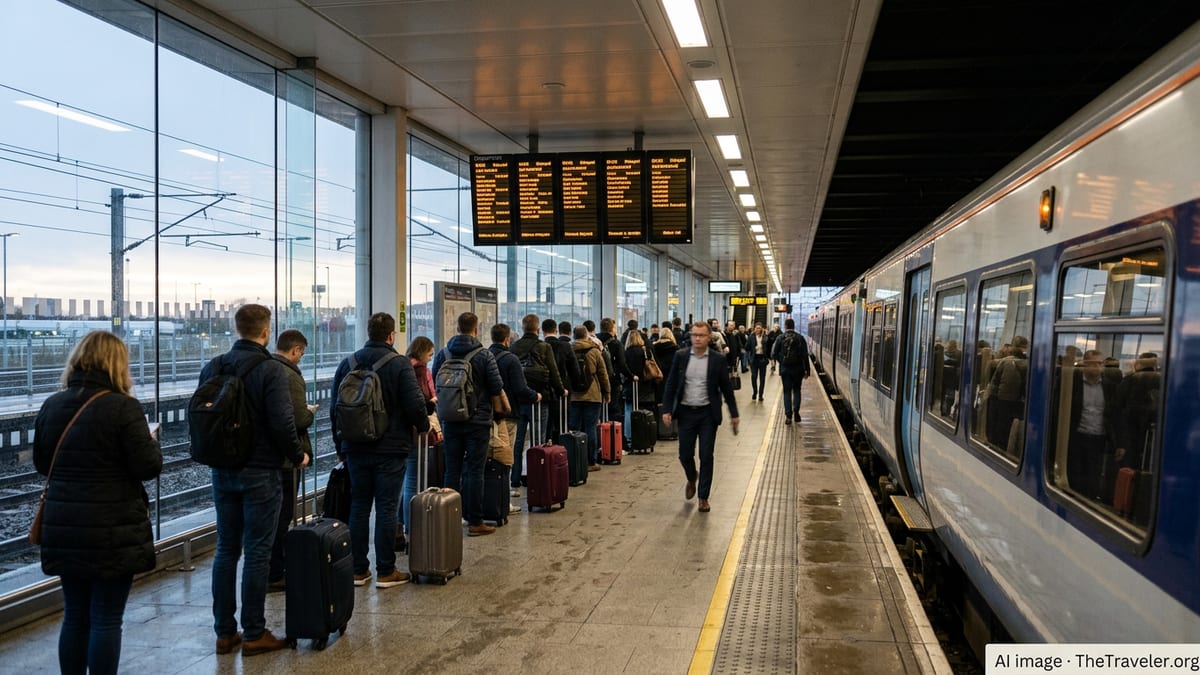
Fire near Hayes cuts power on key Heathrow rail corridor
Publicly available information shows that the incident centred on the North Hyde electrical substation in Hayes, adjacent to the busy Great Western route that carries Heathrow Express, Elizabeth line and long distance services. The fire, which broke out close to the tracks and high voltage equipment, led to an immediate shutdown of power in the area as engineers assessed potential damage to signalling and traction systems.
Initial reports indicate that trains serving Heathrow Airport and intermediate west London stations were among the first to be affected, with operators cancelling late night services and suspending some early departures while control rooms worked to understand the extent of the failure. Services that did run were subject to heavy delays, diversions and the use of diesel traction where possible on non electrified diversionary routes.
Network status pages and operator bulletins describe a complex technical recovery, with infrastructure teams required to test cables, track circuits and overhead equipment before progressively restoring power. That process, while preventing further damage, has contributed to a period of reduced capacity and altered timetables that is now extending beyond the immediate hours of the fire.
Travel updates note that the location of the substation, close to junctions serving Heathrow Airport as well as long distance services towards the west of England and south Wales, magnified the impact. Even lines that did not lose power entirely have experienced knock on effects as controllers prioritised limited paths for essential airport and commuter traffic.
Temporary timetables and reduced frequencies on affected routes
In the days following the fire, rail operators on the corridor have moved from ad hoc cancellations to more structured temporary timetables. According to published coverage and timetable change pages, Heathrow Express and Elizabeth line services through the Hayes area are now operating to reduced frequencies and, at times, altered stopping patterns in order to match the capacity available on the partially constrained infrastructure.
Some airport links have been cut back or combined, with operators advising passengers to allow additional time and check departure boards shortly before travel. Off peak gaps between trains are longer than usual on several branches, particularly west of Hayes and Harlington, where fewer paths are available while damaged power equipment is bypassed or repaired. Early morning and late evening services are among the most affected as engineers reserve overnight access for inspection and repairs.
National rail status summaries also reflect wider timetable adjustments on intercity services using the same corridor. Trains towards Bristol, Cardiff and the south west have been subject to retimed departures, altered calling points and occasional diversions away from the affected stretch, resulting in extended journey times. In some cases, buses have been drafted in to cover shorter sections where electrical supply remains constrained.
Rail planners appear to be favouring predictability over attempting to run a full pre incident pattern. Industry practice and prior disruption reviews indicate that moving to a clearly advertised, slimmed down timetable can help avoid sudden short notice cancellations, giving both staff and passengers a more reliable, if less frequent, service while infrastructure constraints persist.
Knock on impacts for airport, commuters and connecting services
The substation fire has delivered particular disruption for air passengers who rely on direct rail links into Heathrow. With some express services curtailed or retimed and alternative Elizabeth line trains operating less frequently, travellers are being advised through public information channels to build generous margins into their airport transfers and to consider earlier departures than they might normally choose.
Commuters from the Thames Valley and outer west London have also felt the effects. Morning peak reports show crowding on services that are running, as displaced passengers converge on fewer trains and some opt to board stopping services that would previously have been quieter. Where long distance operators have diverted or shortened their trains to fit altered paths, seating capacity has at times fallen below usual weekday levels.
Connecting rail and metro services in London are adjusting in response. Timetable notices and journey planners highlight that onward journeys on the Underground and other National Rail routes may be busier around key interchange points such as Paddington, where westbound flows are disrupted, and central London Elizabeth line stations, where eastbound services still operate closer to normal. The asymmetry between recovering city centre operations and constrained suburban sections has created uneven passenger flows across the network.
Local bus operators and coach companies have responded by strengthening links to Heathrow and nearby stations, particularly during peak travel periods. However, available information suggests that replacement road transport is also subject to delays caused by congestion on the motorway and trunk road network, especially at times of high airport traffic. As a result, total journey times for many travellers have risen significantly compared with normal conditions.
Recovery timeline and what passengers should expect next
Rail infrastructure operators have not yet set a firm public date for the full restoration of the pre fire timetable, but operational notices imply that a staged recovery is under way. Initial goals focus on stabilising power supplies through the Hayes area and verifying signalling integrity, followed by the gradual reintroduction of additional train paths as confidence in the repaired systems grows.
Experience from similar incidents, documented in previous disruption reviews, suggests that while emergency repairs can restore basic functionality within days, full replacement of damaged substation components and cabling may require more extensive works, often scheduled overnight or at weekends. During this period, temporary speed restrictions and short windows of engineering access can continue to limit how many trains can reliably run, even when most services appear to be operating.
Passengers consulting official journey planners are likely to see rolling timetable updates as operators refine their reduced service patterns. Industry timetabling guidance notes that larger structural changes are typically introduced at set dates, but unplanned events such as major fires can trigger interim adjustments to maintain safety and reliability. For travellers, this means that itineraries booked weeks in advance may already have changed, requiring fresh checks close to departure.
Travel advice circulating across rail information channels therefore emphasises three core points: check journeys before leaving home, be prepared for longer travel times and busier trains, and remain alert to on the day announcements at stations. While the Hayes substation fire is a localised incident, its position on a critical airport and intercity artery has turned it into a network wide timetable challenge that is likely to be felt by passengers for some time.