


More news on this day
Air travel across Australia and New Zealand experienced another day of severe disruption as Jetstar, QantasLink, Virgin Australia, Air New Zealand, Sounds Air and other carriers cancelled at least 38 services and logged more than 400 delays, snarling passenger movements through Melbourne, Sydney, Wellington and Christchurch.
Get the latest news straight to your inbox!
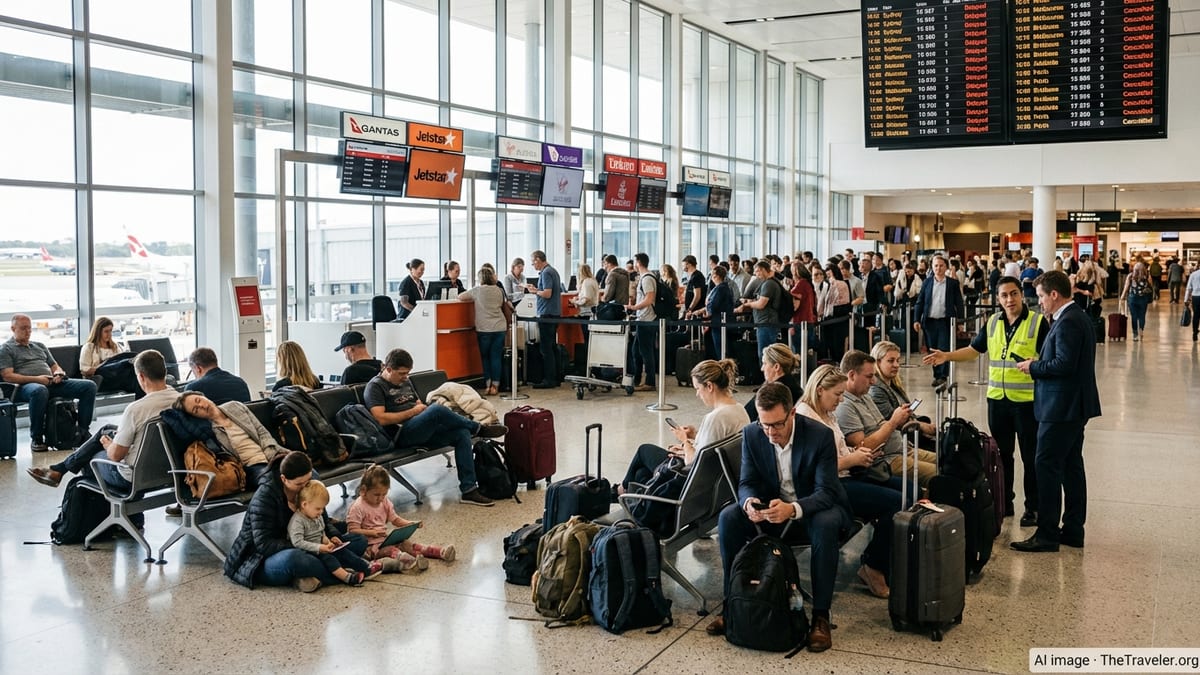
Wave of Cancellations Across Trans-Tasman Routes
Operational data compiled from airport boards and industry tracking platforms indicates that the latest disruption primarily affected high-frequency trans-Tasman and domestic links serving Melbourne, Sydney, Wellington and Christchurch. Short-haul carriers including Jetstar, QantasLink, Virgin Australia, Air New Zealand and regional operator Sounds Air all recorded flight cancellations, with a combined total of at least 38 services removed from schedules over the course of the day.
These cancellations were concentrated on busy commuter and leisure corridors such as Melbourne to Wellington, Melbourne to Christchurch and domestic hops feeding those hubs. Publicly available scheduling information shows that several early morning departures were withdrawn with little advance warning, prompting rolling effects throughout the day as aircraft and crew rotations fell out of place.
While the scale of the disruption was smaller than some of the extreme peaks seen in recent months, it added to a pattern of intermittent irregular operations across Australasia’s aviation network. Previous days have already seen clusters of cancellations and delays affecting many of the same airlines and airports, highlighting the sensitivity of short-haul operations to relatively modest shifts in weather, crew availability or technical issues.
More Than 400 Delays Compound Passenger Frustration
In addition to outright cancellations, more than 400 flights were reported delayed across the affected hubs, according to aggregated airport and tracking feeds. The bulk of those delays were recorded at Sydney and Melbourne, where congested airspace and high utilisation of aircraft can quickly magnify minor schedule changes into significant hold-ups at gates and on taxiways.
Reports from airport departure boards showed a familiar pattern of rolling delays, with some services departing 30 to 60 minutes late and others pushed back by several hours. This had a knock-on effect for connecting passengers heading onward to New Zealand, particularly through Christchurch and Wellington, where many trans-Tasman arrivals are timed to connect with domestic services deeper into each country.
Industry performance statistics published by transport agencies already point to pressure on on-time running for several key routes, especially Melbourne to Christchurch and Melbourne to Wellington. Recent on-time performance summaries have shown comparatively low punctuality rates on some of these sectors, suggesting that even on ordinary days schedules are running tight and vulnerable to disruption.
Key Carriers Under Intensified Operational Pressure
The disruption once again put a spotlight on the network reliability of leading Australasian airlines. Jetstar and QantasLink, which together handle a significant share of short-haul and regional flying in and out of Melbourne and Sydney, recorded both cancellations and extensive delays on services feeding New Zealand gateways. Virgin Australia and Air New Zealand, major competitors on the trans-Tasman trunk routes, also saw services retimed or withdrawn.
Regional operator Sounds Air, which connects smaller centres with hubs such as Wellington and Christchurch, was among the smaller carriers affected. When even a single-frequency route is cancelled in this part of the network, travellers often have limited same-day alternatives, leaving them reliant on rebooking through larger hubs or shifting to competing airlines if seats are available.
Airline network data shows that these carriers collectively underpin much of the connectivity between Australia’s east coast and New Zealand’s main population centres. Tourism authorities point out that Melbourne, Sydney, Wellington and Christchurch function as critical distribution points for visitors heading onward to regions such as Queensland’s resort areas, New Zealand’s South Island ski fields and popular wine and adventure tourism destinations.
Impact on Travellers in Melbourne, Sydney, Wellington and Christchurch
For passengers, the immediate effect of the latest disruptions was felt most acutely at check-in counters, security queues and departure lounges. Visual inspections of airport information displays during the affected period showed clusters of red and amber indicators alongside multiple flights, reflecting cancellations and late departures across both domestic and international services.
In Melbourne and Sydney, where several airlines operate overlapping schedules to New Zealand, some travellers were able to be re-accommodated on later flights, though often with significant delays and limited choice of departure times. In Wellington and Christchurch, which have fewer parallel services on some routes, options were more constrained, with some passengers facing same-day travel only via alternative hubs or next-day departures.
Consumer advice published by travel and aviation bodies typically recommends that affected travellers contact their airline via mobile apps or call centres to confirm rebooking and to check eligibility for meal vouchers or accommodation during extended delays. However, high call volumes and queues at service desks can lengthen the time it takes to secure new arrangements, especially when multiple carriers are simultaneously adjusting their operations.
Ongoing Reliability Concerns for the Trans-Tasman Market
The latest wave of irregular operations has reinforced wider concerns about schedule reliability in the trans-Tasman market, a corridor that is central to tourism, business travel and family visits between Australia and New Zealand. Historical on-time performance reports from New Zealand’s Ministry of Transport and other agencies already show that some routes linking Melbourne and Sydney with New Zealand cities have struggled to maintain consistently high punctuality.
Travel industry analysts note that factors such as tight aircraft utilisation, weather volatility, staffing constraints and maintenance demands on ageing fleets can all contribute to disruption. When several of these pressures coincide, as appears to have been the case in the latest event, delays and cancellations can spread rapidly across multiple airlines and airports, even if the initial trigger is localised.
As Australasia heads deeper into a busy travel season, observers say the resilience of airline schedules between Australia and New Zealand will remain under scrutiny. Travellers are likely to continue building additional buffer time into itineraries that rely on connections through Melbourne, Sydney, Wellington or Christchurch, and to pay closer attention to real-time flight information on the days they fly.