


Beyoğlu is where Istanbul hits its stride. This historic hillside district on the European side, stretching from Taksim Square down to the Golden Horn, blends late Ottoman glamour with contemporary city life. Between Galata Tower, İstiklal Avenue, Cihangir and the Karaköy waterfront, it is the part of town where you can linger in a bookish cafe, visit a major museum, shop for Turkish design, then end the day with a Bosphorus-side stroll under the lights of the Galata Bridge.
Get the latest updates straight to your inbox!
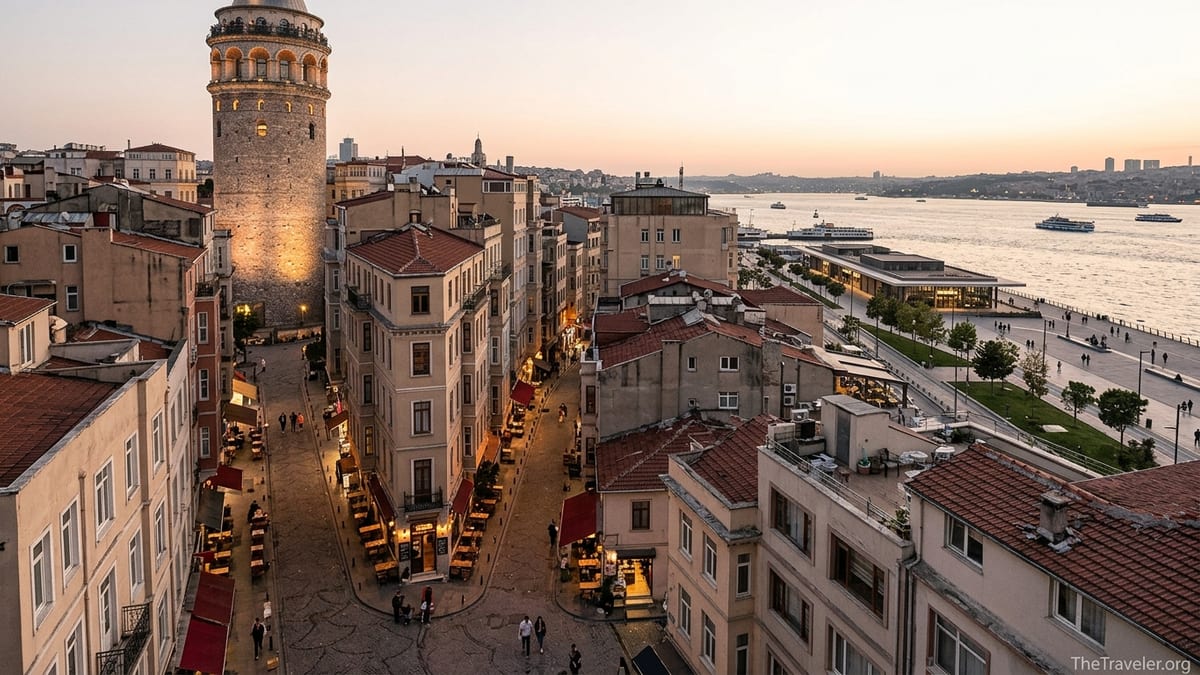
Getting Your Bearings in Beyoğlu
Beyoğlu covers a compact but steep area, so it helps to picture it in layers. At the top is Taksim Square, where the nostalgic red tram begins its journey along İstiklal Avenue. From there, the main pedestrian street runs downhill for about 1.4 kilometers toward the historic Tünel funicular, with side streets spilling into neighborhoods like Cihangir and Çukurcuma. Below that, the cobbled lanes of Galata gather around the stone cylinder of Galata Tower, and everything slopes further down to the tram tracks and ferries of Karaköy and the redeveloped Galataport cruise terminal.
Public transport makes it easy to move between these layers. The T1 tram stops at Karaköy for the old port and Galataport, while the historic Tünel funicular climbs up to the lower end of İstiklal in less than two minutes. From Taksim, the modern M2 metro connects you with the rest of the city. Many visitors choose to stay around Galata or Karaköy, where small hotels sit on quiet sidestreets but you are still a 10 to 15 minute walk from almost everywhere mentioned in this guide.
Beyoğlu is busy from mid-morning until late at night, particularly on weekends and during summer. Plan indoor visits like museums and hammams for the early afternoon heat, then enjoy the cooler hours for cafe hopping, shopping and evening walks. If you are sensitive to crowds, aim to explore the area on weekday mornings, when even usually packed spots like İstiklal Avenue feel more relaxed.
Galata Tower and the Streets Around It
The Galata Tower is the most recognizable landmark in Beyoğlu and an essential first stop. The current tower dates from the 14th century and has served as a watchtower, fire lookout and symbol of the Genoese quarter. Today it operates as a museum with a wraparound viewing terrace. As of mid-2026, the published opening hours are approximately 08:30 to midnight daily, with the ticket office closing around 23:00; expect last entry times and prices to shift slightly, so check locally before you go. Lines build quickly after 10:00, so an early visit is the most comfortable way to enjoy the 360-degree panorama over the historic peninsula, Bosphorus and Golden Horn.
Tickets are typically sold on site via electronic kiosks linked to the national museum system and are also included in some multi-site museum passes. Budget the equivalent of a mid-range museum ticket in Istanbul price terms and consider the occasional wait part of the experience. Inside, there are small displays on the history of the tower and Istanbul, plus a glass viewing floor on one of the higher levels, but the real draw is stepping out onto the narrow balcony and tracing the line of the Bosphorus from bridge to bridge.
Do not rush away once you come down from the tower. The tangle of streets radiating out from Galata Square is one of the most atmospheric parts of Beyoğlu. Serdar-ı Ekrem Street, often described as the postcard-perfect lane of Galata, is lined with boutique hotels, design shops and small cafes. You might duck into a specialty coffee bar for a flat white, then browse a contemporary ceramics studio or a shop selling Turkish-made textiles. Prices here are higher than on the backstreets of Kadıköy or Fatih, but you can still find handmade jewelry and simple cotton scarves in the range that feels reasonable for a one-of-a-kind souvenir.
In the early evening, Galata’s stone steps, tiny wine bars and rooftop terraces fill with both locals and visitors. You could pick a casual meyhane on one of the side streets for grilled fish and meze, spending roughly what you would at a mid-range restaurant in a European capital, or simply find a cafe terrace with a partial tower view and order Turkish tea. Musicians often play near the square at sunset, and the tower is lit after dark, so even if you visit the interior in the morning it is worth wandering back through later to see the area under the lights.
İstiklal Avenue, Historic Passages and Night Strolls
İstiklal Avenue is Beyoğlu’s main stage. This 1.4 kilometer pedestrian street, once called the Grande Rue de Péra, is lined with late 19th century apartment blocks that now hold shops, cinemas, galleries, churches and consulates. On a busy evening it can feel like half of Istanbul is walking here, from students and families to visitors photographing the nostalgic red tram. Street performers gather around Galatasaray Square, ice cream vendors tease customers with spinning cones, and the smells drift from chestnut and simit carts.
Beyond the high-street brands and chocolate shops, the real charm lies in İstiklal’s historic passages and hidden courtyards. Pasaj Europa and Atlas Passage are classic examples of glass-roofed arcades lined with small shops and cafes. The most famous of all is Çiçek Pasajı, or the Flower Passage, a 19th century arcade that once housed florists and now hosts a row of meyhanes. Architecturally, Çiçek Pasajı is worth a look even if you decide not to eat there. Today most of its restaurants cater heavily to tourists and prices reflect the setting more than the food quality, so many locals prefer to wander a block or two away to neighboring fish restaurants and taverns where menus feel more down-to-earth.
For a classic İstiklal experience, start near Taksim in the late afternoon. Stop at a patisserie for a slice of cake or a Turkish-style profiterole, then drift down the avenue, detouring into side streets whenever something catches your eye. You could step into the grand Catholic church of St. Anthony of Padua, then continue to a contemporary bookstore cafe near Şişhane where you can browse shelves of Turkish and international titles over a filter coffee. By early evening, rooftop restaurants above İstiklal begin to glow; some offer fixed-price menus and sweeping views across the Golden Horn, making them a popular setting for anniversaries or birthday dinners.
Night walks along İstiklal are one of Beyoğlu’s greatest free pleasures. Music spills from basement jazz clubs and live-music bars, street vendors sell grilled mussels with lemon, and families push strollers well past 10 pm. If you prefer quieter streets, turn off into Asmalımescit, Tomtom or the streets that slope down toward Şişhane. These areas offer more intimate wine bars, design-forward bistros and small galleries, where you can linger over a glass of Turkish wine or a cup of herbal tea without the constant flow of the main avenue.
Cafes, Hammams and Slow Moments in Cihangir
Southwest of İstiklal, the neighborhood of Cihangir drops down toward the Bosphorus in a series of leafy streets and staircases. Long favored by writers, artists and young professionals, it has a softer pace than the main shopping artery above. This is one of the best parts of Beyoğlu to settle in for a slow morning or afternoon. Start at a cafe on one of the corner squares and order a traditional Turkish breakfast plate loaded with cheese, olives, tomatoes, honey and eggs, or choose a more international brunch with avocado toast and specialty coffee. Prices at popular spots are not low by local standards, but you can still find neighborhood bakeries and tea gardens where a simit and tea cost only a little more than you would pay from a street cart.
Cihangir also offers a window into day-to-day life. You will see residents walking dogs, grocery shops displaying herbs and vegetables on the sidewalk, and small bookstores where you can pick up notebooks or postcards. Many visitors like to combine Cihangir with neighboring Çukurcuma, whose hilly streets are filled with antique shops and vintage furniture dealers. It is an area where browsing is half the fun, whether you are hunting for old Anatolian rugs, framed Ottoman-era prints or mid-century Turkish glassware.
After a morning of walking, consider a hammam break. Traditional Turkish baths in and around Beyoğlu range from historic establishments with marble domes and fountains to newer spas housed in modern buildings. A typical package includes time in the hot, steamy marble hall followed by a scrub and foam massage from an attendant, and then tea in a resting area. Prices vary widely, but in Beyoğlu’s mid-range hammams you can expect to pay the equivalent of a moderate spa treatment in Europe for a full traditional ritual, while simpler self-service options cost less. Booking ahead is recommended, especially in the evenings and on weekends, and it is wise to confirm which services are included to avoid surprises at checkout.
End your Cihangir visit with a view. Several neighborhood tea gardens and municipal social facilities sit on terraces overlooking the Bosphorus and the Old City skyline. They tend to be more affordable than trendy rooftop bars and are popular with local families. Order a glass of Turkish tea or fresh orange juice, take a seat facing the water and watch ferries crisscrossing between Karaköy, Kadıköy and Üsküdar as the sun goes down.
Karaköy: Street Art, Waterfront Walks and Easy Eats
At the foot of the hill below Galata lies Karaköy, once a gritty port district and now one of Istanbul’s liveliest neighborhoods. The main tram road can feel hectic, but duck a block inland and you will find lanes covered in street art, small galleries, third-wave coffee bars and dessert shops. Many visitors come here after visiting Galata Tower, walking down the narrow streets to find lunch or coffee before continuing to the waterfront.
Karaköy is particularly good for casual dining. You can stop at a lokanta-style restaurant for home-style stews, beans and pilaf served from steaming trays, or choose a modern cafe offering salads, burgers and vegetarian plates. Prices are often lower than along İstiklal Avenue, especially if you pick places filled with office workers at lunch. There are also long-established baklava and kunefe shops where you can try syrupy pastries fresh from the oven, perhaps pairing them with Turkish tea or a small cup of strong Turkish coffee.
The waterfront itself is another highlight. From the Karaköy ferry piers, you can watch boats leave for Kadıköy and Üsküdar, listen to the cry of gulls and see anglers lining the edge of the Galata Bridge. One classic itinerary is to arrive in Karaköy by tram, wander the backstreets in the late afternoon, then walk out onto the bridge at sunset. The views of the mosques on the historic peninsula and the changing colors over the Golden Horn make this one of the city’s most memorable evening walks. If you are hungry, simple fish sandwich stands and fish restaurants line the lower level of the bridge and surrounding streets, though quality and prices vary and it is worth choosing somewhere busy with local customers.
Karaköy also serves as a gateway to the wider city. From here you can take a short ferry ride to the Asian side, hop on the tram toward Sultanahmet to see the Blue Mosque and Hagia Sophia, or follow the new waterfront promenade south into the Galataport development. Even if you are based elsewhere in Istanbul, it is worth planning at least one afternoon and evening centered on Karaköy to capture both its urban energy and its access to the water.
Galataport: Waterfront Promenade, Museums and Dining
South of the Karaköy ferry docks, the historic cruise port has been transformed into Galataport, a large waterfront development that reopened the shoreline to pedestrians along about 1.2 kilometers of the Bosphorus. What used to be fenced-off piers are now a long promenade with benches, trees, public squares and direct water views. On days when no ship is docked, this is one of the easiest places in central Istanbul to walk right beside the Bosphorus without traffic. You will see locals pushing strollers, office workers on their lunch break and visitors taking photos with the Old City skyline behind them.
Galataport combines shopping, dining and culture. Its streets and courtyards host a mix of international brands and Turkish designers, from clothing and homeware to small concept stores. Around 40 percent of the leasable space is reportedly devoted to food and drink, which translates to a wide range of cafes, dessert shops and restaurants. You can have a simple Turkish coffee at a waterside kiosk, try modern takes on traditional meze at a sit-down restaurant with terrace seating, or grab takeaway ice cream to eat on a bench. Prices at most venues skew higher than in the rest of Beyoğlu, but many visitors find the combination of easy walking, clean public restrooms and views worth the premium for at least one meal or coffee stop.
Galataport is also home to major cultural institutions, including Istanbul Modern, the city’s main contemporary art museum, and the Istanbul Museum of Painting and Sculpture. Exhibitions change regularly and often include both Turkish and international artists. If you need a midday break from the heat or rain, planning a museum visit inside Galataport can be an efficient way to combine art with a waterfront stroll. Museum tickets are typically in line with other major galleries in Europe and may be discounted with certain city passes or student cards.
In the evening, Galataport’s promenade is softly lit and many restaurants turn up the music, creating a lively but generally more polished atmosphere than the streets of Karaköy just to the north. It is a good choice if you want a relaxed walk with level paving, accessible ramps and plenty of seating. From here, you can continue back toward Karaköy and Galata on foot, or take a short taxi or tram ride back uphill to your hotel if you are staying near Taksim or İstiklal.
Pera Museum, Culture Stops and Boutique Shopping
One block off İstiklal, near the Tepebaşı area, the Pera Museum offers an elegant counterpoint to the street’s bustle. Housed in a restored late Ottoman building, it is known for its Orientalist painting collection, including works by the Ottoman painter Osman Hamdi Bey, as well as rotating exhibitions of photography, contemporary art and themed shows. As of mid-2026, the museum is closed on Mondays and hosts special programs, such as children’s workshops and evening events, on other days of the week. Admission fees remain moderate by European standards and there are often discounts for students and seniors.
Visiting Pera Museum makes a good centerpiece for a quieter Beyoğlu afternoon. You might start with an early lunch in one of the nearby side-street eateries, then spend an hour or two moving through the galleries. The upper floors often hold the permanent painting collection, while lower levels are dedicated to changing exhibitions, so check the floor plan when you arrive. Many visitors appreciate the museum’s manageable size; you can see a significant portion of the displays without feeling rushed or overwhelmed, leaving time for a coffee in the museum cafe or a nearby pastry shop afterward.
The surrounding streets are also rich in small-scale shopping. Along Meşrutiyet Avenue and the linked backstreets, you will find boutiques selling Turkish fashion labels, jewelry studios, record shops and concept stores focused on locally made objects. Prices range from accessible souvenirs, such as cotton peshtemal towels and handmade soaps, to higher-end pieces like leather bags and designer clothing. If you want to bring home items that feel rooted in Istanbul rather than generic imports, this is one of the best areas to browse.
For culture after dark, look to Beyoğlu’s many small theaters, independent cinemas and live-music venues. Some historic movie houses near İstiklal now screen a mix of Turkish and international films, occasionally with English subtitles, while jazz clubs and meyhanes offer live music most nights of the week. Tickets bought at the door are usually affordable compared with Western Europe, though popular performances can sell out in advance. Checking posted schedules as you walk by during the day can help you decide where to return in the evening.
Evening Walks and How to Link It All Together
One of the pleasures of Beyoğlu is how easily you can connect its highlights in a single extended walk. A classic route begins near Taksim in the late afternoon, then follows İstiklal Avenue downhill, pausing at Galatasaray Square, historic passages and side-street cafes. From the lower end of the avenue, you can veer toward Galata Tower for a quick look at the square and its surrounding lanes. As twilight approaches, descend toward Karaköy, passing small shops and street art-filled alleys, before reaching the waterfront just as the lights come on along the Golden Horn.
From Karaköy, you can either walk onto the Galata Bridge for sunset views toward the mosques of the Old City, or turn south toward Galataport for a smoother promenade-style walk along the Bosphorus. Both options offer abundant street life and photography opportunities. Street vendors sell freshly squeezed pomegranate and orange juice, while fishermen chat along the railings. On warm evenings, families gather on benches with sunflower seeds and tea from nearby kiosks, giving the area the feel of a communal living room.
If your day started elsewhere in Istanbul, such as Sultanahmet or Kadıköy, consider timing your arrival in Beyoğlu to coincide with the golden hour. Ferries typically run until late in the evening, and trams and the metro connect well with Taksim and Karaköy, so you have flexibility in how you return. Taxis are plentiful around Taksim, Galata and Karaköy, but traffic can be heavy on weekend nights; using official taxi apps or arranging pickup from a side street rather than directly on İstiklal can make the ride smoother.
Whatever exact route you choose, plan for a relaxed pace. Part of Beyoğlu’s appeal is the chance to stop wherever something interests you: a window full of baklava, a courtyard tea garden, a musician playing in a doorway. Leave space in your schedule for those unplanned pauses, and you will likely remember your time here less as a checklist of attractions and more as a series of vivid street-level moments strung together on foot.
The Takeaway
Beyoğlu is not just one attraction but a layered experience. From the heights of Galata Tower to the bustle of İstiklal Avenue, the cafe terraces of Cihangir, the street art of Karaköy and the polished waterfront of Galataport, this hillside district shows many different faces of contemporary Istanbul. Each neighborhood has its own rhythm, and moving between them over the course of a day reveals how closely everyday life, history and tourism overlap here.
If you have only a short stay, prioritize two or three core experiences: a morning or evening at Galata Tower and its surrounding streets, a slow walk down İstiklal with detours into passages and cafes, and a waterfront stroll linking Karaköy and Galataport. With more time, add a hammam session, a visit to Pera Museum and an afternoon in Cihangir or Çukurcuma. However long you stay, try to experience Beyoğlu both by day, when its shops and museums are open, and at night, when lights, music and street life transform the same streets into something new.
Above all, think of Beyoğlu as a place to wander. The most rewarding discoveries often happen a block or two away from the main sights, where a quiet cafe terrace, a neighborhood bakery or a tiny design shop becomes your personal highlight. Let the tram bells, ferry horns and calls of street vendors guide you, and you will quickly understand why so many visitors end up spending far more time here than they originally planned.
FAQ
Q1. How much time do I need to see the main sights in Beyoğlu?
Most visitors can see Galata Tower, walk İstiklal Avenue and explore Karaköy in one full day, but two or three days allow for slower cafe time, museums and evening walks without rushing.
Q2. What is the best time of day to visit Galata Tower?
Early morning shortly after opening or around sunset on clear days are ideal. Mornings usually mean shorter lines, while sunset offers dramatic light over the Golden Horn and Bosphorus.
Q3. Is İstiklal Avenue safe to walk at night?
İstiklal Avenue is generally busy and feels safe into the late evening, especially on weekends, though like any crowded city street you should watch your belongings and avoid overly aggressive bar promoters.
Q4. Are the cafes and restaurants in Beyoğlu expensive?
Prices vary. Trendy cafes, rooftop bars and Galataport restaurants can feel pricey by local standards, but you can still find neighborhood lokantas, patisseries and tea gardens that are affordable for most visitors.
Q5. Do I need to book hammams in advance in Beyoğlu?
For popular hammams and evening or weekend visits, advance reservations are recommended. For smaller neighborhood baths, same-day bookings or walk-ins are often possible outside peak hours.
Q6. Is Galataport worth visiting if I am not taking a cruise?
Yes. Many people come solely for the waterfront promenade, cafes, restaurants and museums such as Istanbul Modern, as well as the chance to walk along the Bosphorus on level, car-free paths.
Q7. What should I wear when visiting a hammam in Beyoğlu?
Most hammams provide a pestemal towel and slippers. Swimwear is usually acceptable in mixed or tourist-oriented baths, while traditional single-sex baths may have specific customs, so it is best to ask when you book.
Q8. Can I easily reach Beyoğlu from Sultanahmet or the Asian side?
Yes. Trams connect Sultanahmet with Karaköy, and frequent ferries link Kadıköy and Üsküdar with Karaköy. From there, you can walk uphill, take the Tünel funicular or connect to the metro for Taksim.
Q9. Are there good shopping options in Beyoğlu beyond big brands?
Yes. Side streets around Pera Museum, Galata and Çukurcuma offer boutiques, antique shops and design stores selling Turkish-made fashion, jewelry, homeware and vintage pieces alongside the international chains on İstiklal.
Q10. Is Beyoğlu suitable for families with children?
Beyoğlu can work well for families who are comfortable with city crowds. Children often enjoy Galata Tower views, the tram on İstiklal, street performers and simple evening walks along the Karaköy and Galataport waterfronts.