


More news on this day
Severe thunderstorms sweeping across the United Kingdom have triggered stringent airspace restrictions, causing major disruption for British Airways and easyJet and mirroring a broader pattern of weather-linked aviation shocks stretching from Italy to Chile.
Get the latest news straight to your inbox!
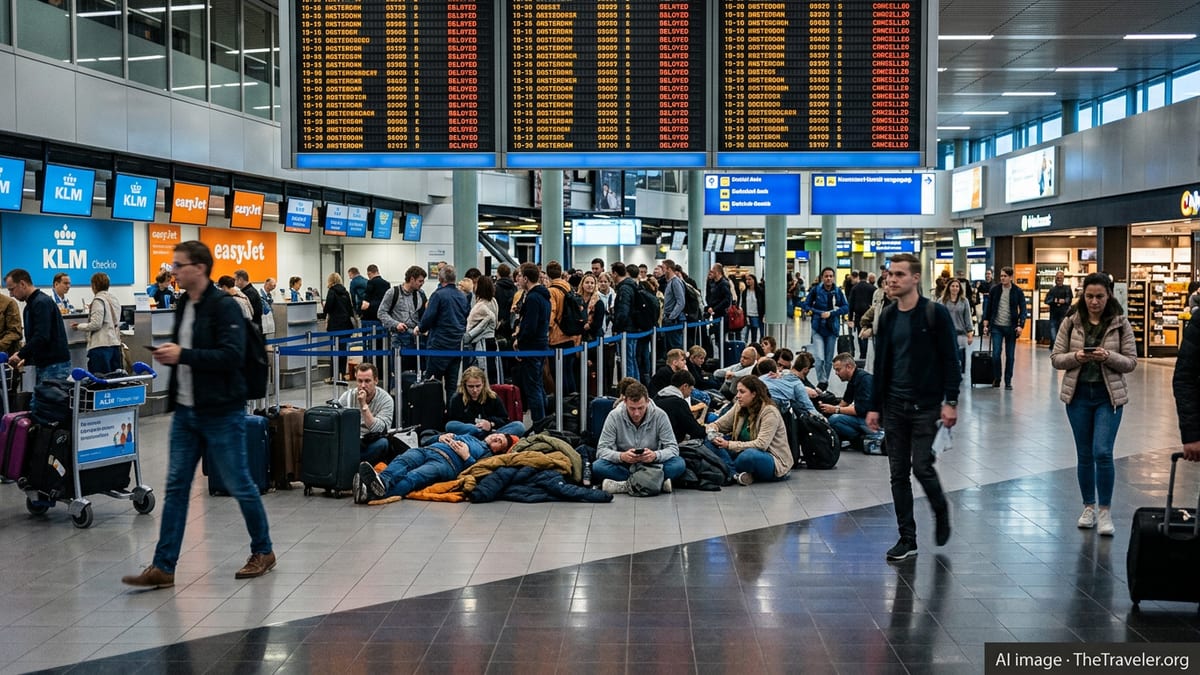
Thunderstorm Gridlock Halts UK Operations
London’s Heathrow and Gatwick airports entered a second day of heavy disruption on June 29, 2026, as successive thunderstorm cells forced air traffic managers to sharply reduce the number of takeoffs and landings. Publicly available data shows hundreds of flights delayed and a growing tally of cancellations as controllers imposed wider separation between aircraft and rerouted traffic around active storm systems over southeast England.
British Airways and easyJet, the two largest operators at the London hubs, have been among the hardest hit. Passenger reports from both airports describe long queues, rolling departure time changes, and aircraft held on the ground for hours while air traffic flow restrictions remain in place. Schedules that had been built around peak summer capacity are now running at a fraction of their planned throughput.
Industry updates indicate that the storm pattern is interacting with an intense heatwave over parts of the UK and continental Europe, compounding the strain on operations. The combination of convective weather, rapidly shifting wind fields, and temperature-driven performance limits has led to conservative spacing rules in UK airspace, particularly for arrivals into London, effectively throttling the system.
While some long-haul services are still operating, connections and short-haul leisure routes have borne the brunt of the disruption. Reports from Heathrow show extended arrival delays for transatlantic and South American flights and knock-on aircraft and crew shortages across the short-haul network serving Spain, Italy, and other European holiday destinations.
British Airways and easyJet Face Near Standstill at Key Hubs
Operational data compiled over the weekend points to a near-paralysis of parts of the British Airways and easyJet networks in and out of London. Aircraft have been reported waiting on stands without departure slots, while inbound flights circle, divert, or are held at origin due to restricted capacity into UK airspace.
At Heathrow, British Airways has been forced to consolidate frequencies on core business routes and cancel multiple European services, particularly at peak morning and evening banks. Travelers on social platforms describe spending up to five hours on parked aircraft or in departure lounges, with departure boards dominated by “delayed” or “cancelled” notices as the airline juggles aircraft rotations and crew duty limits.
Gatwick, where easyJet is the dominant carrier, has experienced similar turbulence. Passengers report aircraft pushed back from gates only to remain on the tarmac while thunderstorm cells pass over the London area and the Channel approaches. EasyJet has been trimming its schedule, prioritizing certain trunk leisure routes while cutting others outright when revised slot allocations make full operation impossible.
The disruption arrives at the height of the early summer getaway for UK travelers, intensifying the impact. Both carriers have already faced a challenging start to the season due to local technical issues, congestion at European hubs, and earlier storm systems, leaving little slack to absorb another shock of this scale.
Europe’s Weather and Capacity Squeeze Extends from Italy to Chile
The UK chaos is unfolding against a backdrop of wider European instability where weather, heatwaves, and capacity constraints have repeatedly collided with surging summer demand. Earlier in June, thunderstorm activity and congestion disrupted thousands of flights across major hubs such as Paris, Madrid, Rome, Munich, Vienna, Dublin, and Barcelona, prompting airlines including British Airways and easyJet to cut or delay services.
In Italy, a series of intense early-summer weather events has layered on top of strikes and local operational issues, amplifying disruption. Industry trackers highlight recent delays and cancellations at airports such as Milan Malpensa and Rome Fiumicino, with both British Airways and easyJet among the carriers affected. Bottlenecks around the Alps and central Mediterranean routes have, in several cases, slowed traffic flows just as UK travelers head south for holidays.
The network effect reaches far beyond Europe. Recent long-haul operations show delays on flights linking Santiago in Chile with London, where weather and downstream airspace restrictions have thrown arrival times into disarray. By the time such long sectors reach UK airspace, constrained holding capacity and limited diversion options can turn small schedule slips into extensive delays, feeding fresh disruption into the departure banks for outbound European services.
Observers of the European network note that these events are becoming more closely coupled. A thunderstorm line over northern Italy or the western Mediterranean can quickly cascade into missed connections in London, Amsterdam, or Frankfurt, especially when controllers across multiple countries tighten flows simultaneously to maintain safety margins.
Safety, Regulation and Limited Passenger Remedies
Across the continent, air navigation service providers have made clear through published materials that safety remains the overriding constraint during convective weather. When storm cells build over critical approach paths or airspace corridors, traffic managers increase in-trail separation, reduce landing rates, and at times temporarily halt arrivals and departures. For airlines such as British Airways and easyJet, which schedule high-density operations at slot-restricted airports, even a modest capacity cut rapidly converts into queues and cancellations.
Under UK and EU passenger protection rules, most weather-related disruptions are categorized as extraordinary circumstances. Legal guidance summarized by travel rights organizations indicates that in such cases airlines are generally not required to pay financial compensation, although they remain responsible for rebooking, refunds where flights are cancelled, and basic care such as meals and accommodation when passengers are stranded.
Travel advocacy groups are using the current wave of cancellations to remind passengers to document the reasons provided for delays, retain receipts for out-of-pocket expenses, and understand that rerouting on alternative carriers may be possible when space permits. However, capacity constraints caused by storms and heat are simultaneously squeezing seat availability, especially on routes connecting the UK with Mediterranean holiday destinations.
Air traffic statistics released by European network bodies in recent weeks underline that weather and associated flow restrictions have already accounted for a significant share of delays since the start of June. The latest spike in UK thunderstorms is expected to raise those figures further, concentrating attention on how regulators, air traffic managers, and airlines coordinate responses as extreme conditions recur.
Tourist Itineraries Upended as Summer Peak Begins
For travelers, the immediate impact of the UK thunderstorm crisis is practical and personal. Families beginning school holiday trips to Spain, Italy, Greece, and other European hotspots are finding carefully planned itineraries disrupted by last-minute cancellations or significant delays on British Airways and easyJet services. Reports from major UK airports describe overnight queues at service desks, crowded rebooking lines, and uncertainty over when seats will next be available.
City-break traffic has also been affected, with weekend travelers to destinations such as Rome, Milan, Paris, Amsterdam, and Barcelona facing reduced options. Some passengers have opted to reroute via regional airports in the UK or on the continent in an attempt to bypass London’s most affected hubs, only to encounter separate local bottlenecks tied to weather or earlier days’ backlogs.
Travel trade analysts note that the timing of the UK disruption coincides with heightened weather alerts in parts of southern Europe, including heat and storm warnings in several Italian cities. This overlap raises the risk that passengers who do manage to reach their destinations may still face localized transport interruptions, further compressing sightseeing plans and connecting journeys, particularly rail and ferry legs linked to arrival flights.
Despite the turmoil, public data indicates that Europe’s aviation system is still moving large volumes of traffic, with controllers and airlines dynamically adjusting routes and schedules to keep at least part of the network flowing. For now, however, the scenes at Heathrow and Gatwick illustrate how quickly a combination of thunderstorms, safety-driven airspace restrictions, and peak tourism demand can paralyze even the largest carriers, sending shockwaves from the UK across Italy, Chile, and the wider European travel map.