


More news on this day
A multiyear global cruise marketed as a floating home for long term travelers has been abruptly cut short in Cambodia, leaving more than 200 passengers trying to rearrange their lives and journeys after being told they had to leave the ship within hours.
Get the latest news straight to your inbox!
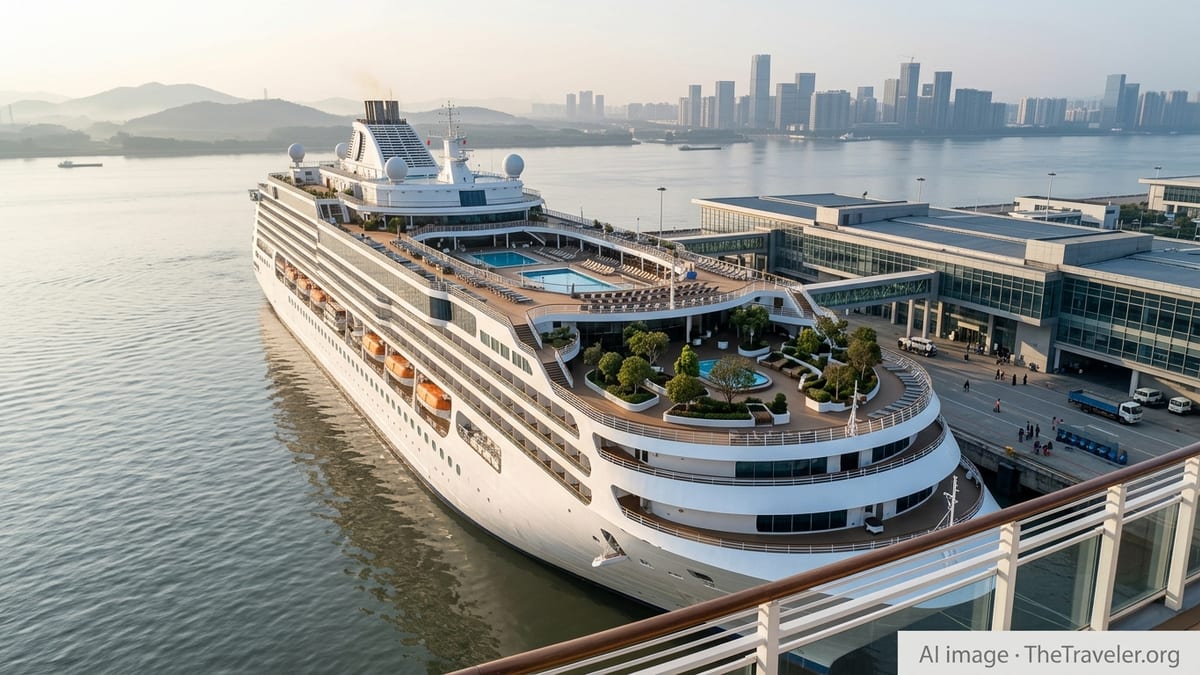
Voyage marketed as life at sea ends abruptly in Asia
The MV Odyssey, operated by United States based Villa Vie Residences, had been sailing a years long itinerary that promoted the idea of permanent or long term life at sea combined with continuous global travel. Publicly available information indicates the ship departed in 2024 on what was billed as a three to three and a half year journey to all seven continents, with capacity for around 650 residents and guests.
According to published coverage from multiple outlets, the company informed passengers this week that the voyage would be suspended in the Cambodian port city of Sihanoukville, citing soaring fuel costs that made continuing the trip financially unviable. Reports indicate the message reached guests with only a few hours of notice, instructing them to disembark the vessel and retrieve their belongings.
The decision effectively ended a highly publicized experiment in long duration cruising that had been positioned as an alternative to traditional retirement and conventional land based living. Marketing materials for the voyage invited travelers to “make the Odyssey your permanent home” and described a constantly moving residence that would circle the globe while offering hotel style services on board.
Coverage in outlets including the Associated Press, Al Jazeera, The Guardian and others describes a program that had attracted residents from North America, Europe and other regions, some of whom reportedly sold or rented out homes on land in order to finance life at sea.
Passengers stranded in Sihanoukville with limited support
Reports from international news organizations indicate that more than 200 passengers were on board when the company halted the voyage in Cambodia. Various accounts put the figure at just over 200 guests and around 150 crew members, though the exact numbers have not been confirmed by an official passenger manifest.
Once the decision was communicated, travelers were told they needed to leave the ship in Sihanoukville, a coastal city in southwestern Cambodia on the Gulf of Thailand. According to publicly available reporting, the operator has not announced a coordinated repatriation program, leaving many guests to book their own hotel rooms and onward travel at short notice.
Coverage from several outlets notes that some passengers quickly secured commercial flights out of Cambodia, while others remained in Sihanoukville to consider their options or await further clarity from the company. Hotel bookings in the city reportedly rose as cruise guests sought temporary accommodation on land after months or years living on board.
News reports also highlight uncertainty for crew members, with public information suggesting that their future employment status and travel arrangements were not immediately clear when the voyage was suspended.
Fuel costs and global tensions reshape long haul cruising
The operator has publicly linked the sudden halt to rising fuel prices, pointing to higher operating costs as the key factor that rendered the multiyear voyage unsustainable. The decision comes against the backdrop of broader volatility in global energy markets, including recent disruptions in key shipping routes that have affected the cost of transporting fuel.
Analysts quoted in international coverage note that fuel is a major expense for cruise lines, and long duration itineraries that cover vast ocean distances are particularly sensitive to price spikes. A voyage that was designed to keep a large vessel in motion across continents for years at a time requires substantial and predictable fuel supplies, which have become more difficult to secure at stable prices in recent months.
The Odyssey’s suspension in Asia underlines how external economic and geopolitical factors can quickly upend ambitious travel products that depend on long term planning and complex logistics. While mainstream seven night or ten night cruises can be adjusted season by season, a three year world voyage offers less flexibility once residents are aboard and have structured their lives around the itinerary.
Publicly available information on the cruise industry shows that other operators have recently trimmed or modified longer voyages in response to costs and regional tensions, though the abrupt nature of the Odyssey decision and the residency model have drawn particular attention.
Uncertain future for the ship and its residency concept
As of October 28, 2026, reports indicate that the Odyssey is docked in Sihanoukville, with local authorities expecting the ship to refuel and depart Cambodian waters in the coming days. However, published accounts say the operator has not announced a revised itinerary or confirmed whether the vessel will continue under the same residency concept elsewhere.
Villa Vie Residences had planned additional long term sailings, including future multiyear voyages marketed to retirees, remote workers and location independent travelers. Publicly available coverage suggests that those plans are now in question, at least in their original form, as the company focuses on the immediate fallout from suspending the current trip.
The early end of the Odyssey voyage raises practical questions for residents who purchased long duration stays or cabins marketed as floating homes. News reports state that some guests had invested significant sums to secure multi year occupancy, and many are now seeking information about refunds, credits or alternative arrangements. As of the latest public reporting, the company has not released a detailed compensation framework.
Travel industry observers note that the situation will likely be closely watched by other companies exploring similar concepts, such as residential ships and long duration circumnavigation cruises. The Odyssey’s experience in Cambodia may influence how future operators structure contracts, fuel hedging and contingency planning for travelers committing to life at sea.
Impact on would be long term cruise residents
The abrupt suspension of the global voyage has highlighted both the appeal and the risks of treating a cruise ship as a long term home. For some passengers, publicly available accounts describe a lifestyle that combined regular port calls on multiple continents with the familiarity of a single cabin and onboard community.
At the same time, the events in Sihanoukville underscore that residents on such voyages remain dependent on the financial health of a single operator and the stability of global shipping conditions. When costs rise or logistics falter, travelers who have committed to years at sea may have fewer options than those on standard holiday cruises lasting one or two weeks.
Travel experts quoted across international coverage suggest that prospective long term cruise residents may increasingly examine the fine print of residency style programs, including fuel cost protections, cancellation clauses and repatriation guarantees. The Odyssey incident in Cambodia is expected to inform questions travelers ask before committing to similar ventures in the future.
For now, hundreds of former residents from the MV Odyssey are adjusting to an unplanned return to life on land, scattered across hotels and onward flights as they leave the Cambodian coast. Their experience is likely to become a reference point in debates over how far the cruise industry can safely push the idea of living at sea full time.