


More news on this day
A United Airlines Boeing 737 MAX 8 operating as flight UAL1494 from Newark Liberty International reportedly diverted to Tulsa after encountering operational disruption, underscoring how localized issues can quickly cascade into wider travel chaos across the already strained United States airport system.
Get the latest news straight to your inbox!
Unexpected Diversion on a Busy Northeast Departure
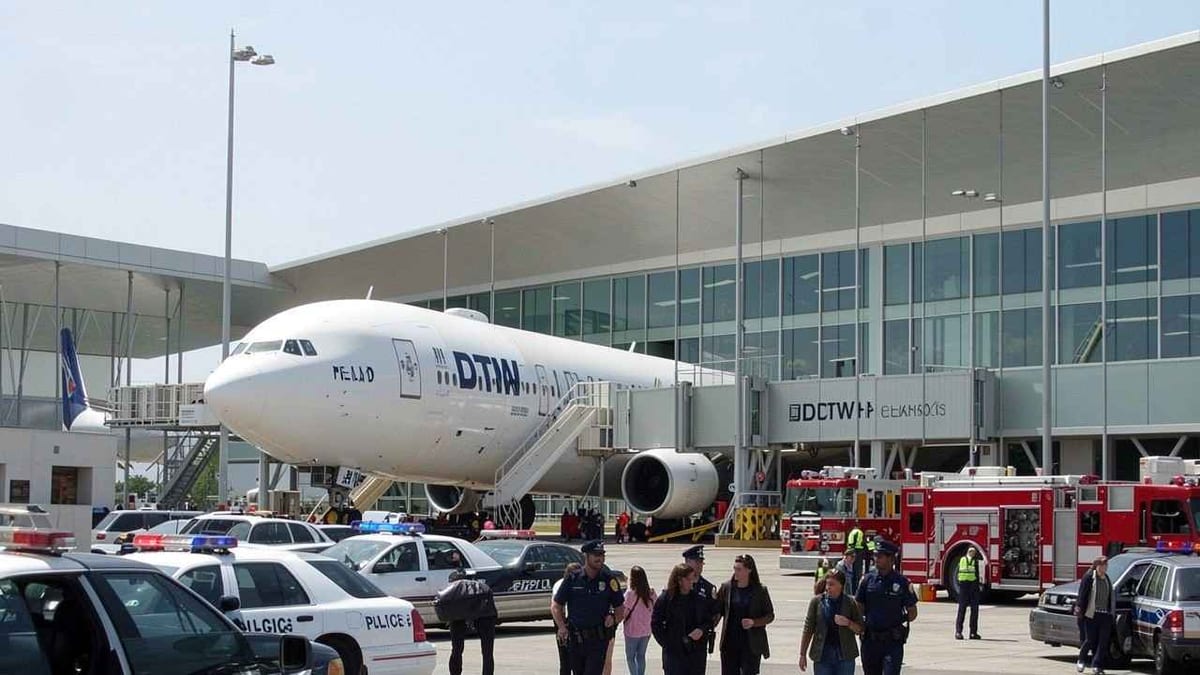
Publicly available tracking data and flight-status tools indicate that United Airlines flight UAL1494 departed from Newark Liberty International Airport as a routine Boeing 737 MAX 8 service before diverting away from its planned routing and touching down in Tulsa instead. The aircraft’s change of course unfolded against a backdrop of heavy traffic and intermittent disruption affecting multiple US hubs.
Early indications suggest that the diversion was driven by operational considerations rather than a single dramatic incident. These can include a combination of factors such as air traffic control flow restrictions, weather-related congestion, crew duty-time limits, or technical inspections that are more easily accommodated at an alternate airport with available capacity and maintenance support.
The flight’s outcome, with the aircraft landing safely in Tulsa, follows a familiar pattern for US carriers managing tight schedules in a constrained system. While diversions are relatively rare on any given route, they are a known contingency in airline planning and can be triggered when delay scenarios begin to compound beyond what can be recovered at the original destination.
For passengers, however, the sudden shift from a normal departure out of Newark to an unplanned arrival in Oklahoma translated into missed connections, overnight arrangements, and uncertainty about onward travel, all of which contributed to a sense of chaos around UAL1494’s journey.
Newark Bottlenecks Ripple Across the Network
Newark Liberty has been a recurring flashpoint for delays and schedule disruptions in recent seasons, a trend reflected in real-time flight feeds that frequently show holding patterns, ground delays, and gate changes. Capacity constraints in the New York airspace, combined with seasonal thunderstorms and construction-related bottlenecks, have repeatedly challenged both airlines and passengers.
Industry data and recent operational coverage point to the Northeast, and particularly the New York and New Jersey area, as one of the most fragile parts of the US aviation network. When inbound and outbound flows at Newark begin to back up, aircraft rotations, crew placements, and connecting itineraries across the country can be thrown off balance in a matter of hours.
In this environment, a flight like UAL1494 can quickly find itself caught in a domino effect. Holding for a slot, waiting for a gate, or facing forecast storms at the intended destination may tip the balance toward diversion, especially if the crew is approaching duty limits or if the airline judges that downstream scheduling will be less disrupted by repositioning the aircraft and passengers via an alternate field.
The Tulsa diversion illustrates how a single high-pressure hub can export operational stress far beyond its immediate catchment area, effectively shifting the disruption hundreds of miles away as carriers seek workable solutions in real time.
Spotlight on the Boeing 737 MAX 8 in US Service
The aircraft involved, a Boeing 737 MAX 8, is part of a fleet type that has been under particularly close public scrutiny since its global grounding and subsequent return to service. Regulatory agencies, airlines, and manufacturers have since introduced layered safety, training, and monitoring measures, and the MAX 8 has re-entered mainstream US domestic and transatlantic schedules.
United and other major US carriers have increasingly deployed the 737 MAX 8 on dense domestic routes and selected longer flights, attracted by its fuel efficiency and range. Financial filings and fleet updates show the type forming a significant part of medium-haul planning, with carriers aligning new aircraft deliveries to growth in key markets.
In the case of UAL1494, publicly accessible information available at the time of writing does not indicate a specific technical fault with the airframe that would distinguish this diversion from other disruption-driven reroutes. The choice to divert a MAX 8 rather than another narrowbody highlights more the aircraft’s growing prevalence in US operations than any particular incident profile.
Still, news of any irregularity involving the MAX family tends to attract heightened attention from travelers, especially those already wary of tight seating configurations or long flights on single-aisle jets. Diversions such as this one are likely to reignite debates around aircraft type selection, passenger comfort, and perceptions of safety, even when the underlying cause is operational rather than mechanical.
Passengers Face Cascading Delays and Rebooking Challenges
For travelers booked on UAL1494, the diversion to Tulsa transformed what should have been a straightforward journey into a multi-step logistical problem. Passengers suddenly had to navigate reissued boarding passes, potential overnight stays, and limited options out of a non-hub airport, particularly if the disruption occurred late in the day when onward flights were already full or finished.
Recent experiences shared across traveler forums and social channels show that such disruptions can leave customers juggling rebookings via apps and kiosks, long lines at service counters, and uncertainty over baggage handling. Many also contend with knock-on effects such as missed meetings, lost hotel nights, and additional ground-transport costs.
United, like its peers, typically leverages a combination of automated re-accommodation tools and station-level support to recover from diversions. The effectiveness of these measures can vary depending on aircraft availability, crew positioning, and seat inventory across the network. In a period of broad operational strain, finding same-day alternatives for an entire planeload of disrupted passengers is increasingly difficult.
The UAL1494 episode underscores how fragile the passenger experience can become when a single irregular operation event intersects with a crowded national schedule. Even when safety is never in question, the customer-facing impact can be significant and long lasting.
What the Incident Reveals About US Airport Resilience
The diversion from Newark to Tulsa is another reminder that the US air transport system operates close to its limits during peak periods. Slots, runways, and air traffic corridors are heavily utilized, and localized disruptions can quickly expose the limited slack in the system.
Analysts have frequently pointed to converging pressures: robust demand for air travel, uneven staffing levels in key operational roles, aging infrastructure at some major airports, and the increasing complexity of mixed fleets. Each factor on its own is manageable, but together they heighten the chances that a single thunderstorm line, equipment outage, or staffing shortfall can reverberate widely.
Against this backdrop, UAL1494’s rerouting to Tulsa looks less like an isolated anomaly and more like a symptom of systemic stress across the network. The decision to divert may have been the most pragmatic option available to keep the aircraft and crew in position, even if it generated short term upheaval for passengers.
For travelers planning summer and holiday itineraries, the incident serves as a timely prompt to build flexibility into their plans, including longer connection times and contingency options. For airlines and airport operators, it is another data point in the ongoing conversation about resilience, redundancy, and the investments needed to reduce the likelihood that a single flight’s troubles will echo across the nation’s skies.