


More news on this day
United Airlines is planning its most ambitious international schedule to date in 2027, with publicly available information indicating a slate of new nonstop links between major U.S. hubs and emerging destinations across Europe and Asia.
Get the latest news straight to your inbox!
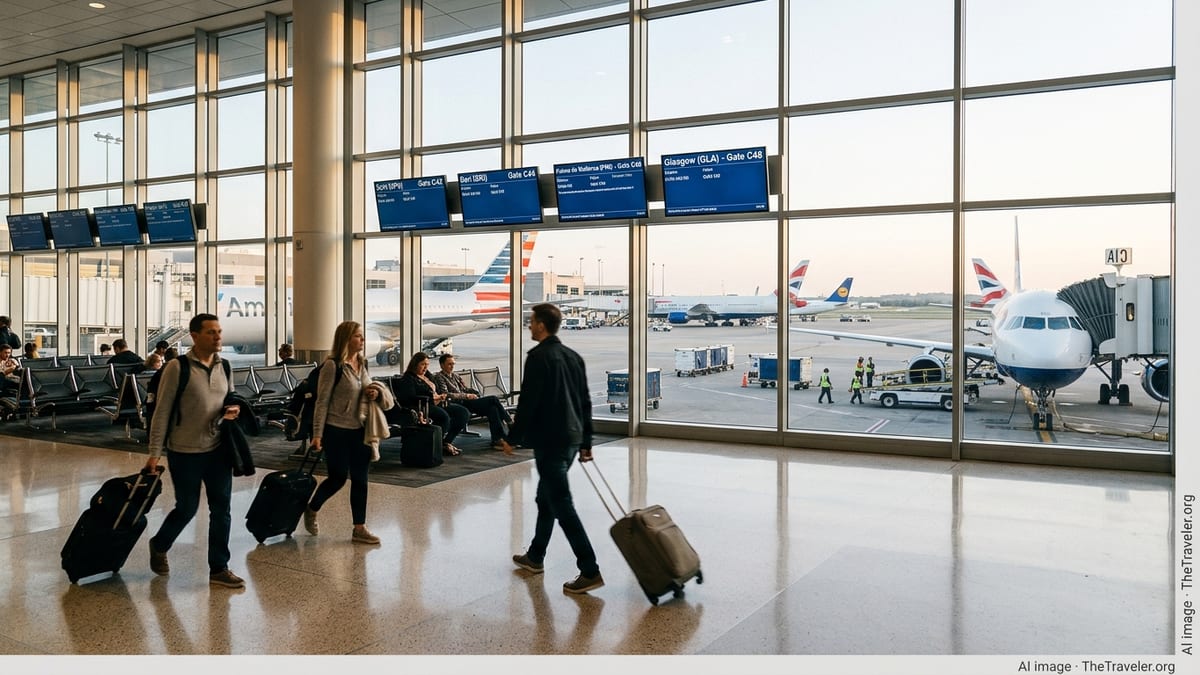
Largest International Growth Spurt in United’s History
Company statements and aviation industry reports indicate that United will add service to 10 new international cities in 2027, focused on Europe and Asia, in what is being described as the largest international network expansion in the airline’s century-long history. The new schedule is set to begin rolling out from March 2027, concentrating capacity into the peak northern summer season.
Coverage of the announcement shows that the expansion combines entirely new destinations for the carrier with fresh nonstop links between existing United hubs and high-potential tourism and business markets. Travel media note that the move builds on a multiyear strategy in which United has steadily targeted “white spots” on the map, adding nearly 60 new international destinations over the last decade and positioning itself as a leading global operator by available seat miles.
Reports also underline that the 2027 push is not an isolated bet but part of the broader “United Next” growth plan, under which the airline is taking delivery of hundreds of new aircraft and increasing the average size and range of its fleet. Analysts point out that this long-term fleet renewal has given United the flexibility to unlock thinner but high-yielding routes that previously could not support larger widebody aircraft on a daily basis.
Aviation observers suggest that the scale of the 2027 network build-out may reset competitive dynamics on long-haul flying from the United States, particularly on the North Atlantic, where United already operates one of the deepest schedules among U.S. carriers, and across the Pacific, where it has been rebuilding connectivity to Japan and broader Asia.
New Links From U.S. Hubs to Secondary European Cities
According to published route filings and aviation schedule trackers for the northern summer 2027 season, a significant share of the new flying will connect United’s East Coast and Midwest hubs to secondary and so-called “second-tier” European cities. Reports highlight additions from Newark and Washington Dulles in particular, both of which have emerged as core gateways for the airline’s transatlantic strategy.
Travel industry coverage points to destinations such as Ibiza and Valencia in Spain, as well as new service to French and Italian cities beyond the traditional Paris and Rome pair, as emblematic of this approach. These markets are considered attractive for both leisure and niche business demand, and are typically underserved by nonstop flights from the United States, giving United an opportunity to differentiate its schedule with unique points on the map.
Analysis of the move suggests that this European push leverages the long range and efficiency of United’s incoming Airbus A321XLR narrowbody aircraft. Reports indicate that these jets will operate from East Coast hubs to medium-distance European cities where demand is strong but not sufficient to justify a larger widebody. The aircraft’s cabin configuration, which includes lie-flat premium seating, is being positioned as a way to offer a widebody-style product on thinner routes.
Industry observers note that this strategy also allows United to diversify beyond the most crowded transatlantic trunk routes, where competition from other North American and European carriers is intense. By opening less conventional city pairs, the airline can attract travelers from across its domestic network, funneled through hubs like Newark, Washington Dulles, Chicago and Denver, and distribute them into a broader range of European destinations.
Pacific Push: Fresh Nonstops to Japan and Beyond
On the other side of the globe, United’s 2027 schedule aims to deepen its long-standing presence in the Pacific. Information compiled from aviation forums and schedule databases points to new routes linking West Coast hubs to Japan and further-flung Asian destinations. These include planned nonstop service from Los Angeles to Osaka Kansai and from San Francisco to Okinawa, joining an already extensive network in Tokyo and other major Asian cities.
Analysts describe these additions as a logical extension of United’s historical strength in Japan and its joint venture partnership with All Nippon Airways. By layering new leisure-focused destinations, the carrier can supplement more corporate-oriented routes while capitalizing on the resurgence of demand for travel between North America and East Asia following the pandemic era.
Industry coverage also emphasizes that, in addition to the completely new Asian cities, the 2027 plan includes incremental capacity on existing transpacific routes. This may involve added frequencies or seasonal extensions on high-demand links from hubs like San Francisco, which United has positioned as its primary gateway to Asia, and Los Angeles, where the airline has been gradually rebuilding long-haul service.
Route-planning experts suggest that the Pacific expansion will help diversify revenue away from a heavy reliance on the Atlantic at a time when economic conditions and demand cycles can vary considerably between regions. For U.S. travelers, the outcome is more choice of nonstop options to resort destinations and secondary Asian cities that previously required time-consuming connections.
Fleet Investments Enable Longer, Thinner Routes
Underlying the 2027 expansion is an aggressive fleet strategy that has seen United place major orders for both narrowbody and widebody aircraft. Public investor documents and fleet updates describe a plan to take delivery of more than 600 new jets by early next decade, with a particular focus on long-range narrowbodies such as the Airbus A321XLR and additional Boeing 787 Dreamliners.
Operational analyses show that these aircraft offer substantial gains in fuel efficiency and per-seat operating cost compared with older models, allowing the airline to profitably serve city pairs that would be challenging for larger or less efficient fleets. The extended range of the A321XLR, in particular, opens up nonstop links from the U.S. East Coast and Mid-Atlantic to smaller markets across Western and Southern Europe.
Industry reports further indicate that United is using the fleet renewal to expand its premium seating and modernize cabins, reinforcing its positioning in the lucrative long-haul business and high-end leisure segments. By increasing the share of premium seats on transatlantic and transpacific flights, the airline aims to capture more revenue from travelers willing to pay for lie-flat or enhanced economy products on overnight sectors.
Commentary from aviation strategists suggests that this combination of new aircraft technology and cabin reconfiguration is central to the 2027 network design. Rather than simply adding more capacity on existing routes, United is using its fleet tools to redraw its long-haul map, tapping into smaller markets while maintaining frequency and connectivity at its largest hubs.
What the Expansion Means for U.S. Travelers and Competitors
From a traveler’s perspective, the 2027 network will provide new one-stop and nonstop options between many U.S. cities and less familiar European and Asian destinations. Because United’s global schedule is built around its hubs in Chicago, Denver, Houston, Los Angeles, Newark, San Francisco and Washington D.C., passengers in medium and smaller U.S. markets will gain new through-connections to places that previously required multiple carriers or complex itineraries.
Travel media point out that the new routes are likely to appeal strongly to leisure travelers seeking beach destinations, cultural hotspots and off-the-beaten-path cities, as well as to diaspora communities looking for more direct links to home countries. Some of the European and Japanese additions, such as Ibiza, Valencia or Okinawa, are also popular with younger and adventure-focused travelers, suggesting potential for strong seasonal demand.
For competitors, the expansion raises the stakes on both sides of the Atlantic and Pacific. Analysts note that United has already been a leading U.S. carrier across the Atlantic and a major player in the South Pacific and broader Asia, and that adding unique city pairs will increase pressure on rivals to either match capacity or differentiate through product and pricing. The move could also spur additional partnership activity among global alliances as airlines seek to maintain relevance in overlapping markets.
While the full schedule will evolve as 2027 approaches, industry observers broadly view United’s announcement as a signal of confidence in the long-term outlook for international travel. With aircraft orders in place and key hubs positioned as global gateways, the airline appears poised to use the coming years to cement its role as one of the most far-reaching international networks available to U.S. travelers.
United Airlines news release on 2027 international expansion
Travel + Leisure coverage of United’s 2027 routes
Skift analysis of new United destinations from Okinawa to Ibiza
CBS News report on United’s 2027 international routes
Reuters report on A321XLR deliveries for United’s Europe expansion