


More news on this day
The United States has issued a new security alert for Mexicali, Mexico, citing information about a potential threat on August 25 and prompting the suspension of official U.S. government travel and activities in the border city.
Get the latest news straight to your inbox!
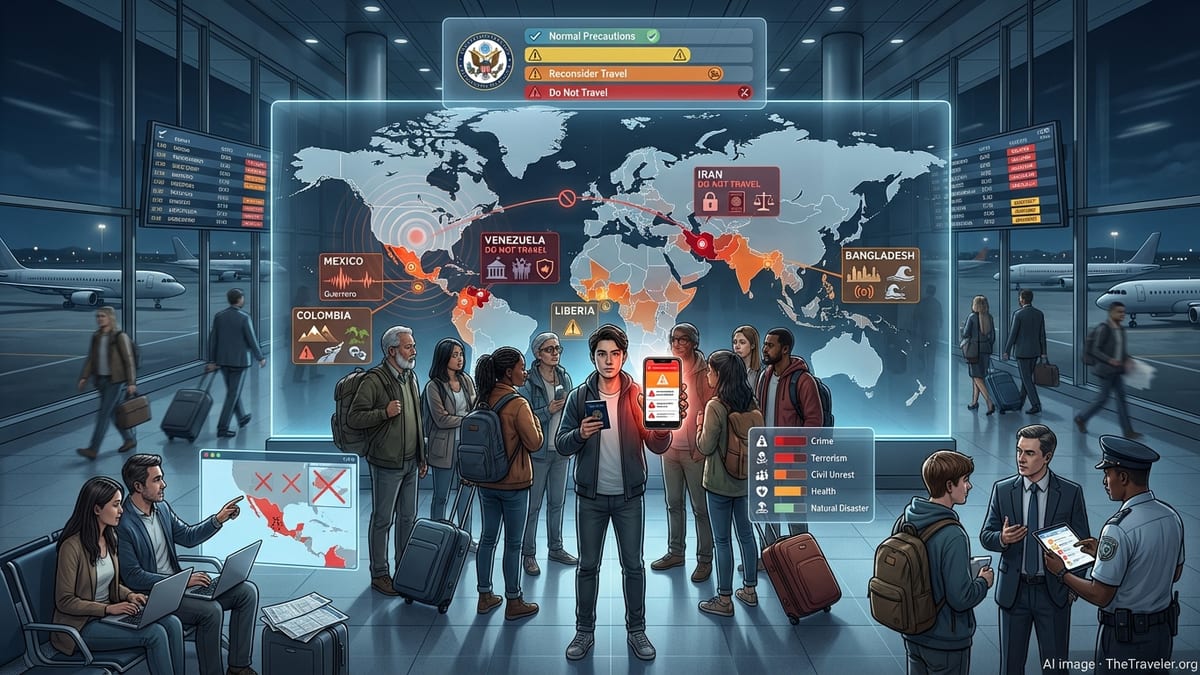
Alert Targets Possible August 25 Threat in Mexicali
According to publicly available information from the U.S. diplomatic mission in Mexico, the security notice titled “Security Alert: August 25 Threat in Mexicali” focuses on potential risks in the capital of Baja California. The alert identifies Mexicali as the location of concern and points to information about possible threats around Tuesday, August 25, without specifying an exact time or target.
Published coverage of the alert indicates that U.S. government personnel were instructed to suspend official travel to Mexicali and halt routine activities in the city for the day. Reports also note that the guidance applies to staff assigned to nearby posts who might otherwise transit through the city. These steps are presented as precautionary and subject to review as new information emerges.
Local and national outlets in Mexico report that the alert was disseminated through official channels late on August 24, giving both residents and cross-border travelers limited time to adjust their plans. As of August 25, there were no confirmed incidents directly linked to the threat described in the alert, but the advisory remains in place while authorities assess the situation.
Reports Link Concern to Organized Crime and Government Sites
Subsequent reporting in Mexican and international media has linked the concern behind the alert to the possible actions of an organized crime group active in the region. Coverage suggests that the warning stems from information about a potential plan to target facilities linked to local or federal law enforcement in Mexicali, including municipal police and federal prosecutor installations. These reports emphasize that the details remain under evaluation and that no attack had materialized at the time of publication.
Analysis in regional outlets describes Mexicali as part of a wider corridor of strategic interest to criminal organizations that operate along the U.S.–Mexico border. In this context, potential threats to police or federal buildings are viewed as attempts to challenge security forces or disrupt ongoing operations. Publicly available information, however, stops short of naming a definitive group or confirming the exact nature of the threat.
For residents and visitors, this uncertainty has translated into a heightened sense of caution, especially in areas near government complexes and main administrative zones. Commentaries in Mexican media note that the alert has revived debate about the vulnerability of public institutions in border states and the implications for everyday activities such as commuting, accessing services, and conducting cross-border business.
Local Government Seeks to Reassure as Security Presence Grows
In response to the alert and the accompanying international attention, Mexican federal and state officials have increased visible security deployments in Mexicali. Public statements highlighted in news coverage stress that patrols and joint operations have been reinforced around strategic facilities and key corridors, including routes commonly used by commuters and cargo traffic.
At the same time, representatives of the Baja California government have sought to present a message of continuity, emphasizing through public remarks that daily life in Mexicali is proceeding with additional safeguards. Reports indicate that coordination cells that bring together federal, state, and municipal forces have been meeting to assess risk levels and adjust patrol patterns in real time.
Observers in the region point out that the balance between reassurance and caution is delicate. On one hand, authorities face pressure to demonstrate control and avoid disruption to commerce and tourism. On the other, the presence of a formal security alert from a major partner underscores that the threat environment is being taken seriously beyond Mexico’s borders.
What the Alert Means for Travelers and Border Crossings
For U.S. citizens and other international travelers, the alert carries specific recommendations. Open-source summaries of the notice indicate that individuals in Mexicali are urged to avoid government buildings, remain aware of their surroundings, and be prepared to seek shelter quickly should a security incident occur. Travelers are also encouraged to keep friends and family informed of their whereabouts and to monitor local media and official channels for updates.
The advisory focuses on Mexicali itself and does not announce blanket closures at the nearby international ports of entry. Reporting from the region notes that cross-border traffic has continued, although some travelers have opted to reschedule nonessential visits or adjust their routes to stay away from government complexes and law enforcement installations.
Travel analysts following the situation point out that the alert fits into a broader pattern of targeted, event-driven notices issued for specific cities or dates in Mexico. These alerts typically do not change the overall U.S. State Department travel advisory level for the country or a state but can influence short-term travel decisions, tour operations, and insurance considerations for visitors planning trips to Baja California.
Part of a Wider Security Picture in Northern Mexico
The new Mexicali alert arrives in a year already marked by intermittent security advisories across several Mexican states, particularly following major law enforcement operations against high-profile criminal figures. Earlier in 2026, a series of widespread alerts urged travelers in parts of Jalisco, Baja California, Quintana Roo, and other states to shelter in place while authorities responded to road blockades and isolated attacks, according to previous public notices and media summaries.
In that context, the Mexicali notice is seen by regional experts as both a localized warning and part of a broader pattern of risk management along key trade and tourism routes. While the frequency of alerts can create uncertainty for travelers, analysts note that they also provide more granular information about where risks are concentrated and for how long heightened precautions may be advisable.
For now, publicly available information points to a short-term, date-specific concern in Mexicali that has prompted a surge in security measures and intense scrutiny from both sides of the border. How quickly the alert is lifted, and whether any additional measures follow, is expected to shape perceptions of safety in the capital of Baja California and may influence travel patterns across this section of the U.S.–Mexico frontier in the days ahead.
U.S. Embassy & Consulates in Mexico – Security Alert: August 25 Threat in Mexicali
Diario Tijuana – Estados Unidos emite alerta de seguridad para Mexicali
La Opinión – EE.UU. emite una alerta de amenaza en Mexicali
El País – Estados Unidos emite una alerta de seguridad en Mexicali