


More news on this day
Travelers heading to Bali and San Francisco have been caught in a fresh wave of disruption after a cluster of short notice cancellations by United Airlines and TNU Airlines at Singapore Changi Airport forced last minute rebookings, overnight delays and missed connections across some of Asia’s busiest leisure and business routes.
Get the latest news straight to your inbox!
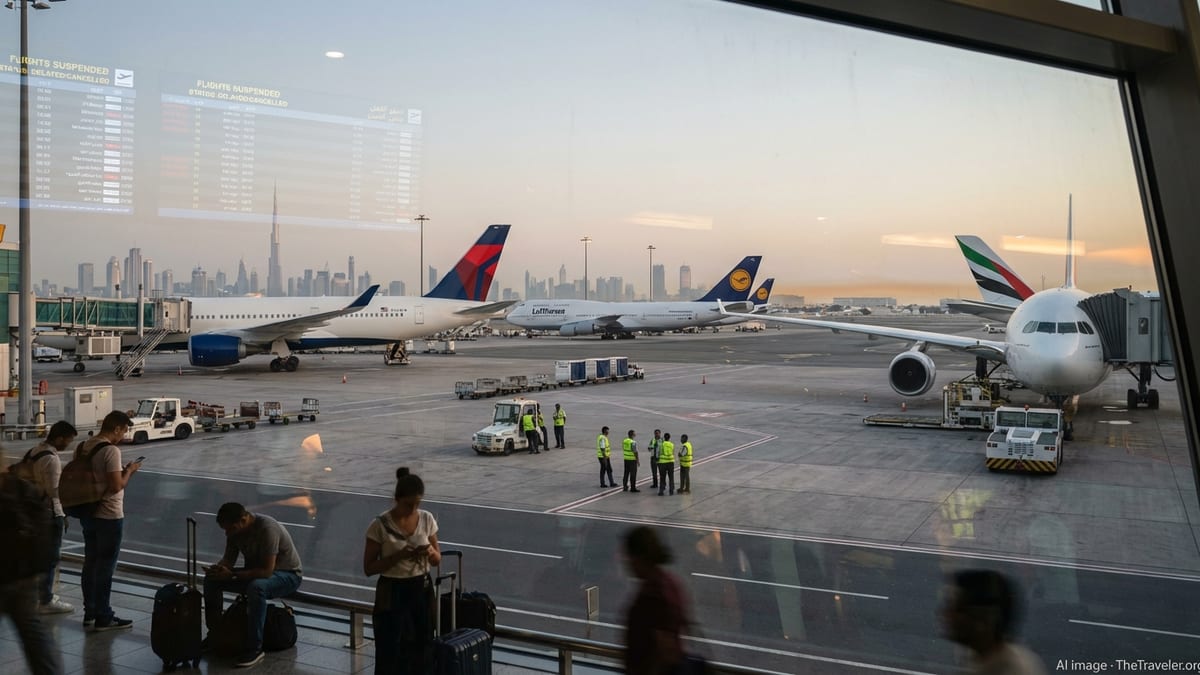
Targeted Cancellations Hit Key Singapore Links
Publicly available flight data and recent tracking histories indicate that several services linking Singapore with San Francisco and Bali were pulled from schedules or returned to the gate at short notice over the past week, affecting departures primarily in the late evening long haul and regional banks. The pattern has centered on United’s Singapore to San Francisco services and TNU-operated flights connecting Singapore with Denpasar, Bali, in what appears to be a localized but high impact disruption rather than a wholesale suspension of routes.
On the United side, services branded under flight numbers such as UA2 and UA28 between Singapore and San Francisco have shown a mix of diversions, equipment changes and occasional cancellations in recent weeks, including at least one Changi-based Boeing 787 service that was forced to return and subsequently taken out of service for maintenance. Flight timetable information still shows daily non-stop Singapore to San Francisco departures available through the northern summer season, suggesting that the disruption remains confined to specific operating days and individual aircraft rather than a structural capacity cut.
For TNU Airlines, a smaller player in the Singapore market serving Bali and select Indonesian destinations, published reports and schedule screens point to several short haul sectors scrubbed on limited dates, with replacement options constrained by already strong demand on the Singapore–Denpasar corridor. The cancellations have proven especially disruptive for travelers using Bali as a gateway to intra-Indonesian islands or as the leisure leg tacked onto longer Asia–US itineraries.
Operational databases and industry schedule summaries indicate that overall traffic through Changi remains robust, with most carriers operating close to planned capacity for late May. That backdrop highlights how even a handful of last minute cancellations on high profile routes can generate outsized visibility and frustration for travelers who have built complex trip plans around a single daily long haul departure or tightly timed island connection.
Bali Holidaymakers Face Tight Capacity and Repricing
The disruption has been particularly acute for passengers bound for Bali, where school holidays and early summer tourism have pushed load factors high across airlines and cabin classes. Travelers rebooked from canceled TNU Airlines services out of Singapore have reported limited remaining seat availability on same day alternatives, leaving many facing overnight stays in Changi or rerouting through secondary hubs in Indonesia and Malaysia.
Fare displays captured following the cancellations show higher pricing on remaining Bali-bound seats for departure dates coinciding with the disruption window, reflecting a combination of stronger seasonal demand and the instantaneous loss of inventory from the affected flights. Even when alternative economy cabins are available, some passengers have had to accept itineraries with additional stops or longer layovers, elongating what is normally a relatively short hop between Singapore and Denpasar.
Package tour operators and online travel agencies reliant on set departure blocks from Singapore to Bali are also contending with ripple effects, as hotel check-in dates and island transfer arrangements can be sensitive to even modest schedule shifts. In some cases, travelers are being moved by ground handlers to partner airlines or later departures in order to preserve as much of their pre-booked Bali itineraries as possible, though this can mean giving up preferred flight times or specific seating arrangements.
Despite the challenges, broader airline schedule data into June continues to list multiple carriers on the Singapore–Bali route, and there is no indication that Bali’s overall air connectivity is under structural threat. The current round of cancellations nevertheless illustrates how quickly capacity can tighten on a leisure-heavy corridor when even a single carrier trims a handful of rotations at short notice.
San Francisco Links Underscore Hub Vulnerability
The impact on San Francisco-bound traffic from Singapore underscores the central role SFO plays as a transpacific hub for United. Airport and timetable references show San Francisco positioned as a key connecting point for onward services across the continental United States and to Latin America, meaning that any disruption on the non-stop Singapore–SFO sector can cascade well beyond the two endpoints.
Recent operational history for flights such as UA2 and UA28 on the Singapore–San Francisco pairing reveals a mix of routine operations alongside several irregular events, including a high profile case in April where a United Boeing 787 returned to Changi and had its flight to San Francisco canceled while the aircraft underwent maintenance. More recently, tracking data and anecdotal reports from passengers point to additional days where Singapore-originating United services suffered extended delays or did not operate as scheduled, increasing the risk of missed onward connections at SFO.
San Francisco International Airport has itself experienced periods of strain in the past year from airline-specific technology issues and broader US operational challenges, with publicly available coverage highlighting episodes in which United’s departures from its home hub were temporarily grounded or heavily delayed. When irregular operations converge at both ends of a long haul route, the result can be a complex web of misconnections that are difficult to unwind rapidly, especially during peak travel periods.
In this latest episode, passengers whose Singapore–San Francisco legs were canceled or significantly delayed have faced rebookings via alternative transpacific gateways such as Tokyo, Seoul and Los Angeles, or have been retimed onto next day non-stop services subject to seat availability. For business travelers on tight schedules and long haul leisure passengers returning home at the end of holidays, the additional time in transit and overnight stays can carry both financial and logistical consequences.
Changi’s Reputation Meets Operational Reality
Singapore Changi routinely ranks among the world’s most efficient and passenger-friendly airports, with extensive retail, dining and hotel options designed to soften the blow of irregular operations. That backdrop has once again been on display as travelers affected by the latest United and TNU cancellations share accounts of overnight stays in airport hotels, extended lounge visits and use of on-site amenities while awaiting revised itineraries.
Nonetheless, images and descriptions circulated in public forums and travel communities reference long queues at airline counters during the affected periods, as rebooking desks for multiple carriers simultaneously handled disrupted passengers trying to secure scarce seats on popular routes. With many long haul and regional services from Singapore operating only once daily, an unexpected cancellation can mean that several hundred passengers must be accommodated on a finite pool of later flights.
Operational data from Changi’s departure boards and flight trackers in late May show the vast majority of flights operating as scheduled, suggesting that the airport itself remains resilient and that the core issues lie with aircraft availability, maintenance requirements or crew scheduling on the airline side. The concentration of disruptions within a narrow set of carriers and routes further points to localized challenges rather than broader systemic issues at the airport level.
For Changi, the episode provides another reminder that even the most highly regarded hubs are exposed to the knock-on effects of airline-specific events, from unplanned maintenance to fleet and crew realignments tied to seasonal timetable changes. For travelers, it underscores the value of building flexibility into itineraries that rely on single daily long haul flights and tight regional connections, particularly when routing through busy transpacific and resort corridors.
What Travelers Can Expect in the Coming Weeks
Forward-looking schedules for June and July continue to display United’s Singapore–San Francisco non-stop services and TNU Airlines’ Singapore–Bali operations, indicating that the latest round of cancellations has not translated into broader route withdrawals. Industry analysts note that airlines are still fine-tuning their northern summer 2026 timetables, balancing strong demand with the realities of fleet deliveries, heavy maintenance checks and crew resource planning.
Passengers booked on affected city pairs are likely to see a heightened emphasis on day-of-travel notifications, with airline apps and airport displays playing a critical role in flagging any last minute changes. Publicly available information from recent disruption events across major carriers shows that timely push alerts and proactive rebooking options can reduce the strain on airport service counters and help travelers adjust plans before arriving at the terminal.
For those yet to depart, travel experts commonly recommend leaving additional buffer time at connection points, especially when pairing a long haul Singapore–San Francisco sector with domestic US flights or linking a Singapore–Bali leg to separately ticketed ferries and island transfers. Purchasing itineraries on a single ticket, where possible, can also improve the chances of coordinated rebooking if one segment is canceled.
While the recent United and TNU Airlines cancellations at Singapore Changi have created real headaches for travelers bound for Bali and San Francisco, the underlying network structures for both routes remain intact. If operational conditions stabilize and no further clusters of short notice cancellations emerge, the disruption may ultimately be remembered as a sharp but contained reminder of how fragile tightly choreographed global schedules can be when even a few flights fall out of line.