


For frequent flyers on United Airlines or American Airlines, the choice between United Club and Admirals Club can shape how pleasant your time at the airport feels. Both lounge networks promise quieter spaces, free drinks, snacks, Wi Fi, and a break from the gate area chaos. Yet the details of how you get in, what you actually receive, and where each airline shines can be surprisingly different. This guide walks through real world examples, current access rules, and on the ground experiences to help you decide which lounge network is the better fit for your travel style.
Get the latest updates straight to your inbox!
Network Size and Key Locations
Both United Club and Admirals Club have strong footprints across major U.S. airports, but they are concentrated in different hub cities. United currently operates more than 45 United Club locations, anchored by hubs such as Chicago O Hare, Denver, Houston Intercontinental, Los Angeles, Newark, San Francisco, and Washington Dulles, plus Guam and several international airports. In Newark alone, United runs multiple United Clubs plus a Polaris Lounge in Terminal C, making it one of the densest networks for a single airline at one airport.
American’s Admirals Club network is a bit smaller but still substantial, with almost 50 Admirals Clubs and access to more than 50 partner lounges worldwide. You will find multiple clubs in American strongholds such as Dallas Fort Worth, Miami, Charlotte, Chicago O Hare, New York LaGuardia, and Phoenix. At Dallas Fort Worth, for example, Admirals Clubs are scattered through several terminals so you are rarely more than one or two gates away from a lounge when flying American.
Where United pulls ahead is at a few flagship hubs where it combines several modern United Clubs with a dedicated Polaris Lounge, such as at San Francisco or Newark. On the American side, the closest equivalent is the Flagship Lounge network, located in select airports such as Miami and Dallas Fort Worth, which sits above Admirals Club in quality but is not included with a standard Admirals Club membership. In practice, that means a United Club member in Newark can often pair an ordinary domestic lounge visit with a much more premium Polaris experience before or after a long haul business class flight, while an Admirals Club member in Miami still needs separate eligibility to access the American Flagship Lounge.
For most U.S. based travelers flying predominantly domestic routes, the better network will often come down to which airline controls your home airport. A Denver or Newark based flyer is likely to find United Club more convenient, while someone in Dallas Fort Worth, Miami, or Charlotte will be surrounded by Admirals Club locations.
How You Get In: Memberships, Day Passes, and Credit Cards
Both lounge systems offer three broad ways in: memberships, qualifying tickets or elite status, and day or single visit passes. The details, however, differ enough to influence which program feels more accessible.
With United, you can buy an annual United Club membership or receive it as a benefit of the United Club Infinite Card. Pricing for a standard membership typically runs in the hundreds of dollars per year, with discounts for United elite members and renewing customers. Membership covers access for the cardholder, plus generally two accompanying guests or immediate family, when flying on United or a Star Alliance partner. Business and first class passengers on certain international or premium transcontinental United flights can also access United Clubs on the day of travel without a separate membership, and Star Alliance Gold members gain access when traveling internationally in any cabin.
American structures Admirals Club access similarly. Travelers can purchase an annual Admirals Club membership, with pricing tiers depending on AAdvantage status level and whether you choose an individual or household plan. Many U.S. based frequent flyers instead obtain access through the Citi AAdvantage Executive World Elite Mastercard, whose annual fee is positioned roughly in line with a discounted membership and includes full Admirals Club membership with guest privileges as long as you hold the card. Without a membership, certain international or transcontinental premium cabin tickets can provide lounge access, though that may sometimes route you to a higher tier Flagship Lounge instead of an Admirals Club if one is available.
Both airlines also sell single visit passes, though details change periodically and capacity controls have become stricter. American advertises one day Admirals Club passes for a fee that has recently hovered in the 59 to 79 dollar range, usable at most Admirals Club locations as long as the lounge is not at capacity and you hold a same day boarding pass on American, a oneworld partner, or qualifying JetBlue flights. United has historically sold United Club one time passes via its co branded credit cards and app, with rules that require same day United or Star Alliance travel and allow one or more guests depending on the pass type. For a traveler facing a three hour connection at Dallas Fort Worth or Chicago O Hare, spending around 60 to 80 dollars for a quieter space, included drinks, and some food can be worthwhile, but these passes are no longer guaranteed admission during peak times.
Design, Comfort, and Crowd Levels
When it comes to physical spaces, both United and American are in the middle of multiyear renovation programs. That means quality varies widely from one lounge to the next. A newly refreshed United Club at Newark’s Terminal C can feel dramatically different from an older space at a smaller station, and the same holds true for Admirals Clubs in places like New York LaGuardia versus older lounges at secondary airports.
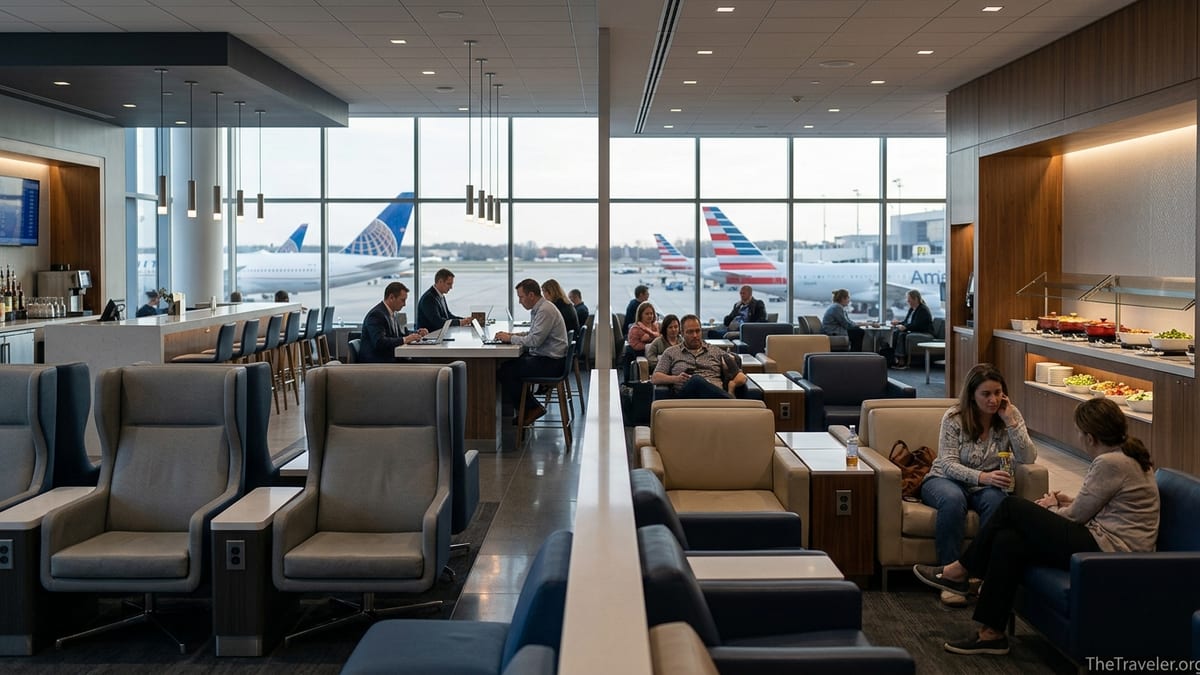
Newer United Clubs, such as the redesigned club near Gate C74 at Newark, generally feature lighter color palettes, a mix of solo work pods and communal tables, plentiful power outlets, and bar areas that open out toward windows with tarmac views. Seating often includes high back armchairs grouped in small clusters for couples or solo travelers. United has also introduced wellness rooms and improved quiet zones in several major hubs, which can be a significant benefit if you need to take a conference call or simply disconnect between long flights.
Modern Admirals Clubs, particularly at rebuilt terminals like New York LaGuardia or the larger spaces at Dallas Fort Worth, lean into a similar aesthetic: light wood, modern furniture, clusters of armchairs, long communal tables with integrated power, and improved natural lighting. Some Admirals Clubs, such as the updated spaces in Miami and Charlotte, offer dedicated quiet areas and slightly more residential style decor, with softer textures and warmer lighting than older clubs that still feature darker tones and traditional business lounge furnishings.
Crowding is where the practical experience can diverge. At large United hubs such as Denver or Newark, United Clubs during early morning bank departures can feel packed, with difficulty finding more than a single seat together. Conversely, a smaller Admirals Club at a less busy American focus city might feel half full at the same time of day. On the other hand, at a major connection point like Dallas Fort Worth before a bank of evening departures to Europe and South America, Admirals Clubs can be just as crowded as any domestic United Club. In real world terms, if you frequently travel at peak business times from a dominant hub like Newark or Dallas Fort Worth, you should expect crowding in either network and treat seating availability as a coin toss rather than a guaranteed perk.
Food, Drinks, and Showers: What You Actually Get Inside
Both United Club and Admirals Club provide a baseline of complimentary snacks, non alcoholic drinks, and basic house alcoholic beverages, with paid upgrades available. However, travelers often perceive differences in variety and quality that can influence which membership feels more rewarding.
In a typical United Club at a hub such as Chicago O Hare or San Francisco, you can generally expect a buffet with items like soup, salad greens, a couple of hot dishes such as pasta or rice based entrees, several cold salads, cheese, crudites, and cookies or small desserts. Breakfast service often includes scrambled eggs or frittata bites, oatmeal, yogurt, fresh fruit, and pastries. United offers self serve soft drinks and coffee machines, while the staffed bar provides complimentary domestic beer, basic wine, and well spirits, with premium cocktails, higher end wines, and craft beers available for purchase.
Admirals Club buffets tend to be similar but not identical. At a large Admirals Club in Miami or Dallas Fort Worth, you might find a rotating selection of hot items such as chicken tinga, mac and cheese, or flatbreads, alongside salads, hummus, vegetables, and dessert bites. Breakfast spreads frequently include hot egg dishes, oatmeal, fresh fruit, and baked goods. House beer, wine, and well spirits are included at the bar, with a menu of premium wines, name brand liquors, and cocktails for an extra charge. In some Admirals Clubs, American has rolled out made to order avocado toast or guacamole stations during select time windows, which can make the food offering feel slightly more elevated than the average U.S. domestic lounge.
Neither United Club nor Admirals Club routinely offers showers in every location. Showers tend to be concentrated at major international gateways, and even there, availability can be limited and subject to waiting lists during peak arrival times. For truly premium dining and spa like experiences, United’s Polaris Lounges and American’s Flagship Lounges outclass their standard clubs. In practice, this means that a business class passenger arriving on a long haul United Polaris flight into Newark will have access to a dedicated Polaris Lounge with a la carte dining and well designed shower suites, while an American business class passenger arriving into Miami could use the Flagship Lounge for similarly upgraded food and shower facilities. Regular United Club or Admirals Club members without an eligible ticket, however, typically remain in the standard lounges with more modest buffets and limited or no shower access.
Working, Relaxing, and Families
Both lounge networks have evolved from their old image of quiet business only spaces into more mixed environments that serve families, digital nomads, and leisure travelers. The difference often comes down to small details such as how many true workstations exist, how reliable the Wi Fi feels, and whether there are spaces where children can move around without disturbing working travelers.
New generation United Clubs at hubs like Denver and Newark are designed with a significant number of individual work pods or high backed single seats that face away from the main traffic flow, accompanied by power outlets at nearly every seat. Wi Fi speeds are generally adequate for video calls and large file downloads outside of absolute peak times. Several clubs also incorporate semi separated TV zones and bar areas, so that sports or news broadcasts do not dominate the entire lounge. For a solo traveler needing to prepare a presentation between flights, a modern United Club at a major hub can feel close to a co working space, especially during mid afternoon lulls.
Admirals Clubs in larger markets similarly emphasize productivity with long communal work tables, small business centers with printers, and improved power access. American has also experimented with small phone rooms or focus rooms in select clubs, though availability varies by location. The Wi Fi experience is comparable to United in most major airports, though users might notice slowdowns when a club is completely full late in the day before evening departure banks. Some Admirals Clubs, particularly in leisure heavy markets like Miami, provide play areas or family rooms that make it easier to keep children occupied while adults rotate turns grabbing food or taking brief breaks.
From a real world perspective, if you are primarily interested in a quiet place to work for an hour or two, the newest lounges in either network generally deliver. The deciding factor is more likely to be how renovated your particular club is rather than whether it belongs to United or American. A road warrior based in Denver might find United Club consistently better for work simply because United has invested heavily there, while someone whose weekly commute runs through Dallas Fort Worth could have the same experience with Admirals Clubs.
Value for Money: Which Membership Pays Off Faster?
The value of a United Club or Admirals Club membership depends heavily on how often and where you fly. Since both airlines price annual memberships in a similar high hundreds of dollars range, and co branded credit cards that grant access carry similar annual fees, the comparison often becomes one of perceived quality and practical frequency of use.
Consider a traveler based in Chicago who flies United twice a month, often with long layovers at O Hare. If that traveler visits a United Club 20 to 25 times per year, the effective cost per visit of an annual membership or United Club credit card benefit might land in the 20 to 30 dollar range. Given that a simple sit down meal plus a couple of drinks in the terminal easily approaches or exceeds that figure, the lounge membership can feel like a financial win, especially once you include access at other United hubs during irregular operations or missed connections.
Now compare that with a Miami based American flyer who takes one or two trips per month. With similar annual membership pricing, 20 or so Admirals Club visits per year would result in a similar approximate per visit cost. However, this traveler might also occasionally gain access to the separate American Flagship Lounge when flying on qualifying long haul or premium transcontinental itineraries, adding extra value that technically stems from the ticket, not the Admirals Club membership itself. If this traveler often originates very early in the morning or late at night, the ability to shower or enjoy a proper breakfast spread before a long work day can tip the scales in favor of paying for ongoing access.
Day passes are trickier. At around 60 to 80 dollars per visit in many cases, buying a single visit pass only makes solid value sense if you are facing multiple hours in the airport and plan to consume both food and drinks you would otherwise pay for in the terminal. For example, if you have a five hour weather delay at Dallas Fort Worth, a one day Admirals Club pass could easily save you the cost of two meals and several drinks while giving you a more comfortable workspace. On the other hand, if your usual layovers are 90 minutes or less, you may rarely get full value from a day pass, and lounge access via a premium credit card that you already hold for other reasons might be a smarter route.
The Verdict: United Club vs Admirals Club for Different Travelers
When you strip away branding, United Club and Admirals Club are more alike than different. Both provide escape from the gate area, basic food, drinks, Wi Fi, and a place to sit, and both tie premium experiences like Polaris or Flagship lounges to separate long haul or business class eligibility. The better choice for you depends less on which airline has the flashiest marketing and more on your usual routes, airports, and what you personally value most in a lounge.
If you are a United loyalist based in or often connecting through hubs like Newark, Chicago, or Denver, United Club is generally the more logical investment. You will have more opportunities to use the lounges, benefit from United’s focus on upgrading clubs in those markets, and occasionally pair a United Club visit with access to an excellent Polaris Lounge when your ticket qualifies. Road warriors who appreciate work friendly layouts and who fly international routes on Star Alliance partners will often find United Club membership and Star Alliance Gold benefits combine into a robust lounge ecosystem.
Conversely, if most of your flying is with American through Dallas Fort Worth, Miami, Charlotte, or Phoenix, Admirals Club becomes the better practical choice. The combination of an Admirals Club membership or Citi AAdvantage Executive card and occasional access to American’s higher tier Flagship Lounges on qualifying tickets can produce a consistently comfortable experience. Travelers with heavy schedules to Latin America or the Caribbean from Miami, for instance, may see more day to day benefit from Admirals Clubs simply because those lounges line the paths they walk most often.
For travelers who are airline agnostic and simply want lounge access, the decision might hinge on which credit card ecosystem you prefer and which airline offers better schedules from your home airport. In that situation, examining where you realistically expect to fly over the next year, counting how many of those trips touch a hub with multiple lounges, and estimating how often delays and long connections affect you will often clarify whether United Club or Admirals Club will deliver more real value.
FAQ
Q1. Is United Club or Admirals Club generally better for food and drinks?
Both offer comparable buffets with light meals and snacks plus house beer, wine, and spirits. Differences are more noticeable between individual lounges than between the two brands overall. Newer or larger clubs at major hubs for each airline tend to have the best selections.
Q2. Which lounge network has more locations: United Club or Admirals Club?
United Club currently operates slightly more than 45 lounges, while Admirals Club has close to 50 locations plus partner lounges. In practice, each airline dominates at its own hubs, so your home airport usually matters more than the total network count.
Q3. Do United Club and Admirals Club memberships include access to Polaris or Flagship Lounges?
No. United Club membership does not grant access to Polaris Lounges, and Admirals Club membership does not include access to American Flagship Lounges. Entry to those higher tier lounges depends on your specific ticket, route, and cabin class.
Q4. Can I buy a single visit pass to United Club or Admirals Club?
Yes. Both airlines sell single visit or one day passes, typically priced around the cost of a modest airport meal and a couple of drinks. Availability can be limited during peak times, and you must hold a same day boarding pass on the respective airline or a qualifying partner.
Q5. Which lounges are better if I need to work during a layover?
Newly renovated lounges in both networks offer strong Wi Fi, plentiful power outlets, and dedicated work areas. United has invested heavily in work friendly layouts at hubs like Denver and Newark, while American has rolled out similar designs at updated Admirals Clubs in places such as Dallas Fort Worth and New York LaGuardia.
Q6. Are showers available in United Clubs and Admirals Clubs?
Showers exist in some, but not all, lounges in both networks and are most common at major international gateways. If shower access is critical, you will usually find better facilities in United Polaris Lounges or American Flagship Lounges when your ticket qualifies.
Q7. Which lounge program offers better value if I only fly a few times per year?
If you travel infrequently, an annual membership for either program may be hard to justify. Occasional day passes, or lounge access that comes bundled with a credit card you use for other reasons, may be more cost effective than paying full price for year round access.
Q8. Does elite status with United or American include free lounge membership?
Standard mid tier elite status alone usually does not include full lounge membership with either airline. Higher elite tiers may receive discounted membership pricing or gain lounge access when traveling internationally, but full year round access typically still requires a paid membership or qualifying credit card.
Q9. If my home airport is a United hub, should I ever choose Admirals Club instead?
In most cases, a United based traveler will derive more day to day value from United Club. An exception would be if your work requires frequent American flights from another city where Admirals Clubs are strong, making an Admirals Club membership or credit card useful even if United dominates at home.
Q10. Which is better for families traveling with children: United Club or Admirals Club?
Both lounge networks welcome families and allow children to enter with a member or day pass holder. Some larger Admirals Clubs and United Clubs feature family or play areas, but the presence and quality of those spaces varies by location, so neither program has a consistent advantage.