


For United loyalists and Star Alliance regulars, United Club lounges promise a calmer airport experience than the gate area, with Wi Fi, snacks and a seat where you can actually hear yourself think. In 2026, though, access rules, membership tiers and prices have shifted, and the value equation looks different than it did just a few years ago. This review takes a clear eyed look at today’s United Club offering from a frequent flyer perspective, drawing on recent lounge examples at hubs like Newark, Denver and Washington Dulles.
Get the latest updates straight to your inbox!
Where You Will Find United Clubs Today
United currently operates roughly 45 United Club lounges worldwide, concentrated at its big hubs and key business markets. In the United States, that means multiple clubs in Chicago O’Hare, Denver, Houston Intercontinental, Newark, San Francisco, Los Angeles and Washington Dulles, plus smaller outposts in cities like Boston, Seattle and San Diego. Internationally, you will see United Clubs at major United stations such as London Heathrow and Tokyo. For a domestic road warrior based at a hub like Denver or Newark, the network is dense enough that you can realistically plan to use a lounge before most flights.
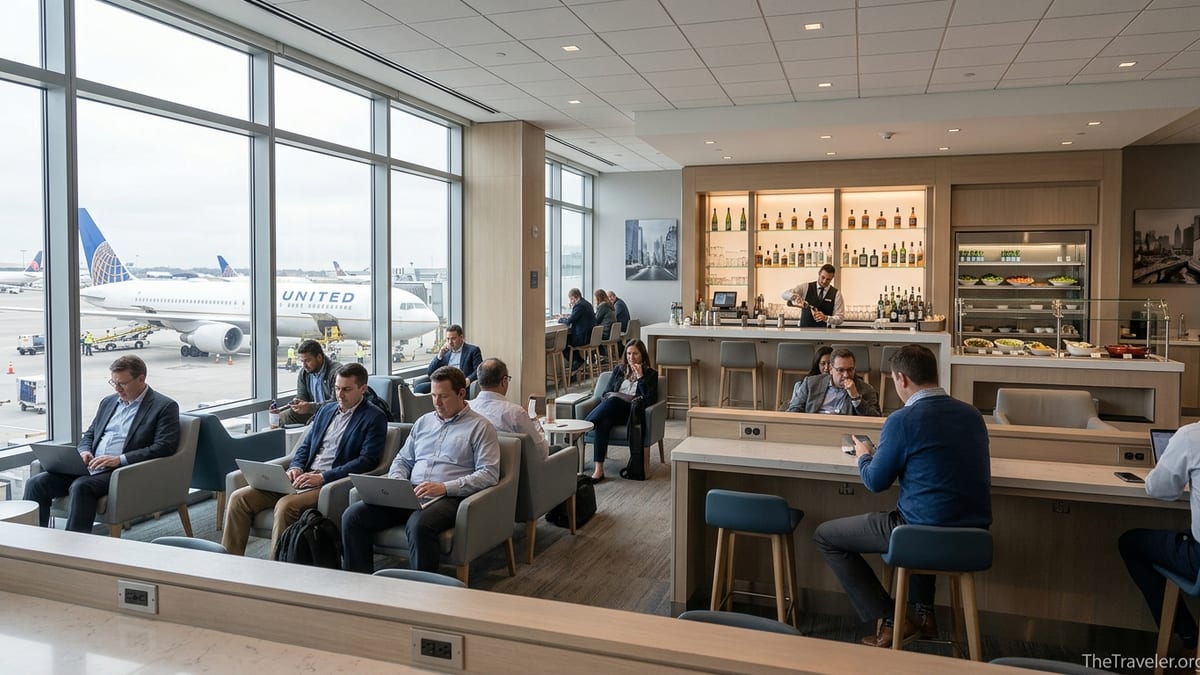
The network, however, is uneven in quality and capacity. At Newark, for example, the reimagined United Club near gate C74 in Terminal C has drawn praise for its airy design inspired by New York City, with floor to ceiling windows, a long bar, and multiple seating zones that feel more like a modern coworking space than a traditional club. Reviewers note that this lounge, opened as part of United’s broader Newark refresh, represents what the airline wants the next generation of United Clubs to look like.
Compare that to Washington Dulles, where United consolidated operations into two primary clubs near gates C7 and C17 after closing an older C4 location in 2025. Travelers report that these surviving clubs can feel stressed at peak bank times, with lines at the check in desk and difficulty finding a seat around the evening transatlantic departures. At Houston, frequent flyers on message boards often cite the older Terminal C club as one of the weakest in the system, with dated decor and crowding that undermines the promise of a quiet retreat.
This variation matters if you are deciding whether to pay for membership. A traveler based at Newark, Chicago or Denver, using refreshed or expanded lounges multiple times a month, is more likely to feel satisfied than someone whose home base is served primarily by older, smaller clubs that routinely run at capacity.
Access Options and What They Really Cost in 2026
In 2026, United has made United Club access more expensive and more segmented than it used to be. A standard annual individual United Club membership now costs about 750 dollars or roughly 94,000 miles for most MileagePlus members. Prices for the more inclusive All Access membership, which is aimed at travelers who want broader lounge reciprocity and more generous guesting rights, start around 1,400 dollars or 175,000 miles for regular members, with modest discounts for top tiers like Premier Platinum, Premier 1K and Global Services. These figures will fluctuate over time, but the broad picture is clear: full price membership is a significant investment.
Frequent flyers often find better value through the United Club Infinite credit card, issued by Chase, which has an annual fee in the mid 500 dollar range and includes a full United Club membership for the primary cardholder plus guest access for companions. Some long time United flyers report that they effectively treat the annual fee as their lounge subscription, especially if they are based at a hub and can use a club 20 or more times a year. Others point to the high fee and say that unless you fly United at least once or twice a month, it is cheaper to simply use restaurants in the terminal.
Day passes remain an option, typically priced around 59 dollars per person, but these too have tightened. At Washington Dulles, for example, United now limits day pass use to within three hours of your scheduled departure time, and pass holders cannot bring guests. That makes day passes best suited to infrequent flyers who have a single long layover or who are trying the lounge before committing to annual access. For business travelers who are on the road every week, paying day by day rarely makes financial sense.
There are also access routes based on class of service or status. On international itineraries, business class travelers on Star Alliance carriers often have United Club access provided automatically when the club is the designated partner lounge. Star Alliance Gold members can typically enter when flying on a same day Star Alliance international flight, though rules around domestic only itineraries are more restrictive than they once were. The bottom line is that almost every path into a United Club now requires either an eligible same day boarding pass on United or Star Alliance, or a qualifying membership product, so you should not plan on “dropping in” during an unrelated trip.
Inside the Lounges: Design, Seating and Atmosphere
Step inside a newer United Club at a hub like Newark C74 or Denver B East and you will immediately notice a more modern design language than the beige, windowless lounges the brand was once known for. These refreshed clubs favor large windows, lighter woods, muted blues and grays, and a mix of seating types: bar height work counters, two top cafe tables, loungers facing the tarmac and semi enclosed nooks with power outlets. Travelers at Newark often comment that the C74 lounge feels like a contemporary hotel lobby, with art that nods to New York landmarks and a long bar that anchors the space.
At these newer locations, power availability is generally good, with most seats near an outlet or USB port, and Wi Fi speeds are adequate for email and light video calls. Business travelers using Newark or Denver as a connection point describe taking 30 minute Zoom meetings from the far corners of the lounge, where it is easier to find a quiet spot. During mid morning and mid afternoon lulls, these spaces can feel genuinely relaxed, especially compared to crowded gate seating areas where every seat is taken and boarding announcements echo nonstop.
Older clubs tell a different story. At Washington Dulles, reviewers note interiors that feel a generation behind: darker carpets, lower ceilings and a layout that forces passengers to walk through food and bar areas to reach less crowded seating. Restrooms and showers, where available, can be limited for the number of guests, leading to waits during peak periods. At Houston and some of the older San Francisco clubs, frequent flyers complain about stained upholstery, tired furniture and awkward traffic flow that makes it hard to wheel a carry on without bumping someone’s laptop bag.
Crowding is the recurring theme across the network. Since United has both raised membership prices and tightened some access channels, you might expect lounges to feel emptier, but at many hubs the opposite seems true in peak banks. At Dulles in the early evening or Denver on Sunday afternoons, it is not unusual to see almost every seat taken, with solo travelers guarding outlets and staff reminding guests that saving extra chairs is discouraged. For a road warrior who simply wants a guaranteed seat with power, this inconsistency can be frustrating and should factor into your value calculation.
Food, Drinks and the Work Day Experience
United has quietly improved food and beverage across much of its network in the last few years, but the step change is not as dramatic as the marketing might suggest. In many United Clubs, the baseline offering remains a buffet of rotating hot items like soup, pasta or rice dishes, paired with salads, crudités, cheese and crackers, and a few desserts. In the morning, you are likely to find scrambled eggs or a breakfast casserole, yogurt, cereal, pastries and whole fruit. At Newark’s revamped C74 club, reviewers call out more thoughtful touches, such as locally inspired dishes or slightly higher quality pastries that nod to New York bakeries.
That said, regulars still describe the food as functional rather than memorable. A typical business traveler connecting through Chicago might plan on grabbing a small bowl of soup, a salad and a cookie, then supplementing with a proper meal in the terminal if time allows. Travelers with dietary restrictions have a more mixed experience: vegans and gluten sensitive flyers often report that while there is usually something they can eat, it can be repetitive and poorly labeled, which adds friction when you are rushing between flights.
The bar program has seen incremental upgrades, with a selection of complimentary domestic beers, house wines and basic spirits, plus paid options for premium cocktails and top shelf liquor. At some hubs, the bartender will make reasonably crafted drinks such as an Aperol spritz or a classic gin and tonic, while at others the experience is more akin to a hotel happy hour, with plastic cups and pre mixed options. Again, the newer clubs tend to fare better, with more bar seating and staff who are used to moving quickly during rush periods.
For frequent flyers who work on the road, what often matters more than buffet variety is the ability to plug in, log on and get through email or presentation edits without constant interruption. On that front, United Clubs perform adequately rather than exceptionally. Wi Fi is usually stable, but at crowded locations you may notice slower speeds in the evenings. True quiet zones are rare; even in areas designated for working, gate announcements filter through, and phone calls are constant. Travelers who need serious focus time might still look to third party spaces like airport minute suites or simply work in their hotel before heading to the airport.
Is United Club Membership Worth It for Frequent Flyers
From a pure numbers perspective, the math on United Club membership hinges on how often you fly United or Star Alliance and what you value most in the airport experience. Take a United Club Infinite cardholder paying an annual fee in the region of 525 dollars who uses a lounge two round trips a month, or roughly 48 visits a year. You can think of each visit costing around 11 dollars, not counting the value of other card perks like checked bag waivers. For a consultant who regularly spends two or three hours in hubs like Denver or Newark, that is often a trade off they are happy to make, particularly when they can expense the fee.
For a more occasional traveler who flies United maybe six times a year, with eight or ten potential lounge visits, the math looks less favorable. If you selectively bought day passes at around 59 dollars for your longest layovers, you might spend 200 to 300 dollars per year instead of locking in a high annual fee. Some MileagePlus members on travel forums say they finally downgraded from the Club credit card after realizing that they were essentially paying 50 dollars per lounge visit, and that a good sit down meal in the terminal often offered better value and enjoyment.
There is also a qualitative dimension. United Clubs are not in the same league as the very best premium lounges, such as some of the new American Express Centurion locations or flagship lounges from Asian and Middle Eastern carriers. Travelers who split time between networks notice this immediately. They describe United Clubs as “fine” or “good enough” rather than aspirational, and some openly call them the weakest of the big three U.S. airline lounge networks. If you are used to Capital One or Delta Sky Club spaces with made to order food and showers everywhere, United’s offering may feel underwhelming, especially at older locations.
On the other hand, there are plenty of scenarios where a United Club can save a stressful trip. Road warriors tell stories of weather meltdowns at Chicago or Denver where the club’s agents were able to rebook them faster than gate staff, or late night delays at Newark when lounges remained a comparatively calm place to sit with a laptop rather than standing in a long customer service line. If you consistently fly United on high traffic business routes and value customer service, Wi Fi and guaranteed seating more than gourmet food, membership can still be a rational choice.
Comparing United Club to Other Lounge Options
For frequent flyers, the right question is often not “Is United Club good or bad” but “Is it better for me than the alternatives I can realistically access.” Many U.S. based business travelers carry premium cards like the American Express Platinum or Capital One Venture X, which offer access to different lounge networks. At Dallas or Miami, for example, you might have a choice between a United Club and a Centurion Lounge or a new generation Admirals Club, depending on your ticket. Reviewers routinely note that food and design are stronger in some of these competitor spaces, though crowding is a universal problem.
If you routinely connect at airports where United Clubs are the primary or only premium option, then the comparison set might be terminal restaurants and bars. A glass of wine and a main course at a mid range airport restaurant can easily run 30 to 40 dollars today, and it still leaves you battling for a power outlet at the gate. In that light, a per visit cost in the low double digits, if you have a membership and use it frequently, can look attractive, even if the buffet is ordinary.
Internationally, Star Alliance Gold status or a premium cabin ticket may open doors to partner lounges that are superior to many United Clubs. Flyers describe significant jumps in quality when using Scandinavian, Asian or Middle Eastern partner lounges, from fresh cooked meals to quieter nap areas and better showers. If much of your long haul flying is on Star Alliance partners rather than United metal, it is worth checking how often you will actually use a United branded club versus a partner facility, and optimising your strategy accordingly.
Finally, some frequent flyers piece together lounge access without buying any one airline membership. They might rely on Priority Pass for non hub airports, a premium credit card for third party lounges and Centurion spaces, and occasional day passes to United or Delta clubs when necessary. For travelers who mix airlines or who have seen lounge policies change repeatedly over the last few years, this flexible approach can feel less risky than locking into a 700 dollar plus annual commitment tied to a single carrier.
The Takeaway
In 2026, United Club is a solid but uneven lounge product that fits best for travelers who are already deeply committed to United and who pass through United hubs at least a couple of times a month. The best new generation clubs, like the Newark C74 location, offer genuinely pleasant spaces to work and relax, with natural light, ample seating and a bar that feels more like an upscale hotel than an airline afterthought. At the same time, older and more crowded clubs at places like Houston and Washington Dulles struggle to deliver on the promise of a serene pre flight experience, especially during peak departure banks.
Membership and access have become more complex and more expensive. A full price annual membership now rivals the cost of a domestic round trip in a premium cabin, and even the co branded credit cards that bundle access come with hefty fees. For a consultant flying weekly between Chicago and the coasts, that investment can still be easy to justify. For a leisure traveler who makes a handful of trips a year, the numbers are much harder to make work, and occasional day passes or terminal dining will be more sensible.
If you are deciding whether to engage with United Club as a frequent flyer, start by mapping your typical routes and connection points. Note which airports you use most, what kind of clubs are there, and how often you actually have time to visit. Think through whether your employer reimburses lounge or card fees, how much you value on site customer service, and how sensitive you are to crowding and food quality. With those realities in view, you can decide whether United Club should be a core part of your travel routine or just an occasional convenience when the schedule and price line up.
FAQ
Q1. How much does a United Club membership cost in 2026
As of 2026, an individual United Club membership for most MileagePlus members is in the mid 700 dollar range, with higher prices for more inclusive All Access tiers and small discounts for top elites. Exact pricing can change, so always confirm current rates directly with United before purchasing.
Q2. Is the United Club Infinite credit card a better deal than buying membership
For many frequent flyers, yes. The United Club Infinite card has an annual fee in the mid 500 dollar range and includes a full United Club membership for the primary cardholder plus guest access, often undercutting the cash price of a standalone membership. It is best value if you fly United often enough to use lounges at least a couple of dozen times per year.
Q3. Can I access United Club with a day pass
Yes, United sells single visit passes, typically around 59 dollars, which you can buy in advance or at the door when space permits. Some airports, such as Washington Dulles, now limit day pass visits to within three hours of departure and do not allow guests, so check the latest rules for your specific lounge.
Q4. Do Star Alliance Gold members get into United Clubs on domestic flights
Star Alliance Gold status usually grants access when you are flying on a same day Star Alliance international itinerary, but access on purely domestic United trips has become more restricted over time. Policies can vary by route and ticket type, so it is important to review the current Star Alliance and United rules for your exact journey rather than assuming blanket access.
Q5. How good is the food in United Club lounges
Food in United Clubs is generally described as adequate but not outstanding. Expect a rotating buffet of hot dishes, salads, snacks and pastries, with some newer lounges like Newark C74 offering slightly upgraded or locally inspired options. Most frequent flyers treat the lounge as a place for light meals and snacks, not a replacement for a proper restaurant.
Q6. Are United Clubs very crowded
Crowding varies widely by airport and time of day. Newer, larger lounges at hubs like Denver and Newark can feel comfortable during off peak times, but locations at Washington Dulles, Houston and some San Francisco and Chicago clubs often fill up during morning and evening banks. At peak times, it can be difficult to find a quiet seat with power even with valid access.
Q7. Can I bring guests into a United Club
Guest access depends on how you qualify for entry. Many membership products and the United Club Infinite credit card allow you to bring at least one adult guest plus dependent children, while some purchased memberships or day pass entries may not include any guests. Before counting on bringing a colleague or partner, check the guest rules tied to your exact membership or card.
Q8. Do United Clubs have showers and quiet rooms
Some larger United Clubs, especially at major hubs and international gateways, offer showers and small quiet areas, but these amenities are far from universal. If showers are important for you on long haul trips, verify whether the specific lounge at your connecting airport has them, and be prepared for waits during busy hours.
Q9. How does United Club compare to Amex Centurion or Delta Sky Club
Most frequent flyers rate United Clubs as functional but less premium than many American Express Centurion lounges or the newest Delta Sky Clubs. Competitors often offer more distinctive design, stronger food programs and, in some cases, better spa or shower facilities. That said, United Clubs can still be the most convenient choice if you primarily fly United from its hubs.
Q10. How many visits per year make a United Club membership worthwhile
There is no single threshold, but many travelers find that if they use a lounge 20 or more times per year, especially on longer layovers, the per visit cost of membership or a bundled credit card becomes reasonable. If you only fly a few times a year, buying occasional day passes or just using terminal facilities is usually more economical.