


More news on this day
United Airlines is accelerating investment in its Denver Flight Training Center, broadening simulator capacity and campus footprint as the carrier prepares for record pilot hiring and a rapidly growing mainline fleet.
Get the latest news straight to your inbox!
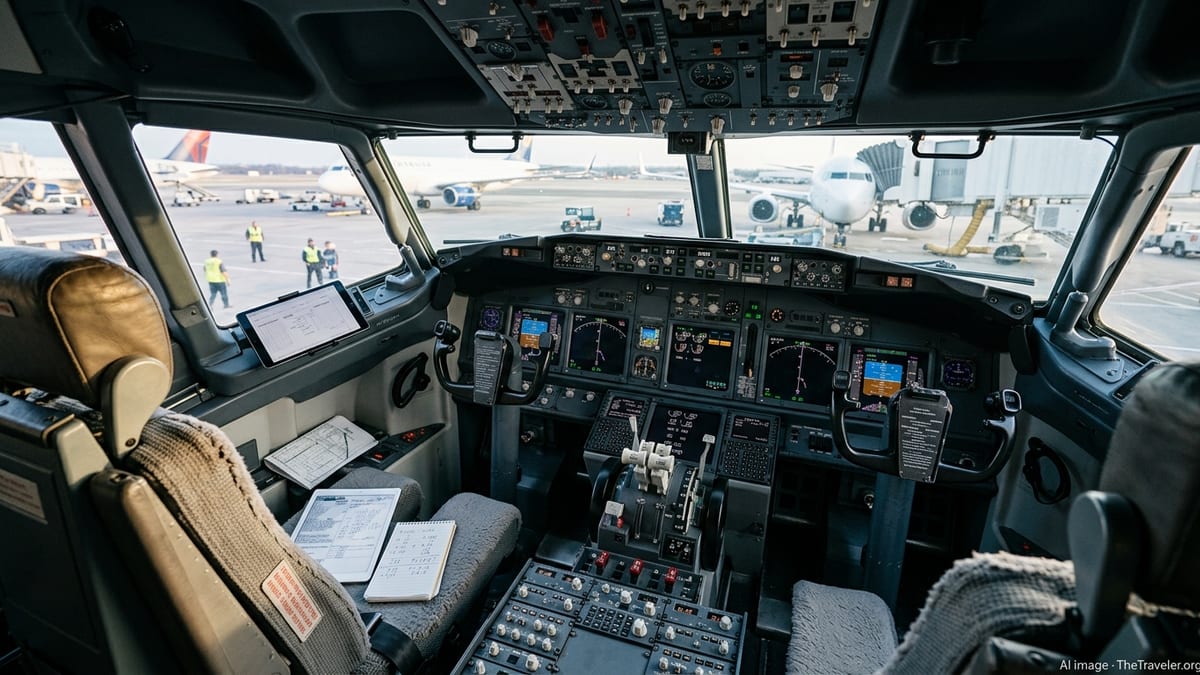
World’s Largest Airline Training Campus Keeps Growing
Publicly available information from the airline and local filings indicates that United’s Denver Flight Training Center now spans eight buildings and nearly 700,000 square feet of training space, making it one of the largest dedicated airline training hubs in the world. The complex is located northeast of downtown Denver in the city’s Central Park area, separate from Denver International Airport but closely tied to the airline’s operations there.
The facility houses a dense network of full-motion simulators and fixed training devices that replicate United’s mainline fleet, including Boeing and Airbus aircraft types. Recent corporate disclosures note that the carrier has brought its simulator count to more than 80 devices on site, with dozens of full-motion bays running around the clock to meet both initial and recurrent training needs.
Reports from aviation groups that have toured the campus describe a tightly integrated training environment, with technical classrooms, emergency procedure mockups and specialized equipment for cabin crew training situated alongside the cockpit simulators. This layout reflects a broader industry trend toward multidisciplinary campuses that can support an airline’s entire frontline workforce in one location.
The Denver center’s scale mirrors United’s overall fleet ambitions. Public fleet data shows that the airline now operates more than 1,000 mainline aircraft, and has signaled further growth with large orders for new-generation jets. That expansion feeds directly into training demand, keeping the Denver complex central to the company’s future planning.
Rezoning Clears Path for New Training and Corporate Campus
The most recent signal of long-term expansion came in June 2026, when the Denver City Council approved a rezoning measure for roughly 114 acres near East 64th Avenue and Yampa Street in the Denver International Airport neighborhood. City records describe the change to a new planned unit development district that specifically anticipates a United Airlines flight training facility and corporate campus on the site.
Planning documents connected with the rezoning outline a vision for a multi-building complex that could ultimately accommodate thousands of employees, new training structures and associated office space. The filings indicate that United intends to use the land for future phases of its training and support operations, complementing the existing Quebec Street campus rather than replacing it.
Community engagement materials linked to the project show that United representatives have framed the expansion as a response to long-range training needs, pointing to sustained pilot hiring and the need for additional simulator bays, classrooms and support infrastructure. The proposed site, adjacent to Denver International Airport, would give the airline room to develop a new generation of training spaces designed around the latest aircraft technology and digital tools.
The rezoning decision also underscores Denver’s role as a strategic operations hub. With the city already hosting one of United’s largest bases and a major share of its domestic connecting traffic, the training expansion reinforces the metropolitan area’s position in the airline’s broader network strategy.
Inside United’s Simulator-Driven Training Model
At the core of the Denver facility is an extensive simulator fleet that allows pilots to train and recertify without leaving the ground. Recent descriptions in aviation industry newsletters and tour reports highlight more than 50 full-motion devices at the campus, complemented by dozens of fixed-base trainers used for procedures and systems work.
These devices are configured to mirror United’s current and incoming aircraft, from narrowbody models used on domestic routes to widebody jets that operate long-haul international services. This range enables pilots to transition between aircraft types within the same campus and gives training planners flexibility to schedule intensive upgrade and recurrent courses.
Reports emphasize that the center runs at high utilization, with recurrent training obligations requiring thousands of simulator hours each month. Many line pilots rotate through Denver several times a year for checks and additional instruction, while new hires spend weeks at the facility for initial qualification on their first United aircraft type.
Beyond pilot training, the campus supports cabin crew and safety instruction with emergency slide trainers, water-ditching pools, door and galley mockups and specialized classrooms. These resources aim to standardize procedures across a large workforce and keep staff current with evolving safety requirements and aircraft configurations.
Pilot Pipeline Programs Feed the Denver Hub
The Denver training center sits at the top of a broader talent pipeline that United has built in recent years. The airline’s wholly owned United Aviate Academy, based in the Phoenix area, focuses on ab initio training for aspiring pilots, guiding students from initial flight hours through the ratings needed to progress toward airline flying.
Public information on the Aviate program shows that graduates who meet experience and hiring requirements can move into roles with United’s regional partners and, ultimately, into United flight decks. As pilots advance, Denver becomes a critical stop, providing type ratings and recurrent training aligned with United’s mainline operating procedures.
Industry analyses point out that this integrated pipeline, from flight school to full-motion simulators, is designed to give the airline more control over training quality and capacity at a time when the broader industry continues to manage pilot supply constraints. By centralizing advanced training in Denver, United can standardize instruction and quickly roll out changes in procedures across its pilot group.
The strategy also aligns with the carrier’s growth trajectory. With large aircraft orders and a robust route network, maintaining a steady flow of trained pilots is essential. The Denver center functions as both a throughput engine, moving new aviators into the system, and a quality-control checkpoint, ensuring that experienced crews stay current on evolving technology and regulations.
Economic Impact and Future Outlook in Denver
City documents associated with the rezoning and expansion plans estimate that United already employs roughly 1,500 people at its Denver Flight Training Center, spanning instructors, technical staff, support personnel and administrative roles. That number is expected to rise as new buildings come online and the training footprint increases.
Local planning analyses suggest that the expanded training and corporate campus near Denver International Airport could ultimately house several thousand additional employees. This would reinforce the airline’s role as a major regional employer and contribute to sustained job growth in the airport corridor, which has been a focus area for commercial development.
Observers note that the concentration of training activity in Denver can have secondary economic effects, including demand for nearby lodging, food services and transportation to support a constant flow of visiting pilots and trainees. The presence of a large, high-skill workforce in aviation and operations may also attract related businesses to the area, from simulator maintenance providers to aerospace technology firms.
With rezoning secured and additional land set aside for future phases, the Denver Flight Training Center appears positioned to remain central to United’s long-term strategy. As the airline continues to expand its fleet and flight schedule, the scale and sophistication of its Denver training operations are likely to play a significant role in shaping both the carrier’s performance and the city’s aviation-driven growth.