


More news on this day
United Airlines is deepening its investment in pilot training, completing a major expansion of its Denver Flight Training Center while advancing longer-term plans for a vast new aviation campus near Denver International Airport.
Get the latest news straight to your inbox!
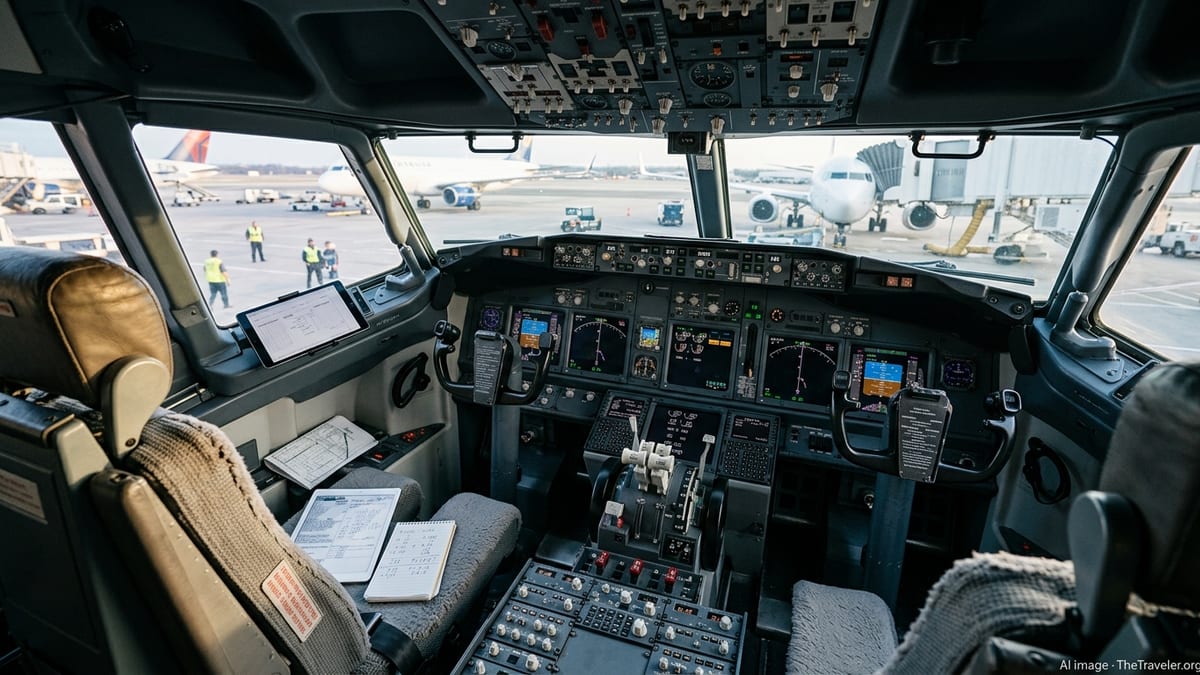
Largest Pilot Training Hub Reaches New Milestone
Recent company disclosures and local planning documents indicate that United’s Flight Training Center in Denver has completed the first phase of a multiyear expansion, reinforcing the facility’s role as the airline’s central hub for pilot instruction and recurrent checks. The complex, set on former Stapleton International Airport land in Denver’s Central Park neighborhood, is already described in public materials as the largest dedicated pilot training site in the world.
United reports that the training center now comprises eight buildings and roughly 700,000 square feet of space, accommodating dozens of full-motion flight simulators and fixed training devices for a range of aircraft types. The footprint is equivalent to several city blocks of classrooms, briefing rooms and simulator bays, operating almost around the clock to cycle crews through mandatory training.
Publicly available information on the facility’s activity shows that every one of United’s more than 18,000 active pilots is scheduled to pass through Denver roughly every nine months for recurrent instruction and evaluations. That volume, combined with a steady flow of newly hired aviators, has driven the need for additional simulators, support infrastructure and nearby lodging.
United has been steadily adding simulation capacity over the past several years as new aircraft join the fleet. Industry updates and corporate filings describe a mix of narrowbody and widebody simulators on site, from domestic workhorses to long-haul jets, reflecting the airline’s focus on standardizing training while supporting a growing international network.
Rezoning Clears Way for 113-Acre Campus Near DIA
While the existing Denver training center continues to grow at the former Stapleton site, city records show that United has secured key approvals for a much larger campus closer to Denver International Airport. In June 2026, the Denver City Council approved rezoning for approximately 113 acres of land northeast of downtown, enabling development of a United-branded training and office complex tied more directly to the airline’s operations at the airport.
Planning documents associated with the rezoning describe a vision for more than 1 million square feet of potential office and support space, parking structures and training-related facilities. Reports indicate that the long-term buildout could host thousands of employees, including administrative teams and aviation professionals rotating through recurrent programs.
According to public statements summarized in local media coverage, United expects to begin site planning in detail over the next year, with groundbreaking on the next phase of the Flight Training Center projected for 2027 and operations at the expanded campus tentatively targeted around 2030. The move would extend the airline’s already prominent footprint in metro Denver, where it is cited in economic development materials as the city’s largest private employer.
The rezoning near Denver International Airport follows earlier investments in a separate 150,000-square-foot training building that opened in 2022 at the existing Stapleton-area campus. That project added new simulator bays and support areas, setting the stage for the more ambitious, airport-adjacent development now moving through the planning pipeline.
Economic Lift for Denver’s Travel and Tourism Sector
The concentration of pilot training activity has turned the facility into a quiet economic driver for Denver’s hospitality and services industries. Data highlighted in recent business and economic development reports suggest that pilot training visits account for tens of millions of dollars a year in hotel stays, transportation and related spending.
United’s training schedule brings pilots into Denver year-round for multi-day simulator sessions, recurrent check rides and classroom work. Many stay in nearby hotels or long-stay properties, often returning to the city multiple times over the course of a year. Local business coverage notes that the airline spent tens of millions of dollars on hotel room nights in 2025 and is expected to increase that figure in 2026 as hiring continues.
The training center’s presence also supports a broader aviation ecosystem in the region, including simulator maintenance, technical support services and contract instructors. Economic development organizations portray the expansion as part of a larger cluster of aerospace and airline-related employment along Colorado’s Front Range, with spillover benefits for restaurants, retail and transportation providers.
City planning records further position the new 113-acre campus as a long-term anchor on the northeastern edge of Denver, complementing ongoing construction and gate expansion projects at Denver International Airport. For the travel sector, the combined buildout at the airport and at the training center underscores Denver’s role as a critical node in United’s global network and as a gateway city for domestic and international passengers.
United Aviate Academy Feeds the Training Pipeline
The Denver Flight Training Center sits at the top of a broader training ladder that begins in Arizona. United Aviate Academy, the airline’s wholly owned flight school based at Phoenix Goodyear Airport in Goodyear, functions as a key entry point for aspiring pilots seeking a path to the flight deck.
United’s publicly available program materials describe a 340,000-square-foot campus at the Arizona airport, including classrooms, dormitories, maintenance hangars and a simulator building. The airline has stated in earlier announcements that it aims to train at least 5,000 new pilots through the academy by 2030, with a focus on expanding access to aviation careers and diversifying the pilot ranks.
Prospective students who complete training at the Goodyear campus can apply to flow into the broader Aviate program, which offers structured progression from initial flight training through regional partners and, ultimately, to United’s mainline operation. Graduates who reach the airline’s flight decks eventually find themselves at the Denver Flight Training Center for type ratings and ongoing recurrent instruction.
In this way, the Denver facility and the Goodyear academy are linked parts of a single pipeline that stretches from first solo flights in Arizona to advanced simulator sessions on widebody aircraft in Colorado. As air travel demand recovers and aircraft orders continue, the combined system is positioned to support United’s hiring plans over the coming decade.
What the Expansion Means for Future Travelers
For passengers, the expansion of United’s training infrastructure is largely invisible, unfolding in industrial parks and training complexes far from terminal concourses. Yet the operational impact is significant. Robust simulator capacity allows airlines to introduce new aircraft, adjust procedures and roll out technology updates while keeping pilots current and minimizing schedule disruptions.
Industry analysts note that the scale of United’s Denver facility signals a long-term commitment to in-house training as a strategic asset. As airlines compete for qualified pilots and grapple with retirement waves, access to simulators and instructors can become a bottleneck. By securing more space, ordering additional devices and planning a larger campus near Denver International Airport, United is seeking to stay ahead of that curve.
The training center’s growth may also influence route planning and hub development. Denver is already one of United’s fastest-growing hubs in terms of destinations and capacity, and the clustering of simulators, corporate offices and airport infrastructure in the region may further entrench the city as a central operating base.
For travelers connecting through Denver, the impact may show up indirectly through network reliability, pilot availability and the airline’s ability to scale schedules for peak seasons. As United’s pilots cycle through recurrent sessions in the city’s simulator bays, the Denver Flight Training Center is poised to remain a backbone of the carrier’s global operation for years to come.