


More news on this day
A United Express service operating as flight RPA3659 diverted to Nashville after encountering severe airspace congestion near Louisville, underscoring how quickly routine regional hops across the Midwest can unravel during peak summer traffic and convective weather patterns.
Get the latest news straight to your inbox!
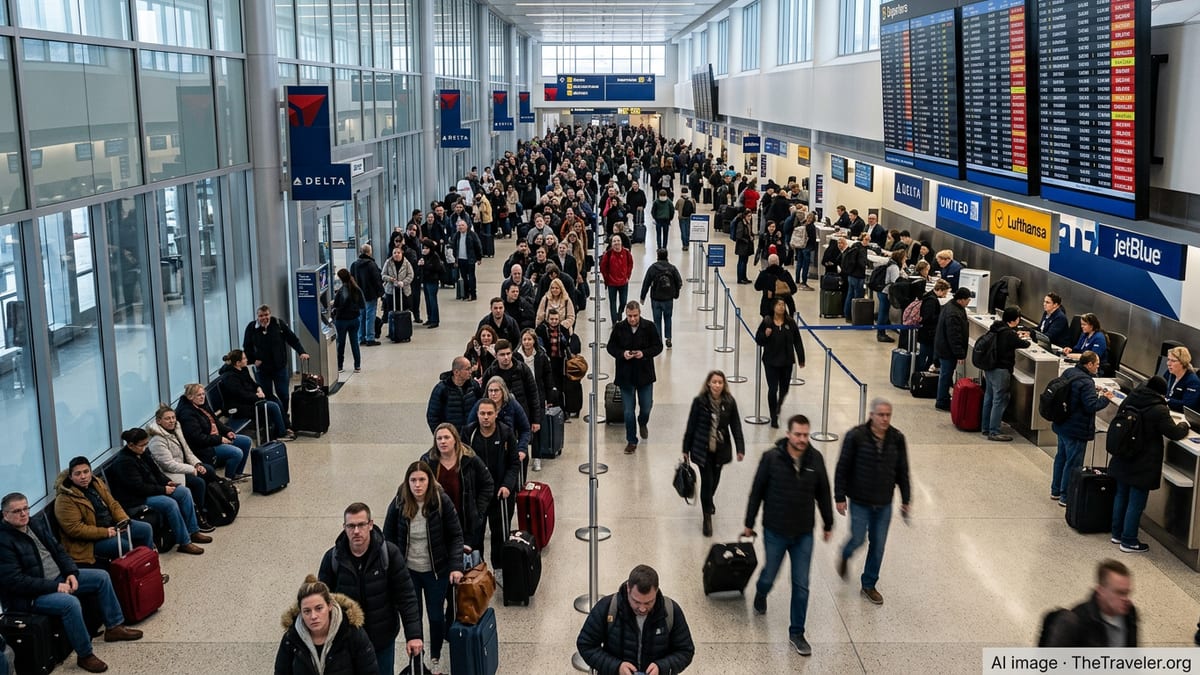
Sudden Course Change as Congestion Mounts over Kentucky
Publicly available flight-tracking data show that United Express flight RPA3659, operated by regional partner Republic Airways, altered course away from its planned arrival into Louisville and headed for Nashville instead, after holding patterns and flow restrictions began stacking up in the skies over northern Kentucky. The diversion unfolded as traffic volumes surged into the Ohio Valley and controllers worked a growing backlog of arrivals and departures.
Flight visualizations indicate that the Embraer regional jet initially followed a standard routing toward Louisville before leveling off into a series of vectors consistent with sequencing delays. As additional aircraft converged on the same sector and arrival stream, the United Express crew ultimately turned south, opting for a shorter, more predictable path into Nashville’s larger hub rather than wait out an increasingly uncertain queue into Louisville.
The aircraft landed in Nashville with no reported safety issues, but the unscheduled stop immediately cascaded through passengers’ itineraries, forcing onward connections to be rebooked and same-day plans to be rewritten. For travelers, the episode became another reminder that even modest regional trips can be heavily affected by bottlenecks far beyond any single airport’s perimeter fence.
Louisville’s Busy Airspace Under Summer Weather Strain
Operational data and published advisories from the Federal Aviation Administration’s Air Traffic Control System Command Center point to a confluence of factors that can quickly snarl the airspace around Louisville. The city’s primary commercial gateway, Louisville Muhammad Ali International Airport, shares local skies with significant cargo flows and general aviation activity, while also sitting in a corridor that is prone to rapidly developing thunderstorms during late June.
Recent command center summaries and traffic management plans for the central United States reference miles-in-trail restrictions, ground delay programs at major hubs, and reroutes designed to keep traffic away from convective cells and turbulence. When those constraints ripple outward, smaller but strategically located airports such as Louisville can see arrival rates sharply reduced, creating lengthy holding patterns for inbound flights.
Analysts note that even when the airport surface itself appears to be operating normally, the surrounding en route structure can effectively cap how many aircraft can be safely funneled toward the same arrival fixes. As additional flights stack up, dispatchers often face a choice between holding, rerouting, or diverting aircraft to nearby alternates where gate and runway capacity may be easier to access on short notice.
Nashville Steps In as Pressure Valve for Regional Grids
Nashville International Airport, which has been reporting sustained passenger growth and infrastructure expansion in 2026, frequently functions as a regional relief outlet when conditions deteriorate elsewhere in the central and southeastern United States. Its position along several north-south and east-west corridors, combined with a more extensive mix of runways, gates, and airline staffing, can make it an attractive diversion point for aircraft that need to exit crowded holding stacks around smaller fields.
In the case of RPA3659, the shift to Nashville allowed the flight to complete a firm landing rather than continue burning fuel in an extended arrival sequence into Louisville. Once on the ground, passengers could be reaccommodated onto later departures, while the aircraft and crew could be repositioned into the network once congestion eased and new routings became available.
Airport planning documents and recent operations committee materials from Nashville describe a strategy aimed at handling surges in irregular operations through added gate flexibility and collaborative decision-making with airlines and air traffic managers. Episodes like the diversion of RPA3659 illustrate how those investments translate into practical options for airlines looking for a stable harbor when congestion flares elsewhere.
Broader Pattern of Summer Disruptions Across U.S. Skies
The diversion of United Express RPA3659 fits into a broader pattern of summer 2026 disruptions that has included severe weather outbreaks, regional airspace restrictions, and rolling traffic management initiatives. Industry summaries and consumer-focused travel alerts have highlighted days in June where hundreds of flights were canceled and thousands delayed across the country, with regional carriers such as Republic, SkyWest, and Envoy shouldering a significant share of the impact.
Data published by the U.S. Department of Transportation in its Air Travel Consumer Reports indicate that flight delays remain heavily concentrated in a subset of congested corridors and hub complexes. When those systems encounter thunderstorms, temporary airspace closures, or runway capacity constraints, regional spokes linked to those hubs can experience outsized ripple effects, from extended tarmac waits to unplanned overnight stays following diversions.
Travel analysts point out that diversions like the one involving RPA3659 are often the product of strategic risk calculations rather than isolated mishaps. By opting for a known, better-equipped alternate like Nashville, airlines can reduce the likelihood of severe downstream disruptions to crew scheduling and aircraft rotations, even if the immediate impact on passengers is frustrating.
What the Diversion Means for Summer Travelers
For travelers passing through Louisville and other mid-sized markets this summer, the RPA3659 diversion underscores the value of planning for volatility in the flight network. Travel advisories and waiver programs issued in recent weeks for convective weather and regional airspace constraints show that airlines anticipate days when diversions and reroutes will be necessary to keep the system moving.
Passenger advocates recommend that travelers build extra buffer time into itineraries that rely on tight connections through weather-sensitive hubs or regional spokes, particularly during afternoon and evening hours when thunderstorms and cumulative delays tend to peak. Monitoring airline apps and flight-tracking tools while en route can provide early hints of emerging congestion, such as prolonged holds, repeated arrival time revisions, or sharp changes in routing.
The experience of those aboard United Express RPA3659 also highlights how alternates like Nashville can become unexpected waypoints in an evolving travel day. While such diversions may be inconvenient, they are part of a broader operational toolkit that airlines and air traffic managers use to navigate an increasingly crowded and weather-exposed national airspace system during the busiest months of the year.