


More news on this day
American Airlines flight AAL490, a Boeing 737 MAX operating from Philadelphia to Chicago on August 9, diverted to Milwaukee after congestion and severe weather around Chicago disrupted arrivals and left multiple flights seeking alternate airports.
Get the latest news straight to your inbox!
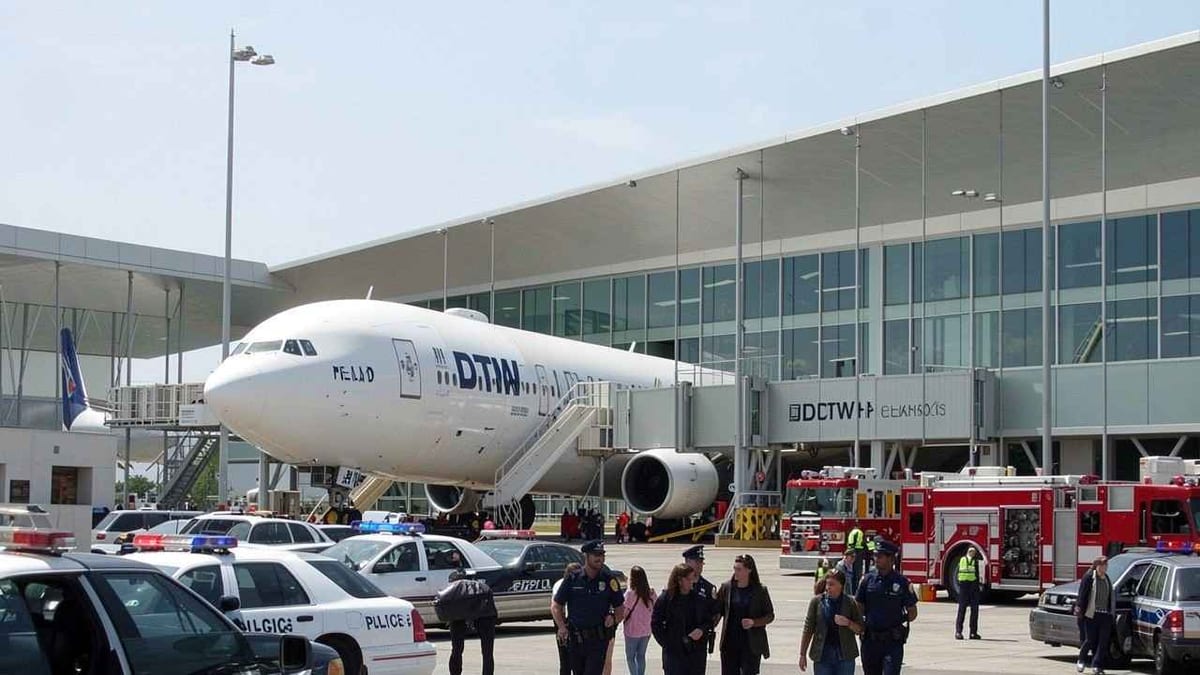
Unscheduled Stop Turns Philadelphia to Chicago Flight Toward Milwaukee
Publicly available flight-tracking data for August 9 shows American Airlines flight AAL490 departing Philadelphia in the evening on a regularly scheduled service to Chicago O’Hare, using a Boeing 737 MAX aircraft. Midway through the journey, the routing changed, sending the jet north of its planned track and into Milwaukee Mitchell International Airport instead of continuing to O’Hare.
Reports from travelers and aviation enthusiasts monitoring the route indicate that AAL490 was one of a cluster of Chicago-bound flights that diverted into Milwaukee as storms, low visibility, and air traffic management constraints built up around the Chicago area. At times of heavy congestion, O’Hare arrival rates are reduced and aircraft can face extended holding patterns, prompting some flights to divert when fuel, crew duty limits, or operational planning no longer support continued holding.
Data for Milwaukee on the morning and evening of August 9 points to an unusual spike in inbound traffic, with travelers describing the terminal as crowded and gates under pressure as a series of diversions arrived in quick succession. AAL490 joined this stream, using Milwaukee as a relief airport when conditions and traffic volume made a direct arrival into O’Hare impractical.
Once on the ground in Milwaukee, the flight effectively became a disrupted segment of the Philadelphia to Chicago trip, with the remainder of the journey handled as a separate operational problem by American Airlines and its airport partners.
Why Airlines Choose Diversion Airports Like Milwaukee
Industry data and previous diversion patterns show that Milwaukee frequently serves as an alternate for Chicago flights when weather or ground congestion create bottlenecks at O’Hare. The airport has a long runway, instrument landing capabilities, and sufficient terminal infrastructure to accept multiple mainline jets when the regional airspace tightens.
For a Boeing 737 MAX flying from Philadelphia toward Chicago, Milwaukee offers several advantages as a diversion point. It lies close enough to O’Hare to limit additional flying time, yet far enough away that it often escapes the worst of the weather affecting Chicago. Its location also allows airlines to refuel, re-crew, and reposition aircraft while remaining within the general Midwest network.
From an operational perspective, a diversion like AAL490 on August 9 reflects a balance of safety margins, fuel planning, and air traffic control restrictions. When arrival rates are cut, aircraft holding stacks can grow quickly. Once a jet reaches a predetermined fuel level reserved for alternates and contingencies, the flight crew and airline operations center treat diversion as the safer and more predictable option compared with prolonged circling near the destination.
In addition to weather and traffic volume, airlines must also consider crew duty time rules. If holding and ground delays threaten to push a crew beyond allowable hours, turning to an alternate such as Milwaukee can help avoid a situation where a plane lands at O’Hare only to have its onward timetable disrupted by crew timeouts.
Impact on Passengers and What Typically Happens After a Diversion
Travelers on AAL490 experienced an abrupt change to their itinerary, arriving in Milwaukee rather than Chicago on August 9. Accounts from other recent diversions into Milwaukee suggest that passengers often face extended waits for updates while airline operations teams determine whether the aircraft will continue to the original destination, whether a replacement crew is needed, or whether the flight will terminate at the diversion point.
When a diverted aircraft like AAL490 reaches a gate, several decisions cascade: whether to allow deplaning, whether baggage can be offloaded, and how to rebook passengers who choose to end their journey at the alternate airport or need new connections. Published examples from similar American Airlines diversions show a range of outcomes, from quick refueling and onward flying to overnight stays and complete cancellation of the remaining segment.
Passengers connecting onward from Chicago to other destinations typically face the most complex rebooking scenarios. If a diversion leads to missed connections, airlines often rely on available seats on later flights, sometimes through different hubs. Travelers who choose not to continue to Chicago from Milwaukee may instead seek ground options such as rental cars, intercity buses, or regional rail, particularly given the relatively short distance between the two cities compared with the overall journey from the East Coast.
Consumer rights in these situations vary by cause. When diversions are tied to weather or air traffic control constraints rather than airline-controlled issues, federal rules in the United States do not require carriers to provide meals or hotels, although some airlines choose to extend vouchers or accommodations as a gesture of goodwill depending on circumstances and internal policies.
Broader Pattern of Weather and Congestion Disruptions in the Midwest
The diversion of AAL490 fits within a broader pattern of midsummer disruption affecting air travel into Chicago and other Midwestern hubs. Operational data and traveler accounts from early August point to multiple days when thunderstorms and low ceilings forced holding, ground stops, and reroutes across several airlines, not only American.
Air traffic control capacity, especially in busy terminal areas such as Chicago, can be significantly reduced when convective weather cells block standard approach paths. In these circumstances, the Federal Aviation Administration implements flow control measures that slow the arrival rate into affected airports. Airlines, in turn, adjust by delaying departures, canceling some flights, or diverting aircraft already en route to nearby alternates as fuel and crew limitations demand.
Academic and government studies on flight delays and diversions in the United States highlight the interconnected nature of hub operations. A single evening of weather and traffic restrictions at a major hub can echo across an airline’s network, affecting routes far from the storms themselves. The experience of passengers on AAL490 on August 9 reflects how quickly a routine corridor like Philadelphia to Chicago can become complicated when the system is stressed.
For Milwaukee, these events temporarily transform the airport into a pressure valve for the region. Terminal staff, ground handlers, and regional transportation providers must adapt rapidly as diverted flights arrive with passengers who were never scheduled to pass through the city, stretching local resources until operations at the primary hub stabilize.
What Travelers Can Learn from the AAL490 Diversion
The events surrounding American Airlines flight AAL490 on August 9 provide several practical lessons for travelers using busy hubs prone to summer weather disruption. First, diversions are a safety-focused response to constrained fuel margins, crowded airspace, or operational limits. While inconvenient, they are structured around maintaining conservative safety buffers rather than pushing flights toward their original destination at all costs.
Second, passengers booked on evening flights into hub airports may want to anticipate a higher risk of disruption on stormy days, particularly in summer. Monitoring weather forecasts, enabling airline app notifications, and familiarizing oneself with common alternate airports such as Milwaukee for Chicago-bound travel can help set expectations and guide real-time decisions when routes change.
Third, travelers caught in a diversion scenario often benefit from quickly exploring options beyond waiting passively at the gate. Historical accounts from similar Milwaukee diversions suggest that, once it becomes clear that a flight will not reach O’Hare soon, some passengers secure rental cars or ground transport before demand spikes, while others work through mobile apps to lock in scarce seats on later flights.
The AAL490 diversion also underscores the value of building time buffers into itineraries that rely on tight connections through major hubs. As complex weather and congestion events continue to affect U.S. airspace, flights that appear simple on the timetable can still encounter sudden routing changes, with airports like Milwaukee playing a pivotal role in getting aircraft and passengers back on track.