


More news on this day
A United Airlines service operating as flight UAL1149 from Denver International Airport was diverted shortly after departure, prompting schedule disruptions, passenger delays and renewed scrutiny of how major carriers handle irregular operations across their domestic networks.
Get the latest news straight to your inbox!
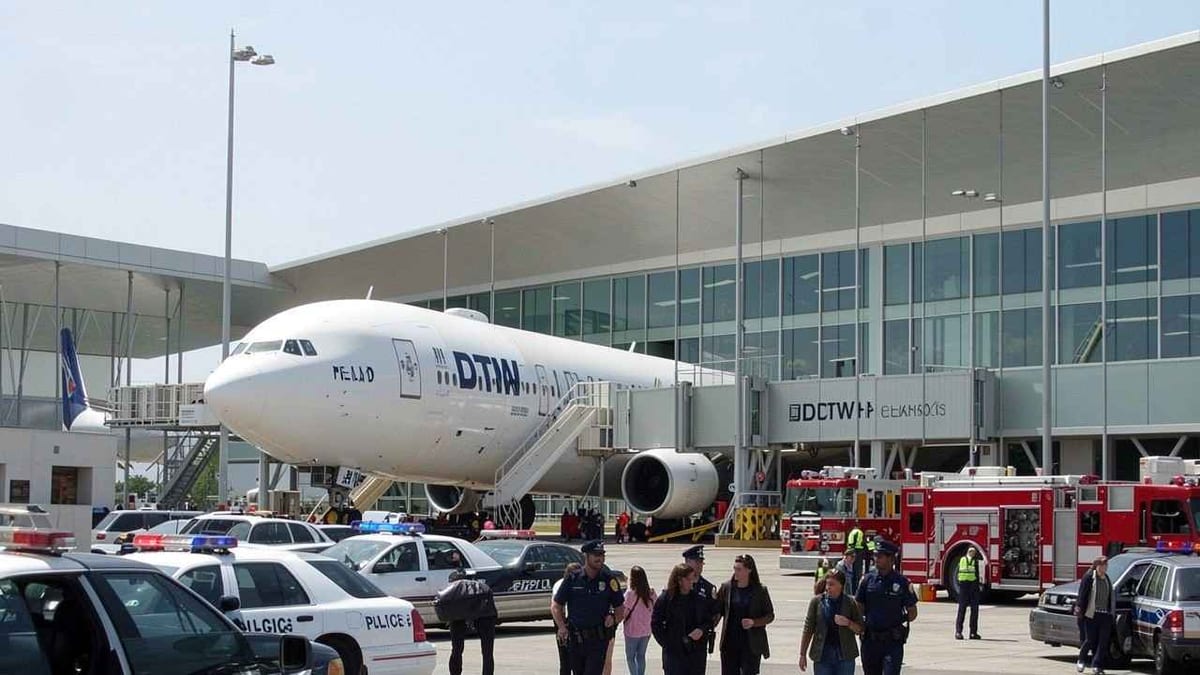
What Is Known About UAL1149’s Diversion
Publicly available flight-tracking data and airport status boards indicate that United flight UAL1149, operating from Denver, did not complete its planned route and was instead diverted en route. The flight was scheduled as a domestic United service using Denver International Airport as its departure point, part of the carrier’s extensive hub operation at the Colorado gateway. While basic timing, routing and aircraft details are accessible on flight-data platforms, they do not specify the underlying reason for the diversion.
Available operational records typically show diversions when a flight departs its origin but lands at an airport other than its scheduled destination. These records can capture changes in estimated and actual departure or arrival times, as well as shifts in airport codes that reflect a diversion. In the case of UAL1149, the flight’s tracked path and status entries suggest such an unplanned change, consistent with the standard industry definition of a diversion.
As of the latest data, no detailed public investigation reports or regulatory summaries have been released that focus specifically on this individual flight. In the absence of formal documentation, only high-level operational information can be confirmed, and the precise trigger for the diversion remains publicly unspecified.
Possible Factors That Can Force a Diversion Out of Denver
Denver International Airport is among the highest-elevation major airports in the United States, operating in a region frequently affected by rapidly changing weather. Airlines with large Denver operations, including United, routinely contend with summer thunderstorms, winter snow systems and strong crosswinds that can disrupt arrival and departure flows. When weather systems move across the Front Range or Plains, flights may be held, re-routed around storm cells or diverted to other airports if arrival windows close or conditions deteriorate along the route.
Beyond weather, diversions can stem from a wide range of operational and technical factors. Aircraft may divert in response to onboard medical situations when passengers or crew require urgent attention and a nearer airport is judged preferable. In other cases, precautionary landings occur following cockpit indications of potential mechanical issues, even when later inspections reveal minor faults or sensor anomalies. Air-traffic management constraints, including flow-control programs and ground stops at destination airports, can also prompt flights to land at alternates when holding patterns become unsustainable.
In the broader context of recent U.S. aviation events, Denver has figured in several high-profile disruptions involving a variety of airlines. Publicly reported cases have included flights returning to the airport due to technical checks, diversions amid severe weather and, in rare instances, more serious runway events that have led to temporary closures or operating restrictions. Against this backdrop, a single diverted flight such as UAL1149 fits into a known pattern of irregular operations that large hubs experience during busy travel periods.
Impact on Passengers and the United Network
For passengers aboard UAL1149, the diversion would likely have translated into extended travel times and missed onward connections. When diversions occur, airlines typically must reposition aircraft, coordinate new crews if duty-time limits are reached and rebook connecting passengers across their networks. At a hub like Denver, where United operates a dense schedule of departures to major domestic and international destinations, the knock-on effects from a single aircraft going out of its planned rotation can spread across multiple later flights.
Recent travel seasons have illustrated how individual disruptions compound in complex airline networks. When a flight diverts, it often requires ground handling at an airport that may not be staffed or provisioned for an unscheduled arrival at that exact time. This can slow refueling, maintenance inspections and boarding of any onward segment. In addition, crew schedules are tightly regulated, meaning a delay or diversion late in a duty period may require a replacement team, leading to further waiting for passengers even after the aircraft is cleared to continue.
Broader network data from Denver shows the scale at which carriers like United operate at the airport, with tens of thousands of monthly flights and a substantial share flown by the mainline carrier and its regional partners. In such an environment, operational planners must manage not only the immediate needs of passengers affected by a diversion like UAL1149, but also the downstream effects on aircraft positioning and schedule reliability for the rest of the day.
How Diversions Are Managed and Communicated
When a diversion decision is made, flight crews and airline operations centers work within established procedures to identify suitable alternates based on runway length, weather, available ground services and air-traffic conditions. Once the aircraft is committed to the new airport, customer-facing teams take on the task of adjusting itineraries, arranging ground transportation or hotel accommodations when necessary and keeping passengers informed of evolving plans. The level and speed of communication can vary by situation, but digital tools, gate announcements and mobile notifications commonly play central roles.
Recent publicly discussed disruption cases across the industry have highlighted the challenges of managing customer expectations during irregular operations. Travelers often report uncertainty about next steps, limited information about timing and difficulty securing alternate routings during peak periods, particularly when multiple flights are affected across a hub. Events like the diversion of UAL1149 reinforce how important clear, frequent communication and flexible reaccommodation policies can be in maintaining passenger confidence.
Aviation analysts frequently point out that diversions, while disruptive, are an inherent part of running a large airline network. From a safety perspective, precautionary diversions and returns to departure airports are generally considered signs that crews and operations teams are prioritizing risk management over schedule adherence. For travelers, understanding that such events are relatively rare compared with the overall number of daily flights can provide context, even as individual experiences remain frustrating when connections are missed and plans change unexpectedly.
What Travelers Can Learn From the UAL1149 Case
Although the publicly available record on United flight UAL1149’s Denver diversion is limited, the episode underscores several practical lessons for travelers using the Colorado hub and other major connecting airports. Building longer connection windows, especially during seasons when thunderstorms or winter weather are common, can provide a buffer when flights encounter delays or need to divert. Flexible booking options and awareness of alternative routings on the same carrier can also help minimize disruption if original plans fall through.
Travel-planning guidance from consumer advocates often emphasizes the value of monitoring flight status through both airline channels and independent flight-tracking tools. In a diversion scenario, these platforms can provide early visibility into route changes or unexpected airport codes appearing on a flight’s track, sometimes before updated gate announcements or emails arrive. Keeping essential medications, chargers and a change of clothes in carry-on baggage can also ease the strain of unplanned overnight stays if onward flights are not immediately available.
More broadly, the UAL1149 diversion highlights how interconnected modern airline operations have become. Events affecting one aircraft and one group of passengers can ripple through a network of flights spanning multiple time zones. For carriers, improving resilience to such shocks involves investments in staffing, technology and contingency planning. For passengers, understanding the dynamics behind diversions can help set realistic expectations and support more resilient travel strategies when itineraries pass through a busy hub like Denver.