


More news on this day
United Airlines is set to restore nonstop service between Houston and Caracas in August, reviving a vital U.S.–Venezuela air corridor nearly nine years after suspending the route and opening new possibilities for business and leisure travel across the Americas.
Get the latest news straight to your inbox!
Daily Nonstop Service Returns This August
Publicly available information shows that United Airlines plans to resume daily nonstop flights between George Bush Intercontinental Airport in Houston and Simón Bolívar International Airport outside Caracas starting 11 August 2026, subject to final regulatory approvals. The move marks United’s first scheduled passenger service to Venezuela since it halted operations in the country in 2017 amid deteriorating economic and security conditions.
According to published coverage and company disclosures, the reinstated route will operate as UA1046 from Houston to Caracas and UA1045 on the return. The northbound leg is scheduled to depart Caracas in the morning and arrive in Houston around midday, aligning with peak bank connections at United’s Texas hub. The southbound flight is slated as an overnight departure from Houston, touching down near dawn at Caracas, a pattern designed to maximize connectivity on both sides.
Reports indicate that United intends to deploy Boeing 737 MAX 8 aircraft on the route, offering a mix of United First, Economy Plus and standard economy seating. This configuration is expected to appeal to both corporate travelers seeking premium options and price-sensitive passengers reconnecting with family and friends in Venezuela.
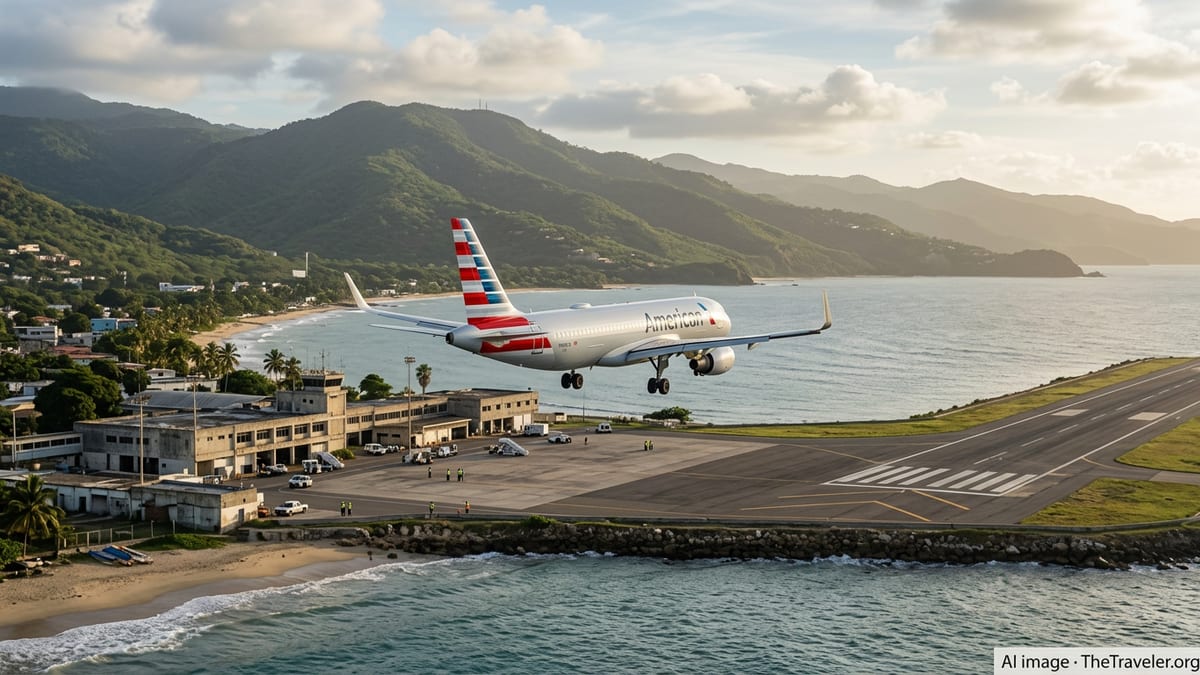
The airline’s return comes shortly after American Airlines restarted daily service from Miami to Caracas, signaling a broader reopening of direct air connectivity between the United States and Venezuela following years of suspension related to political tensions and security restrictions.
Strategic Boost for Houston’s Latin America Network
Houston has long served as one of United’s primary gateways to Latin America, and the restoration of flights to Caracas reinforces that role. Publicly available route data shows United offering up to 100 daily departures from Houston to more than 50 destinations across Latin America and the Caribbean, positioning the city as a key connecting point for travelers moving between North America, the Andean region and Brazil.
The reestablished Houston–Caracas link is expected to strengthen commercial ties at a time when U.S. and Venezuelan authorities are incrementally normalizing economic and diplomatic relations. Business travelers in the energy, petrochemicals and logistics sectors, in particular, gain a single-connection option from Caracas via Houston to major U.S. and global markets, including Chicago, New York, Los Angeles and Asian and European hubs.
For United, reviving the route fits within a broader strategy of selectively rebuilding its long-haul and regional network as demand recovers and geopolitical conditions evolve. Industry analysts note that the carrier has been quick to seize opportunities in markets where capacity was sharply reduced, allowing it to capture premium and connecting traffic with limited direct competition.
Airport stakeholders in Houston and Caracas are also expected to benefit from renewed passenger flows and increased aircraft movements, which can support additional retail, cargo and airport services activity over time.
Improved Choices for Business and Leisure Travelers
The return of United to Venezuela adds meaningful competition and choice on a corridor that for years relied on indirect routings through third countries. Before recent route announcements, many passengers traveling between the United States and Caracas connected via Panama City, Bogotá or Caribbean hubs, often enduring longer travel times, complex itineraries and higher fares.
With both United’s Houston service and American’s Miami flights coming online, travelers will again have multiple nonstop options that reduce journey times and simplify connections. Houston’s role as a Star Alliance hub broadens access to partner airlines and onward destinations, while Miami’s position within the oneworld network offers its own distinct set of links, effectively reweaving Venezuela into two of the world’s major global alliance systems.
Leisure travelers are expected to benefit from more competitive pricing and better schedule alignment for trips to visit family, explore Venezuela’s Caribbean coastline, or access destinations in the interior via domestic connections. For Venezuelans, the Houston route also restores direct access to a city with sizable diaspora communities and extensive medical, educational and shopping offerings.
Travel advisors suggest that the mix of overnight southbound and daytime northbound schedules will appeal to both business and leisure segments, allowing travelers to minimize time away from work or combine meetings with short leisure extensions in either city.
Symbol of Easing Restrictions and Renewed Connectivity
The resumption of United’s flights carries symbolic weight well beyond the airline’s network plans. According to international aviation and policy reporting, commercial links between the United States and Venezuela have gradually restarted in 2026 as restrictions tied to earlier sanctions and security concerns have been adjusted or lifted.
The return of large U.S. carriers, following the reopening of the U.S. Embassy in Caracas and renewed diplomatic engagement, is widely viewed as part of a broader normalization process. Air connectivity is often one of the most visible indicators of shifting relations, and the reappearance of U.S. airline liveries at Simón Bolívar International Airport underscores changing conditions on the ground.
For Venezuela’s aviation sector, the restoration of direct flights by global network airlines can support efforts to modernize airport infrastructure, improve operational standards and attract additional foreign carriers. For U.S. airlines, the cautious reentry into the market reflects both commercial opportunity and a renewed confidence in security, regulatory oversight and the stability of operating conditions.
Observers note that capacity growth is likely to remain measured in the near term, with regulators on both sides monitoring performance, demand and safety compliance before any significant expansion in frequencies or additional U.S.–Venezuela city pairs is considered.
What Travelers Should Expect This Summer
With the first United flight scheduled for mid-August, travel experts are advising passengers to secure seats early, particularly for peak summer and early autumn dates when demand from business travelers, expatriates and tourists is expected to be strong. Initial load factors on American’s resumed Miami–Caracas route reportedly indicate robust interest, suggesting a similar pattern may emerge for Houston.
Passengers booking the new service can expect the standard United product offered on Boeing 737 MAX 8 aircraft, including in-seat power, inflight entertainment streaming and Wi-Fi on most flights. The overnight southbound schedule may appeal to travelers looking to arrive in Caracas early enough to make same-day domestic connections or meetings, while the morning departure from Caracas facilitates same-day arrivals in many U.S. and international destinations via Houston.
Industry coverage highlights that normal entry requirements, security screenings and potential additional document checks related to evolving U.S.–Venezuela policies will continue to apply. Travelers are being encouraged to monitor airline channels and government travel advisories closely in the weeks leading up to departure, as procedures and regulations can change with limited notice.
Even with those caveats, the restart of United’s Houston–Caracas flights is being viewed as a significant step toward reestablishing Venezuela’s air connectivity to the wider world. For many travelers on both sides of the route, the restoration of this long-dormant link represents not only added convenience, but also a tangible sign that a once-frozen relationship is starting to move again.