

More news on this day
A United Airlines flight from Seattle to Denver made an unscheduled diversion to Grand Junction Regional Airport, after a reported mechanical issue prompted the crew to cut the trans-Rockies leg short and land in western Colorado as a precaution, delaying passengers for several hours on the busy corridor into Denver.
Get the latest news straight to your inbox!
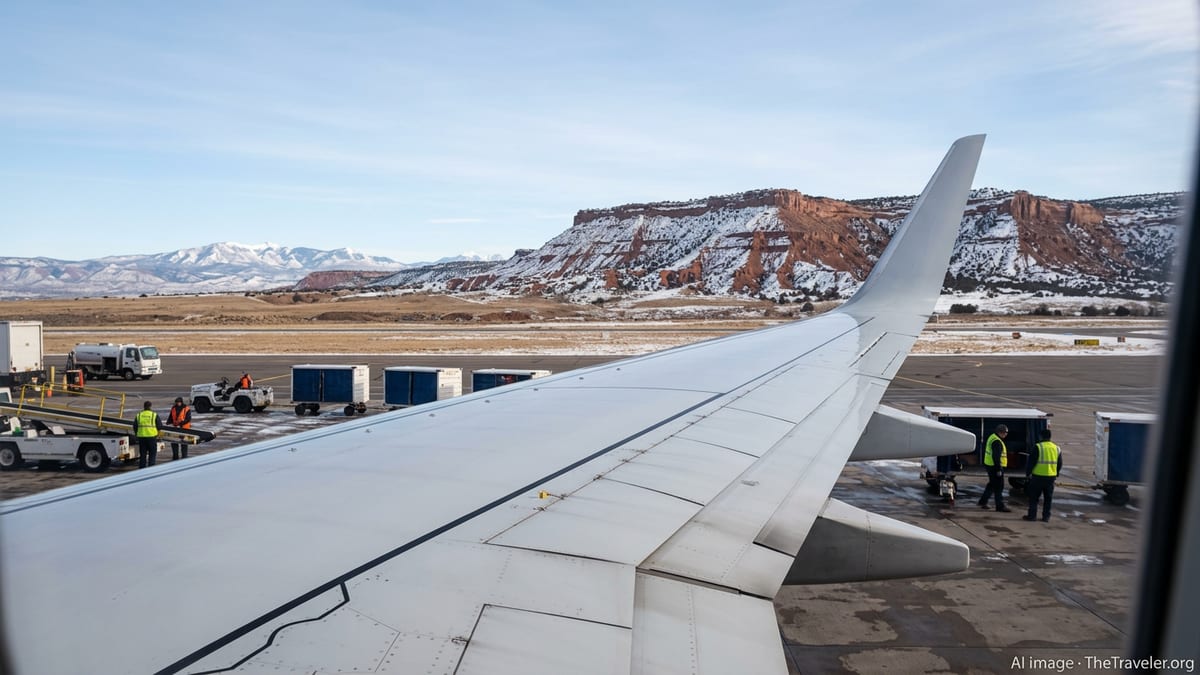
Seattle to Denver Flight UAL1351 Interrupts Journey
United Airlines Flight UAL1351 was scheduled to operate a routine evening service from Seattle Tacoma International Airport to Denver International Airport using an Airbus A321 271NX, part of the carrier’s growing A321neo fleet. The aircraft departed Seattle with Denver listed as its intended destination, joining several daily services that link the Pacific Northwest with Colorado’s largest hub.
Publicly available flight tracking information shows that partway through the cruise segment toward Denver, the aircraft began a descent and turned toward Grand Junction Regional Airport in western Colorado instead of continuing east toward Denver. The diversion placed the aircraft at Grand Junction, a smaller regional facility on the western slope of the Rockies, rather than the much larger Denver hub where passengers had been expecting to connect to onward flights.
The unexpected diversion meant passengers faced an unplanned stopover, as airport and airline teams worked to assess the aircraft and arrange onward travel. Grand Junction routinely handles regional and mainline services, but diversions from long trans-Rockies routes can strain available gate space and ground handling, especially when an Airbus A321neo arrives with a full complement of travelers.
While diversions are relatively rare on the Seattle to Denver route compared with routine weather delays in the Front Range region, Grand Junction’s location west of the Continental Divide makes it a frequent alternate option when conditions or technical considerations prompt crews to look for a safe, nearby landing point.
Preliminary Reports Point to Mechanical Concern
Reports from flight tracking platforms and public aviation data indicate that the diversion was linked to a suspected mechanical issue on board the Airbus A321neo rather than a security incident or medical emergency. In such cases, flight crews typically follow established procedures, prioritizing a stable, nearby airport with suitable runway length and maintenance access when deciding where to divert.
Grand Junction Regional Airport offers a long primary runway capable of handling narrow body mainline aircraft such as the A321neo, as well as instrument approach procedures that allow for safe arrivals in a range of weather conditions. Its position along east west traffic flows between the Pacific Northwest and Colorado makes it a logical choice when a flight must land before reaching Denver.
According to publicly available information on United’s operations, the carrier generally treats unscheduled landings linked to technical concerns as precautionary until maintenance inspections can confirm whether a fault exists. In many recent diversion cases across the industry, conservative decisions by flight crews have brought aircraft to the ground early for checks that either clear the aircraft or identify a component that needs replacement before flying again.
No injuries were reported in connection with the diversion, and there were no indications in public data of an emergency evacuation or other abnormal ground procedures. The event appears to have unfolded as a controlled, precautionary landing followed by extended ground time to address the reported issue and reorganize passengers’ onward travel plans.
Impact on Passengers and Onward Connections
The diversion added unplanned hours to the journey for travelers heading to Denver and beyond. Passengers bound for Denver International Airport often rely on tight connections, particularly in the evening banks of departures to Midwest and East Coast destinations, and a diversion of this nature typically disrupts those itineraries.
Based on standard industry practice in similar situations, passengers from UAL1351 would either remain on the aircraft while maintenance assessments were carried out or disembark into the terminal at Grand Junction if the delay appeared likely to be prolonged. Once the aircraft’s status became clear, options could include continuing the flight to Denver, positioning a replacement aircraft, or rebooking travelers on alternative services from Grand Junction or Denver later in the schedule.
When a mainline narrow body aircraft diverts to a smaller regional airport, the time required to resume travel can be extended by limited gate availability, constrained staffing, and the need to position additional crews or parts. Travelers on UAL1351 faced the added complication of being at an airport with fewer direct services to major hubs, which can translate into longer waits for rebooking compared with diversions into larger alternate airports such as Salt Lake City or Colorado Springs.
Social media posts and anecdotal accounts from similar diversions in the Rocky Mountain region suggest that extended ground time, uncertain connection status, and rebooked itineraries are common outcomes when a technical issue interrupts an otherwise routine domestic flight late in the travel day.
Why Grand Junction Is a Common Alternate for Denver Traffic
The decision to divert to Grand Junction Regional Airport is consistent with historical patterns for flights heading toward Denver that encounter issues over the Rockies or western Colorado. Grand Junction’s runway length, airfield elevation, and location along well traveled routes make it an important safety valve when Denver becomes less accessible due to technical, operational, or weather related factors.
Publicly available airport planning documents describe Grand Junction as a regional hub capable of supporting regular commercial jet activity, including aircraft in the Airbus A320 and A321 families. Its facilities provide emergency services coverage and support infrastructure that make it suitable as an alternate for larger carriers operating into Denver, even though scheduled service is typically provided by a limited mix of regional jets and occasional mainline flights.
For crews navigating the mountainous terrain between Utah and Colorado, Grand Junction offers a relatively straightforward approach environment compared with more complex arrivals into Denver during periods of turbulence, wind shear, or storms along the Front Range. In circumstances where a mechanical concern coincides with challenging weather or air traffic constraints closer to Denver, diverting to Grand Junction can reduce exposure to additional risk and simplify the landing phase.
Industry discussions around recent diversions in the broader Denver region point to a combination of weather volatility, congested airspace, and occasional technical issues as recurring factors that lead to unplanned stops at alternate airports. UAL1351’s diversion fits that broader pattern, even though the specific trigger for this event appears tied to a reported mechanical concern.
Broader Context of Diversions on Busy Domestic Routes
While diversions are disruptive for passengers, aviation safety statistics and industry reports consistently describe them as a routine part of risk management across busy domestic networks. Flights between Seattle and Denver traverse a corridor that regularly experiences high altitude turbulence, strong winds, and rapidly changing weather systems, all of which can compound the operational impact when a technical issue arises mid flight.
In recent months, publicly documented cases across multiple airlines have highlighted diversions for issues ranging from mechanical alerts and cabin odors to unruly passengers and severe weather. In most instances, aircraft land safely at alternate airports, passengers face delays and rebooking challenges, and operations slowly normalize as planes and crews are repositioned.
For United, the diversion of UAL1351 underscores the operational complexity of maintaining tight schedules across its Denver hub while balancing safety driven decisions in the air. The use of modern aircraft such as the Airbus A321 271NX on key domestic routes reflects a focus on efficiency and capacity, but it also means that any single disruption can affect a large number of travelers, particularly when the aircraft must land somewhere other than its intended hub.
As schedules continue to evolve through the summer travel period, observers expect occasional diversions to remain a feature of North American air travel, particularly around weather sensitive hubs and high traffic corridors like the route linking Seattle and Denver.