


More news on this day
Uruguay’s World Cup preparations were disrupted when the national team’s charter flight from Mexico to Miami was grounded over an aviation permit problem, triggering a multi-hour delay that forced an urgent aircraft change and a late arrival in the United States on the eve of the tournament.
Get the latest news straight to your inbox!
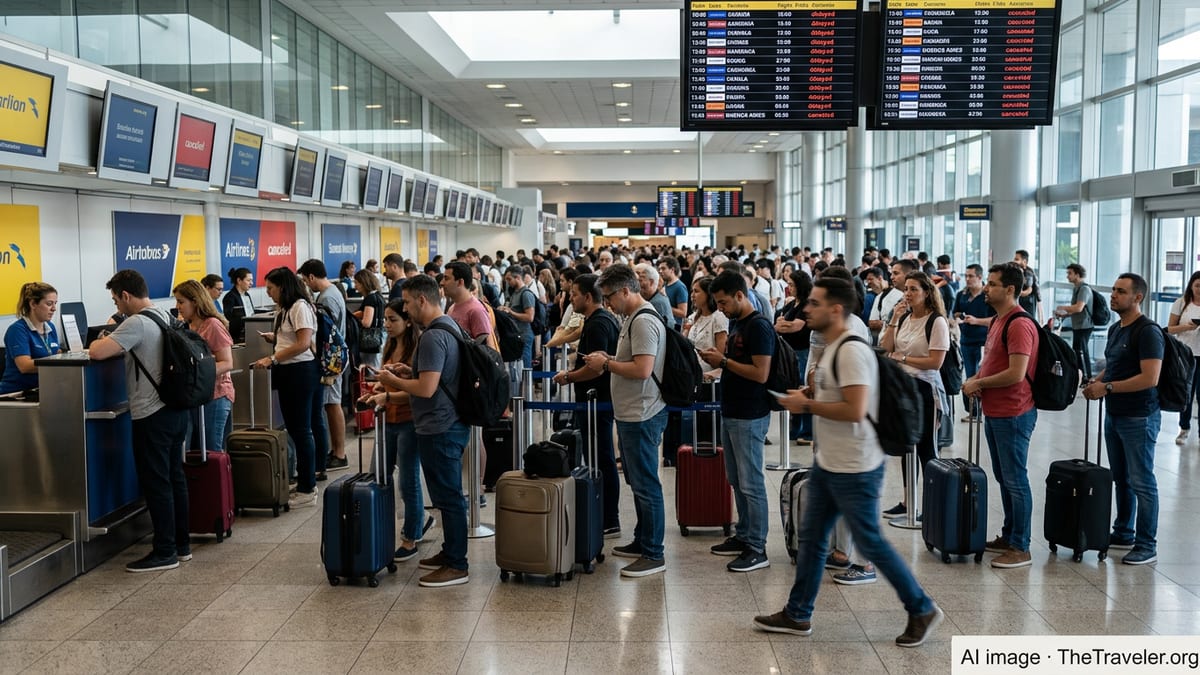
Administrative setback strands squad in Mexico
The squad had been based in Playa del Carmen for the final stage of its World Cup buildup, with a short hop scheduled from Cancún to Miami ahead of Monday’s opening match against Saudi Arabia. According to reports from Latin American and European outlets, the chartered aircraft assigned to carry the team did not have the necessary authorization to enter United States airspace, halting departure plans at Cancún International Airport.
Coverage from sports media in Mexico, Uruguay and Europe indicates that what initially appeared to be a routine transfer became a prolonged wait as aviation paperwork and operating permits were reviewed. Accounts describe a delay extending for several hours while tournament organizers, the airline and national federation representatives worked through the implications of the documentation shortfall.
Publicly available information from the global governing body later described the disruption as the result of an airline authorization error in Mexico, which meant the aircraft scheduled to transport Uruguay could not depart on time for Miami. The stop in Mexico had been designed as a straightforward staging point, but instead became an unexpected test of the logistical systems underpinning this expanded World Cup.
Search for replacement aircraft against the clock
Once it became clear the original charter could not operate as planned, attention turned to finding an alternative way to move the delegation to South Florida. Reports indicate that organizers and the Uruguayan camp raced against strict arrival cutoffs imposed for teams entering the United States ahead of their group-stage fixtures.
Spanish and Latin American coverage note that the team needed to reach Miami by early Sunday evening local time to comply with tournament travel protocols, leaving only a narrow window to rebook an entire World Cup delegation. Accounts suggest that officials explored options to secure another aircraft that fully met United States entry and operating requirements, ultimately commissioning a replacement flight to keep Uruguay on course for its opening game.
While the final solution allowed the squad to depart Mexico, the process compressed an already tight schedule. The late confirmation of a new aircraft, combined with airport handling and immigration procedures, meant that players and staff faced a significantly reduced recovery and preparation window once in Florida.
Late Miami arrival disrupts pre-match program
The delayed takeoff from Cancún translated into a notably late arrival in Miami, with multiple outlets reporting that the team reached the host city only hours before media and training commitments originally planned for the day. Some coverage notes that at least part of the official pre-match program, including scheduled press activities, had to be curtailed or reshaped because of the travel problems.
Reports from international media describe Uruguay effectively operating on a compressed timeline, landing in Miami behind the intended schedule yet still needing to navigate airport formalities, ground transfers and check-in at its tournament base. The shortened turnaround left limited time for players to rest, acclimatize to the venue and complete final tactical work at the stadium where they are due to open their campaign.
Analysts following the team suggest that while the disruption is unlikely to alter core match preparation, it affects the rhythm and routine coaches tend to favor before major fixtures. Recovery protocols, light training sessions and media obligations all had to be adjusted to fit the revised timetable imposed by the aviation delay.
Spotlight on World Cup transport logistics
The incident has drawn wider attention to the complex logistics of moving 48 national teams and their entourages around three host countries. Coverage in regional media and international newspapers frames Uruguay’s experience as part of a broader pattern of travel challenges that have emerged around the tournament, underscoring the dependence on flawless coordination between airlines, airport authorities and event organizers.
Reports indicate that, in this case, the charter aircraft’s lack of appropriate documentation or permits for United States operations proved decisive. Aviation specialists quoted in broader tournament coverage often highlight that international charters must comply with a web of bilateral agreements, safety approvals and operational rules, any of which can cause disruption if not fully in order ahead of departure.
The governing body’s public description of an airline authorization error has fueled discussion over where responsibilities lie when teams encounter such obstacles. Analysis in sports and travel media points to a shared obligation between tournament organizers, contracted carriers and national federations to ensure that aircraft, routes and permits are vetted well in advance, particularly when tight competition schedules leave little margin for error.
Impact on fans, schedules and future planning
While the Uruguay squad ultimately reached Miami in time to fulfill its World Cup obligations, the delay had ripple effects beyond the team itself. Travel-focused outlets and fan reports note that supporters tracking training sessions, open events or media appearances in South Florida faced uncertainty as the timeline shifted, with some activities reduced or moved behind closed doors once the team’s arrival slipped later into the day.
For tournament planners and host cities, the episode serves as a cautionary example of how administrative issues can quickly escalate into operational disruptions when thousands of visitors, broadcasters and local services are geared around tightly scheduled team movements. Observers in the travel sector suggest that future large-scale events may respond by building in greater redundancy to charter plans, including pre-cleared backup aircraft and more conservative arrival buffers.
For Uruguay, the priority now turns to refocusing on the pitch after an unexpected test of patience and adaptability en route to Miami. Yet within World Cup travel circles, the grounded charter in Mexico is likely to remain a reference point in discussions about aviation permitting, contingency planning and the fine margins that separate a smooth team transfer from a logistical scramble on the eve of a global showcase.