

More news on this day
Major US airlines are doubling down on outdoor lounge terraces in San Francisco, Los Angeles and Atlanta as a way to keep high-paying travelers insulated from mounting airport disruptions, frequent ground stops and cascading flight cancellations across the United States.
Get the latest news straight to your inbox!
Outdoor Terraces Become Premium Pressure Valves
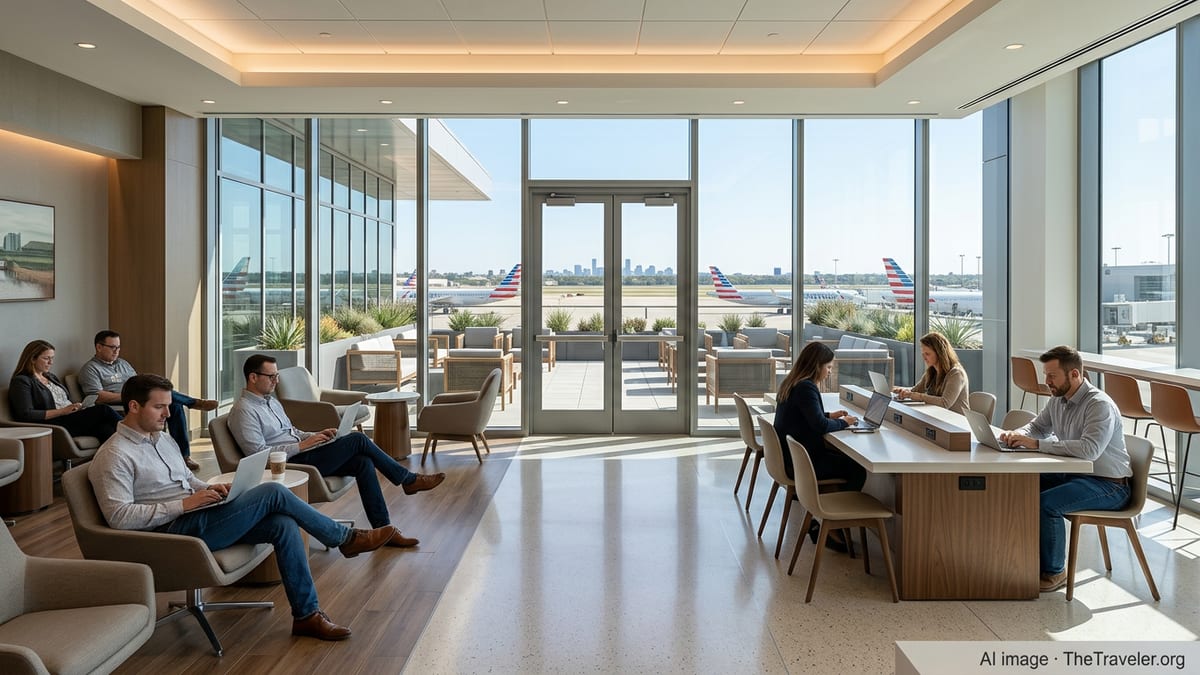
Outdoor terraces that once served mainly as aspirational amenities are increasingly being positioned as operational pressure valves for airlines facing persistent schedule instability. Publicly available lounge maps and recent traveler reports show a growing network of open-air spaces attached to premium facilities at key hubs, including San Francisco International Airport, Los Angeles International Airport and Hartsfield–Jackson Atlanta International Airport.
Airlines are emphasizing these terraces as overflow and rebooking zones during disruption spikes, using them to absorb premium passengers displaced by missed connections or rolling delays. Instead of crowding terminal gate areas, eligible customers are being directed to club and flagship lounges where outdoor decks provide additional capacity for waiting, dining and working while airline teams rework itineraries.
The trend has accelerated in the wake of technology-related outages and severe-weather events that have repeatedly snarled US operations since 2024. Industry coverage of those disruptions has highlighted how quickly traditional club interiors can become saturated, pushing carriers to rethink how indoor and outdoor space can be flexed when schedules unravel.
Analysts tracking lounge development note that airlines are no longer treating terraces solely as aspirational design flourishes. In several recent projects, outdoor decks have been planned from the outset as functional extensions of key hubs, intended to keep premium travelers on the “secure side” of the airport and away from congested concourses when irregular operations hit.
San Francisco Bets on Open Air for Busy International Banks
San Francisco International Airport has emerged as a focal point for the new strategy. The airport already offers multiple outdoor viewpoints, including a public SkyTerrace and an outdoor observation area linked to the international terminal. In parallel, airlines have begun integrating open-air concepts directly into premium lounge footprints serving long-haul traffic.
Recent coverage of SFO’s lounge scene highlights a growing set of terraces attached to carrier and alliance facilities, with new-build and refurbished clubs expected to add thousands of square feet of open-air seating overlooking the airfield. A newly previewed United Club project, for example, is centered on a large terrace positioned as a standout feature for the airline’s international operation, designed to accommodate significant numbers of premium customers during peak departure waves.
For airlines, the business case at SFO is clear. The airport’s transpacific and transcontinental banks leave little slack when a storm front, air-traffic-control program or technical issue slows departures. Outdoor terraces effectively provide a release valve, enabling carriers to move disrupted premium passengers out of crowded gate areas into controlled environments where they can be re-accommodated, fed and kept informed while crews and aircraft are repositioned.
Travelers passing through SFO in recent months have described a noticeable shift in how these spaces are used, with terraces functioning as quiet work zones during normal operations and as high-capacity waiting rooms when departure queues lengthen. Seating, heat elements and weather protection have been added to keep them usable in the airport’s often cool and windy conditions.
Los Angeles Showcases the Model for West Coast Hubs
Los Angeles International Airport has become a showcase for the open-air lounge model. LAX now features multiple terraces attached to premium facilities, including alliance and carrier-specific lounges that directly serve long-haul international passengers and high-tier elites. Lounge guides published in early 2026 describe expansive terraces with runway views, fire pits and dining setups that can absorb large numbers of guests when terminals grow congested.
One of the most prominent examples is the outdoor space associated with a major Star Alliance lounge in the Tom Bradley International Terminal, widely cited by frequent flyers for its size and ability to remain relatively uncrowded even in peak evening departure banks. Separately, carrier-branded lounges in other terminals, including a dedicated premium product from Delta Air Lines at LAX, feature terraces that airlines are actively marketing as part of a calmer journey experience.
The operational role of those terraces has grown as Los Angeles has faced repeated disruption cycles, including fallout from the 2024 technology outage that left Delta and other carriers with thousands of cancellations. While terraces do not solve systemic scheduling issues, they allow airlines to concentrate high-yield customers in more comfortable surroundings while operations teams work through backlogs.
In practical terms, that can mean passengers spending multi-hour delays outdoors rather than in crowded gate pens, with ready access to staffed rebooking desks, hot meals, showers and workspace. For airlines rebuilding goodwill with their most profitable customers after major operational failures, that differentiation is increasingly important.
Atlanta Links Terraces to Irregular Operations Playbooks
Hartsfield–Jackson Atlanta International Airport, the primary hub for Delta Air Lines, is also seeing outdoor lounge concepts folded into broader disruption planning. While Atlanta’s climate and airfield layout differ from coastal hubs, premium facilities there are being upgraded to include semi-open and open-air areas that can be activated when weather or airspace challenges ripple through the network.
Industry reporting on Delta’s premium strategy indicates that design elements pioneered at LAX, including outdoor zones and double-height spaces, are informing club renovations and new-build projects at the airline’s home base. Terraces and partially open verandas provide extra seating and alternative airflow in a hub that regularly confronts thunderstorms and heat-related ground delays.
These spaces are being positioned as part of irregular operations playbooks that aim to keep premium customers out of crowded concourses during mass rebookings. Carriers can triage passengers inside lounges, prioritizing connections, reassigning seats and arranging overnight options while travelers have access to showers, food and quieter seating, including outdoor areas when weather permits.
For Atlanta’s role as a connecting megahub, the ability to decant hundreds of disrupted passengers into controlled spaces is increasingly viewed as a competitive asset. Outdoor and semi-outdoor extensions effectively increase the capacity of premium lounges without requiring additional terminal footprints, a significant consideration in a constrained airport campus.
Premium Segmentation Widens the Gap for Regular Travelers
The rapid build-out of open-air terraces for premium passengers also underscores a widening gap between the experiences of high-yield customers and the general traveling public during severe disruptions. Lounge projects in San Francisco, Los Angeles and Atlanta are heavily targeted at business-class, first-class and top-tier elite travelers, along with select co-branded credit card holders.
During large-scale cancellations and delays, this segmentation becomes more visible. Published lounge access rules show that only a fraction of disrupted passengers can make use of terrace-equipped spaces, while most travelers remain in crowded terminals facing limited seating, long lines for food and limited access to airline staff. Social media and traveler forums frequently contrast images of packed gate areas with photos of comparatively spacious terraces reserved for premium guests.
Airlines argue, through marketing materials and public statements, that investments in premium lounges help fund broader network upgrades and that better treatment of high-yield customers supports overall financial health. Critics counter that the most visible benefits of recent capital spending, including dramatic terrace expansions, are concentrated in a small slice of the customer base even as systemwide reliability remains under pressure.
For now, the build-out of outdoor terraces remains firmly focused on premium segments at the largest hubs. Industry observers expect more US airports to see similar projects unveiled over the next several years as airlines refine designs proven at San Francisco, Los Angeles and Atlanta and continue searching for ways to manage disruption without sacrificing their most profitable travelers’ experience.