


More news on this day
JetBlue is accelerating its expansion at Fort Lauderdale-Hollywood International Airport, turning the South Florida gateway into a powerful hub for Colombia-bound travelers seeking to bypass chronic weather and congestion disruptions at major northern airports.
Get the latest news straight to your inbox!
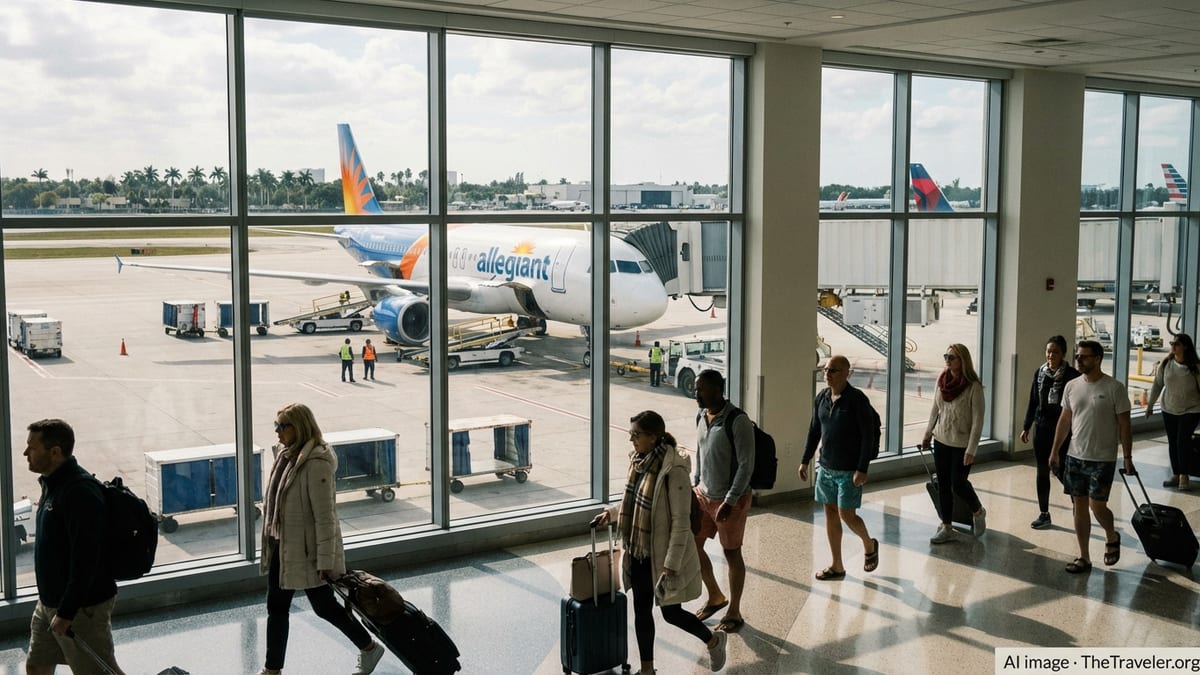
Fort Lauderdale Becomes Strategic Escape Valve From Northern Chaos
The latest network moves position Fort Lauderdale as one of JetBlue’s most important focus cities, with publicly available schedules and airport data indicating the carrier is on track to operate well over 100 daily departures there by late 2026. Capacity growth is concentrated on leisure and visiting-friends-and-relatives markets that are typically exposed to winter storms and summer congestion when routed through New York, Boston or other northeastern hubs.
By concentrating more Colombia flying through Fort Lauderdale, JetBlue is offering passengers in the northern United States an additional option: connect south through Florida to avoid weather-prone airports where snow, ice and low-visibility conditions can quickly lead to cascading cancellations. Operational records and U.S. Department of Transportation enforcement actions show that JetBlue, like many U.S. carriers, has faced scrutiny over delays linked to tightly scheduled operations at major northern airports, reinforcing the strategic value of a more weather-friendly connection point.
Fort Lauderdale’s location outside the U.S. snow belt does not eliminate weather risk, particularly during the Atlantic hurricane season, but it substantially reduces exposure to the snowstorms and prolonged freezing conditions that routinely disrupt winter travel in the Northeast and upper Midwest. For travelers to and from Colombia, where demand often peaks around school holidays and year-end periods, the ability to route via South Florida is being marketed as an attractive alternative to connections farther north.
Industry analysis notes that while Miami International remains South Florida’s dominant long-haul hub, Fort Lauderdale has emerged as a competitive secondary gateway focused on low-cost and hybrid carriers. JetBlue’s stepped-up investment is widening the airport’s role in north–south traffic flows, particularly to the Caribbean and northern South America.
New and Expanded JetBlue Routes Deepen Colombia Connectivity
Published schedules for 2025 and 2026 show JetBlue rebuilding and enlarging its Colombia portfolio from Fort Lauderdale, adding new cities and restoring capacity on established routes. Historically, the airline has linked Fort Lauderdale with Bogotá, Medellín and Cartagena, and recent announcements indicate a renewed emphasis on these markets alongside interest in additional Colombian destinations.
Coverage in Colombian and U.S. aviation media in May and June 2026 describes a “massive” Fort Lauderdale expansion that includes extra frequencies to Bogotá and Medellín and upgraded service to Cartagena, where flights that once operated several times per week are moving toward daily service. Local reports in Colombia also reference JetBlue’s plans to introduce new nonstop links between Fort Lauderdale and secondary Colombian cities as aircraft and slots become available, supporting a broader push to capture visiting-friends-and-relatives demand previously served by ultra-low-cost competitors.
The timing closely follows the retreat and restructuring of several carriers on U.S.–Colombia routes, as well as the collapse or downsizing of key players in the South Florida market. Analysts note that JetBlue is stepping into capacity gaps left by other airlines, particularly on routes where Colombian travelers had grown accustomed to frequent, low-fare service but where schedule reliability occasionally suffered.
For Colombian tourism boards and local airports, additional nonstops from Fort Lauderdale bring incremental U.S. connectivity without the need for passengers to transit congested northern hubs. For JetBlue, the routes expand its presence in one of Latin America’s fastest-growing aviation markets while helping to balance seasonal swings between domestic and international demand.
Shielding Passengers From Disruptions With a South Florida Gateway
The network pivot toward Fort Lauderdale is unfolding against a backdrop of heightened public scrutiny of airline reliability. U.S. regulators have taken enforcement action over chronically delayed flights in recent years, and consumer forums frequently highlight congestion around the New York area as a source of missed connections and lost travel days. By contrast, routing connections through Fort Lauderdale can shorten exposure to the tightly constrained airspace and airport infrastructure of the Northeast.
Operational data and traveler accounts over recent winter seasons point to repeated patterns: storms or strong winds in New York or Boston trigger ground stops and flow-control measures that ripple across carrier networks. Flights to and from Colombia that rely on northern hubs can be particularly vulnerable, because they often operate at the edges of the day and use narrow scheduling buffers. When snow or low ceilings lead to runway capacity reductions, these services are frequently among the first to face lengthy delays or cancellations.
Routing via Fort Lauderdale does not eliminate such risks, but it allows airlines to design schedules with more flexible turn times and less exposure to chronic congestion. JetBlue’s growing Fort Lauderdale operation is configured with multiple daily departures to key domestic points, giving the carrier more options to re-accommodate passengers if a disruption occurs on one leg of the journey. For customers, this can translate into same-day recovery options that might not exist when flying through a single, heavily slot-controlled hub.
Travel advisors and consumer advocates note that many passengers are increasingly willing to consider a short detour through South Florida if it reduces the probability of weather-related cancellations in the North. The gradual accumulation of Colombia frequencies from Fort Lauderdale fits neatly into that preference, turning what was once a niche connection into a mainstream alternative.
Competitive Pressure Rises Across the South Florida–Colombia Corridor
JetBlue’s strategy in Fort Lauderdale is also reshaping competitive dynamics on South Florida–Colombia routes. Historically, ultra-low-cost carriers from the region held a strong position in price-sensitive segments, especially on services to Medellín and Cartagena. The recent exit or downsizing of some operators has opened space for full-service and hybrid carriers to add capacity, often with upgraded onboard products.
Industry reports indicate that JetBlue is emphasizing its cabin experience, including complimentary Wi-Fi and entertainment, to differentiate its service from low-cost rivals while still targeting value-conscious travelers. In Colombia, this positioning is aimed at customers who might previously have chosen ultra-low-cost carriers for price alone but who are now weighing schedule reliability, baggage inclusions and perceived safety records more heavily.
The expansion from Fort Lauderdale also exerts pressure on competitors at nearby Miami International Airport, where large network airlines maintain extensive Colombia operations. Analysts suggest that incremental JetBlue capacity from Fort Lauderdale could encourage fare competition across the region, particularly during peak holiday periods when demand for Colombia is strong among diaspora communities in the United States.
At the same time, Fort Lauderdale-Hollywood International Airport stands to benefit from a more diversified mix of carriers and destinations. Airport statistics already show JetBlue as one of the top operators by passenger volume, and the addition of more Colombia routes further cements the airline’s role as a cornerstone of the facility’s international growth strategy.
What Travelers Should Expect on the New Fort Lauderdale–Colombia Flights
For passengers, JetBlue’s expanding Fort Lauderdale hub translates into more choices in timing, routing and service level when flying to Colombia. Flight-search data for travel later in 2026 and into 2027 show growing numbers of one-stop itineraries from northern U.S. cities that connect in Fort Lauderdale rather than New York or Boston, often with shorter total travel times than two-stop options through multiple hubs.
Travel publications advise Colombia-bound passengers to compare schedules that route through Fort Lauderdale with traditional connections through northern airports, particularly during winter and early spring when snow and ice are most disruptive. For travelers based in the Northeast, a common strategy involves taking an early-morning departure to Fort Lauderdale followed by a same-day connection to Bogotá, Medellín or Cartagena, thereby clearing the snow-prone region before the worst of the day’s delays develop.
Observers also point out that the strengthening of Fort Lauderdale as a hub could improve day-of-travel flexibility. With more JetBlue flights clustered around peak connection times, passengers affected by irregular operations may have additional rebooking options that do not require overnight stays. This is particularly relevant for Colombia services, which often operate near curfew times at both origin and destination airports.
As JetBlue continues to execute its Fort Lauderdale strategy, travelers can expect ongoing adjustments in schedules, frequencies and destinations. However, the underlying trend is clear: South Florida is evolving into a central pillar of the airline’s Latin America playbook, offering a practical detour around northern travel chaos for those heading to and from Colombia.