


More news on this day
France-bound travelers connecting through major United States hubs are facing fresh uncertainty after a runway incursion involving a France-operated long-haul flight prompted an aviation alert that is rippling across transatlantic schedules.
Get the latest news straight to your inbox!
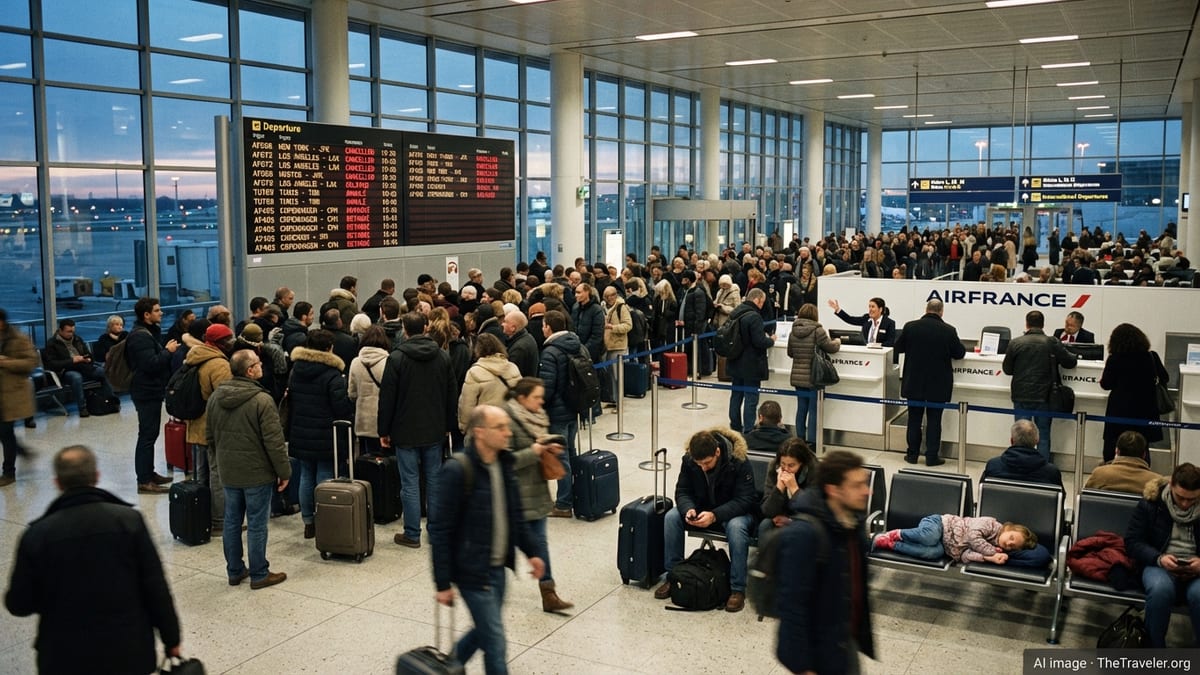
Runway Breach at LAX Sparks Emergency Stop and Safety Review
Recent social media and aviation community reports describe an aborted takeoff by an Air France service at Los Angeles International Airport after another aircraft edged across a hold line toward the active runway, triggering a high-speed stop on the takeoff roll. The incident has revived concern about runway incursions at crowded United States hubs and their impact on widebody long-haul operations.
Publicly available accounts indicate that the France-bound jet rejected takeoff just as ground movement monitoring systems and visual checks highlighted the encroaching business jet near the runway threshold. While the aircraft returned safely to the gate and no injuries were reported, the event has been catalogued alongside a series of close calls that already had regulators and safety analysts focused on surface-movement risk at large US airports.
Travel industry commentary notes that, although this specific runway breach did not lead to a collision, the combination of heavy traffic, staff strain and complex taxiway layouts at hubs such as Los Angeles, New York and Atlanta has created a backdrop where even minor lapses can generate major delays. For France-bound passengers relying on US gateways, a single aborted takeoff can cascade into missed connections at Paris and beyond.
The LAX incident follows a deadly runway collision at New York LaGuardia in March involving a regional jet and an airport fire truck, which has already prompted closer scrutiny of procedures for vehicle crossings and runway-status lighting. Together, the two events have fueled calls for more robust separation between departure traffic and ground movements when heavy widebody aircraft are accelerating for takeoff.
Heightened US Safety Posture Meets Transatlantic Demand
Regulatory bulletins and independent aviation analysis in early April highlight a broader push in the United States to address runway incursions and surface risk after a multi-year uptick in serious close calls. Aviation news coverage points to government watchdog findings about vulnerabilities in some air traffic control and alerting systems, reinforcing the case for upgraded technology that can automatically warn when an aircraft or vehicle is entering an active runway.
This heightened safety posture is colliding with strong transatlantic demand, especially on routes linking major US cities with Paris Charles de Gaulle and other French gateways. Recent disruption data compiled by passenger-rights platforms and travel media shows that Air France, United Airlines and other transatlantic carriers are already juggling rolling cancellations and delays on long-haul routes between Europe and North America.
Analysts note that when an event such as the LAX runway breach triggers an emergency stop, crews must often undergo aircraft inspections and duty-time checks, while airlines reevaluate the rest of the day’s flying program. That can lead to missed aircraft rotations for Paris-bound services, last-minute aircraft substitutions and, in some cases, outright cancellations of overnight departures.
Because many US–France flights are timed to connect with early-morning or midday banks in Paris for onward travel across Europe and Africa, even a short delay departing the United States may break those connections. In recent days, published disruption trackers have highlighted missed onward flights from Paris to cities such as Nice, Toulouse and Marseille as passengers arrive late from North America.
Knock-On Effects Across French Hubs Already Under Strain
France’s own airport network is contending with additional pressure from staffing shortages and industrial action. Earlier in April, operational data showed cancellations and delays at Paris Charles de Gaulle, Paris Orly and Nice Côte d’Azur, with air traffic control and airport staffing constraints forcing airlines to trim schedules and reroute traffic.
When United States departures involving France-destined aircraft experience runway-related delays or emergency stops, the impact can therefore be magnified once those flights finally reach French airspace. Published coverage of recent disruptions describes long-haul services arriving late into Paris and struggling to secure stands, gates and crews that are already stretched by local constraints.
Travel observers point out that the combined effect of US runway safety actions and French ground-capacity limits is particularly noticeable around multi-leg itineraries. Passengers flying, for example, Los Angeles to Paris via New York or Atlanta may find that a safety-related delay on the first leg leads to missed long-haul departures, which in turn arrive late into France, where local congestion compounds the problem.
Several disruption-tracking services report that airlines are increasingly consolidating flights, using larger aircraft or adjusting departure times on US–France routes to create extra slack in the system. While these changes are intended to maintain safety margins and operational resilience, they also introduce additional uncertainty for travelers who booked months in advance based on now-altered timetables.
What International Passengers Should Watch Today
For travelers scheduled to fly from the United States to France in the coming days, publicly available guidance from aviation analysts and consumer advocates converges on a few practical priorities. First, passengers are urged to monitor their reservations closely in the 24 hours before departure, as airlines may swap aircraft, adjust departure times or rebook itineraries in response to evolving safety and staffing constraints.
Second, experts recommend building extra connection time into routings that rely on busy US hubs, especially those that have recently experienced runway incidents or operational strains. A tight domestic connection into an evening Paris departure may be more vulnerable to disruption if an earlier runway incursion, weather delay or crew issue forces air traffic controllers to meter departures or impose short ground stops.
Third, passengers heading beyond Paris to other French or European cities are being advised to pay particular attention to minimum connection times and the timing of the first wave of morning departures from Charles de Gaulle and Orly. If a US-origin long-haul arrives after that wave has departed, same-day rebooking options may be limited, especially on smaller regional routes.
Travel specialists also emphasize the importance of tracking luggage handling when reroutes occur. Safety interventions like aborted takeoffs can trigger aircraft changes, overnight delays or diversions, increasing the risk of bags missing tight connections. Keeping essential items in carry-on baggage and verifying baggage tags during rebooking is being highlighted as a simple but effective step.
Regulatory Outlook and Longer-Term Implications for US–France Routes
Industry reporting suggests that United States regulators and airport operators are likely to respond to the LAX runway breach and recent LaGuardia collision with a mix of short-term directives and longer-term investments. Short-term steps may include refresher training for ground vehicle operators, reinforced procedures for runway crossings during heavy departure banks, and closer oversight of air traffic controller staffing and shift patterns.
In the medium term, aviation policy coverage points to renewed interest in cockpit-based runway alerting tools and expanded deployment of surface radar and lighting systems that can detect and warn of incursions in real time. While these technologies carry significant costs, advocates argue that they are increasingly necessary as traffic rebounds and runway complexes become more congested.
For France-bound long-haul markets, the main implication is that crews and controllers may opt for more conservative margins around departure and arrival windows, particularly at peak times. That can translate into slightly longer taxi times, holding patterns on approach, or departure spacing that reduces overall throughput during busy evening transatlantic waves.
Travel planners caution that, for individual passengers, these measures are likely to be experienced as a continuation of the pattern now visible in early April: more schedule adjustments, occasional last-minute gate changes, and a higher-than-usual risk of missed connections when itineraries rely on multiple tight transfers. At the same time, public commentary from safety specialists underlines that such steps are designed to preserve the excellent overall safety record of US–France long-haul travel, even as the system navigates a difficult operational period.