


More news on this day
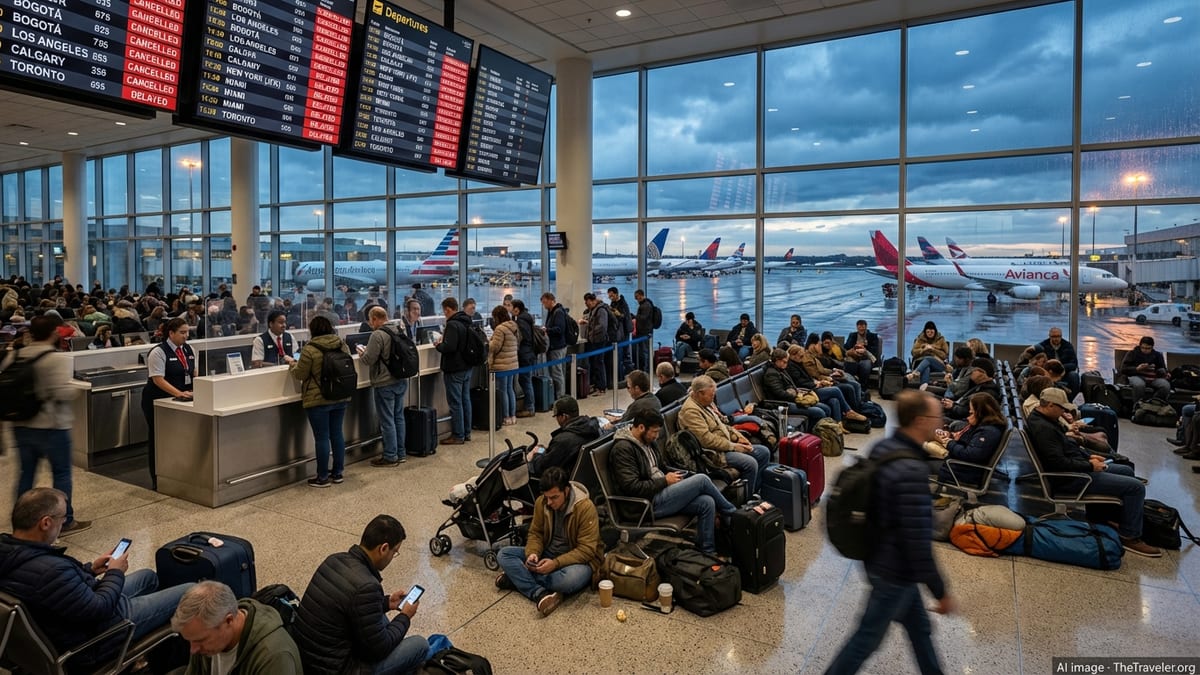
Thousands of passengers across the United States faced major travel disruption as 5,418 flight delays and 576 cancellations rippled through key Florida and Northeast airport hubs, underscoring ongoing strains in the nation’s aviation system during the critical 2026 summer season.
Get the latest news straight to your inbox!
Florida and Northeast Hubs Bear the Brunt
The latest wave of disruption concentrated on some of the country’s busiest coastal gateways. Publicly available tracking data indicates that major Florida airports, including Miami, Orlando, Tampa, and Fort Lauderdale, saw cascading delays that stretched throughout the day, while heavy congestion extended north into New York, Boston, Philadelphia, and other Northeast hubs.
The combined tally of 5,418 delayed flights and 576 cancellations reflects the scale of the shock to the network rather than a single localized issue. With Florida acting as a primary gateway for domestic leisure travel and the Northeast hosting several of the nation’s largest international and business hubs, operational problems in these regions quickly reverberated across the wider system.
Reports from airline and airport status boards show that some carriers experienced rolling disruptions as aircraft and crews failed to reach their next scheduled flights on time. The result was a patchwork of delays, missed connections, and last minute cancellations that strained airport facilities and customer service operations.
Industry data over recent months has already pointed to a fragile equilibrium in on time performance. When concentrated disruption hits a cluster of large airports simultaneously, the margin for recovery is narrow, leaving travelers exposed to prolonged and widespread knock on effects.
Weather, Staffing and Infrastructure Strains Intersect
Early assessments of the disruption point to a familiar mix of contributing factors. Unsettled summer weather across the Eastern Seaboard has repeatedly triggered ground stops, reroutes, and extended taxi times, constraining capacity at some of the region’s busiest airfields. Even when storms are short lived, their impact on tightly scheduled operations can last for hours.
Aviation analysts note that weather alone rarely explains disruption of this magnitude. Persistent staffing challenges in air traffic control and airline operations, combined with aging airport infrastructure, have left the system more vulnerable to relatively routine storms or airspace constraints. When flight schedules are compressed to meet strong summer demand, any reduction in runway or airspace capacity can quickly overwhelm available buffers.
Published performance data for late 2025 and early 2026 already show elevated rates of delays tied to national aviation system constraints and late arriving aircraft, signaling a network that operates close to its limit on peak days. The latest episode fits that pattern, with delays compounding as schedules falter and spare aircraft and crew capacity proves insufficient to restore normal operations quickly.
Labor availability remains another pressure point. Even as airlines have rebuilt workforces since the pandemic slump, several operational roles, from pilots and cabin crew to maintenance and ground handling staff, continue to face tight labor markets. When prolonged disruptions stretch shifts or trigger mandatory rest periods, carriers can be forced to cancel flights even after weather conditions improve.
Passenger Impact at Height of Summer Travel
The timing of the disruptions during the 2026 peak summer travel season magnified the impact on travelers. Florida’s airports host large numbers of families and leisure travelers bound for theme parks, cruises, and beach destinations, while Northeast hubs serve a dense mix of domestic and transatlantic traffic, including business travelers and tourists.
According to publicly available airport terminal updates and traveler accounts, long queues formed at check in counters, security lanes, and rebooking desks as passengers attempted to secure alternative flights or overnight accommodation. In some cases, same day rebooking options were scarce, particularly on popular leisure routes where flights were already operating near capacity.
Extended delays also translated into a surge of missed connections, particularly at large hub airports where travelers rely on tight transfer windows. As inbound flights arrived late or were cancelled outright, onward journeys were disrupted, forcing passengers to reroute via alternative cities or delay travel by a full day or more.
The knock on effects are expected to linger beyond the initial disruption period. Once aircraft and crews fall out of their planned rotations, it can take several days for carriers to fully restore normal patterns, leading to elevated risk of schedule changes even after headline cancellation numbers begin to decline.
Operational and Regulatory Scrutiny Intensifies
The scale of the latest aviation crisis is likely to attract renewed scrutiny of how airlines, airports, and regulators are managing capacity, resilience, and consumer protections. Recent Air Travel Consumer Reports released by federal transportation authorities for late 2025 showed progress in on time performance compared with earlier pandemic era years, but also documented persistent vulnerabilities related to national aviation system delays and late arriving aircraft.
Consumer advocates have pushed for clearer, more enforceable rules on passenger compensation and rebooking obligations when flights are cancelled or severely delayed, particularly when the causes are within airline control. The distinction between disruptions attributed to weather and those linked to operational decisions remains a point of contention for many travelers seeking refunds or reimbursement for out of pocket expenses.
Policy discussions around air traffic control modernization and staffing are also likely to gain renewed urgency. Long running plans to deploy more advanced traffic management technology and improve controller staffing levels across key facilities are often cited by industry specialists as critical steps to improving system resilience during high demand periods and adverse weather events.
Airlines, for their part, face growing pressure to balance aggressive summer scheduling with realistic assessments of crew availability, maintenance needs, and likely weather disruptions. Overly tight turn times and ambitious utilization targets can deliver short term capacity gains but leave little room to absorb shocks without large scale passenger impact.
What Travelers Can Expect in the Coming Weeks
In the immediate aftermath of the 5,418 delays and 576 cancellations, published schedules suggest that carriers are attempting to stabilize operations by selectively trimming frequencies on certain routes, swapping aircraft types, and repositioning crews to cover the most disrupted hubs. Travelers flying into or out of Florida and the Northeast in the coming days may still encounter residual delays as these adjustments work through the network.
Industry observers advise that, during periods of elevated disruption risk, passengers build in longer connection times, monitor flight status closely, and consider early morning departures, which historically face fewer knock on delays. While such strategies cannot eliminate risk, they can reduce the likelihood of becoming stranded by late day cascading disruptions.
The latest crisis reinforces a broader pattern that has characterized U.S. aviation in recent years: even as demand has recovered strongly and airlines report solid bookings, the underlying system remains sensitive to sudden shocks. With hurricane season and continued convective storm activity still ahead for 2026, the potential for additional bouts of severe disruption remains high, particularly at coastal hubs.
For now, the episode serves as a stark reminder that the country’s most heavily trafficked air corridors, particularly between Florida and the Northeast, continue to operate with limited slack. Until structural reforms in infrastructure, staffing, and scheduling are fully implemented, large scale disruption events of the kind seen in this latest wave of delays and cancellations are likely to remain a recurring feature of the U.S. travel landscape.