


More news on this day
Flight plans across the Gulf are under renewed pressure after Iranian missile and drone barrages triggered air-defense interceptions over Kuwait, Bahrain and Jordan, prompting US embassies to warn citizens of potential disruptions and rapidly changing security conditions.
Get the latest news straight to your inbox!
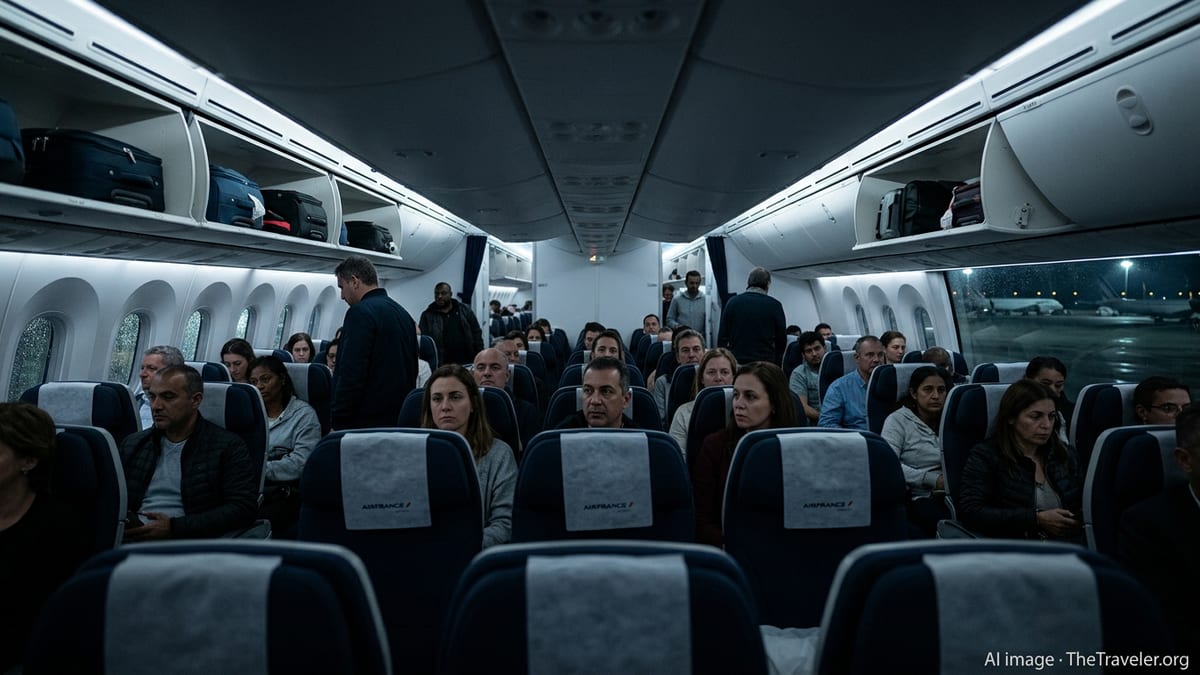
Missile interceptions heighten tensions over key air corridors
Published coverage indicates that Iran’s latest round of missile and drone launches targeted locations linked to US forces in Jordan, Kuwait and Bahrain, sending air defenses into action across several Gulf states. Reports from regional and international media describe interceptions over Jordanian territory, with multiple missiles destroyed in the air and others falling in remote areas away from major population centers.
According to open-source reporting, Bahrain and Kuwait also activated their air-defense systems to engage incoming drones and missiles, with warning sirens sounding in parts of both countries and residents urged to seek shelter or remain indoors. In some cases, explosions heard over urban areas were attributed to interception activity rather than direct strikes on city centers.
These exchanges come on the heels of US strikes on Iranian targets in recent days, which analysts describe as part of a broader escalation that has periodically spilled into Gulf airspace since earlier in the year. The pattern has left airlines and aviation authorities on edge, given the density of commercial routes that cross the region’s skies and the importance of Gulf hubs to global long-haul connectivity.
For travelers, the immediate impact is less about direct physical risk on board aircraft and more about the operational knock-on effects that follow even short-lived airspace alerts, including rerouting, holding patterns, and last-minute cancellations.
Dubai and regional hubs face renewed schedule volatility
Travel-industry reporting shows that disruptions have affected flights to and from several Gulf airports, particularly during and immediately after missile and drone alerts. Coverage from regional travel outlets notes that carriers serving Dubai International, one of the world’s busiest long-haul hubs, have had to adjust routings and timings as airspace restrictions ripple across neighboring states.
Earlier phases of the current crisis already prompted temporary suspensions of services into Kuwait and Bahrain by major Gulf airlines when airspace warnings were issued. Recent strikes and interceptions have revived concerns that similar measures may recur at short notice if regional militaries again restrict overflight or prioritize military movements.
Even when airports remain open, airlines may need to divert aircraft around affected airspace, lengthening flight times between Europe, North America and destinations in Asia, East Africa and Australasia. These changes can cascade through daily schedules, resulting in missed connections in Dubai, Doha or Abu Dhabi and forcing rebookings for through-passengers.
Travelers heading to the United Arab Emirates or transiting via Dubai are therefore being advised by airlines and travel agents to monitor bookings closely up to departure, build additional buffer time into tight connections, and remain prepared for rolling schedule updates.
US security alerts urge vigilance and readiness to change plans
In response to the latest missile activity, US embassies across the Middle East have reiterated security alerts first issued over the northern summer, urging citizens to exercise increased caution and remain prepared for rapid changes to flight operations. A worldwide caution notice published by the US Department of State in July highlighted the potential for flight cancellations, periodic airspace closures and other travel disruptions linked to regional tensions.
Separate country-level advisories for Bahrain, Jordan, Kuwait, Qatar and other Gulf states have raised or maintained warning levels at “reconsider travel,” citing the threat of missile and drone attacks and the prospect of significant disruption to commercial aviation. Publicly available guidance encourages US citizens living in or visiting the region to keep travel documents up to date, enroll in the Smart Traveler Enrollment Program, and monitor embassy alert channels as well as local media.
More recent embassy communications, summarized in regional news coverage, have gone further in urging Americans to be ready to depart certain countries via commercial means if the security situation deteriorates. Notices reference the possibility of unforeseen escalation and stress that flight options could narrow quickly if additional rounds of strikes or air-defense activity lead to sustained airspace restrictions.
While these alerts are primarily aimed at US nationals, similar advice is being echoed by other Western governments, whose travel advisories also reference the heightened risk environment for aviation and critical infrastructure in parts of the Gulf.
What travelers through Dubai and the wider region should expect
For passengers with itineraries touching Dubai, Kuwait, Bahrain, Jordan or neighboring states, the most immediate consequence of the current situation is the potential for short-notice disruption rather than the wholesale shutdown of air travel. Aviation regulators and airlines have developed procedures to route flights away from active conflict zones, and commercial jets typically cruise well above the altitude of most short-range missile and drone engagements.
However, even a limited window of restricted airspace can have substantial operational effects. Airlines may preemptively cancel rotations to ensure crews and aircraft are not stranded, or they may consolidate services and rebook affected passengers on alternative routes. Travelers heading into smaller regional airports may find that connections are reduced temporarily while carriers prioritize capacity on core trunk routes.
Travel media and risk-analysis reports suggest that flexible ticket conditions, comprehensive travel insurance and close communication with airlines are increasingly important for trips through the region. Passengers are also being encouraged to maintain digital access to booking details and airline apps, which are often the fastest way to receive real-time updates on gate changes, delays or cancellations arising from sudden security alerts.
For now, Dubai and other major hubs remain operational, but the combination of intermittent missile activity, air-defense interceptions and elevated government travel warnings means that conditions can shift quickly. Travelers planning winter and early-spring journeys through the Gulf are likely to face an environment where situational awareness and contingency planning are integral parts of the travel experience.
Balancing demand for Gulf travel with an evolving risk landscape
Despite the tension, demand for flights to and through Dubai, Doha and Abu Dhabi remains strong, driven by their role as key connectors between Europe, the Americas, Africa and Asia. Airlines have invested heavily in these hubs, and schedule planners are attempting to preserve as much capacity as possible while factoring in new security realities.
Industry observers note that some carriers are quietly diversifying routings and adding resilience to their networks, for example by scheduling additional capacity on alternative paths that avoid the most sensitive airspace or by coordinating with partners to share risk across alliance networks. These adjustments may not be visible to passengers beyond slightly altered flight times or routing maps on in-flight screens.
For travelers, the broader picture is one in which the Middle East remains accessible but more unpredictable than in previous years. Those planning leisure or business trips are being advised, in publicly available guidance and specialist risk briefings, to weigh the benefits of Gulf stopovers and regional visits against the possibility of itinerary changes, overnight delays or the need to reroute entirely if tensions flare again.
With US embassies and other diplomatic missions continuing to highlight the potential for further escalation, the situation is likely to remain fluid. Anyone booking flights through Dubai and neighboring hubs over the coming weeks may find that the most valuable travel accessory is up-to-date information on both security developments and airline operations.
Condé Nast Traveller Middle East: Dubai and Middle East flight disruption
US Department of State: Worldwide Caution security alert