


More news on this day
United Airlines is once more leading U.S. flight cancellations as a fresh round of thunderstorms and air-traffic restrictions disrupt operations across four of the carrier’s key hubs, creating new headaches for late-summer travelers.
Get the latest news straight to your inbox!
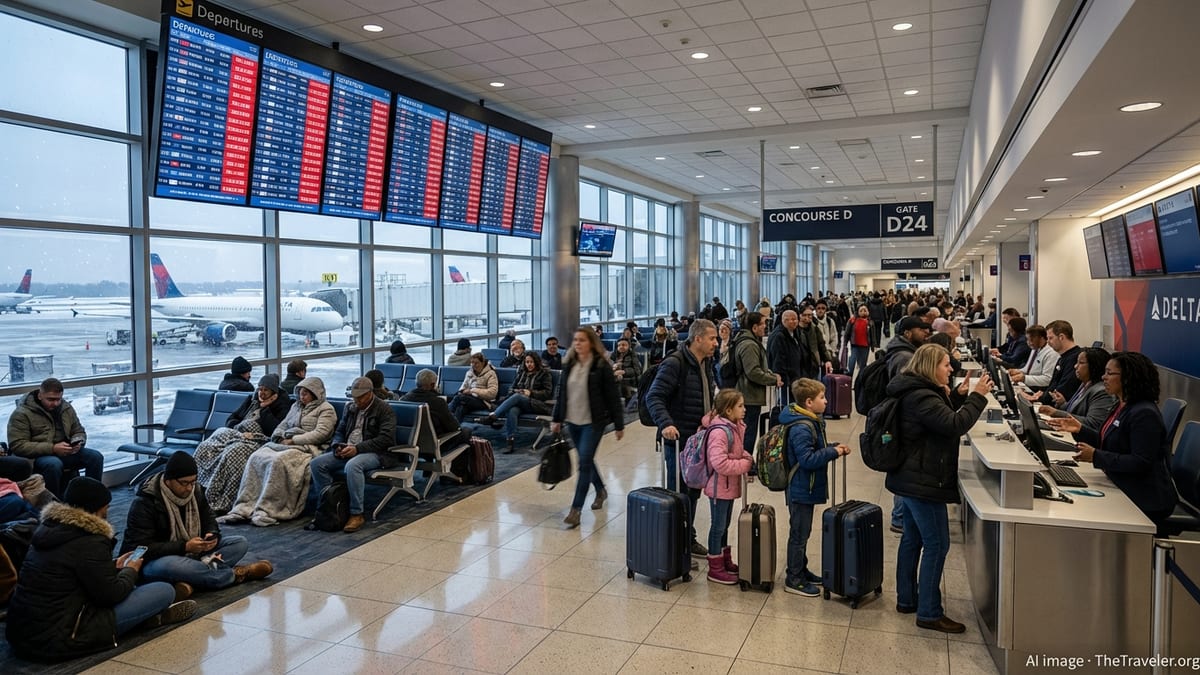
Storm Systems Converge on United’s Core Network
Tracking data from flight-monitoring services shows United Airlines at the top of the U.S. cancellation tables, with the carrier canceling more flights than any other major domestic airline as of Thursday, September 3. Publicly available figures indicate that while American Airlines has recently led by delay counts on some days, United has more often held the highest number of outright cancellations when summer storms flare over its core airports.
The latest wave of disruption coincides with active weather alerts and air-traffic control programs affecting four of United’s major hubs: Chicago O’Hare International Airport, Newark Liberty International Airport, Denver International Airport and Houston’s George Bush Intercontinental Airport. These airports sit directly beneath storm tracks that have repeatedly sent lines of thunderstorms across the nation’s midsection and Northeast corridor in recent weeks, triggering ground stops and flow-control measures that sharply reduce takeoff and landing capacity.
Industry reporting in recent days describes how these storms have forced the Federal Aviation Administration to impose temporary restrictions at multiple major hubs, leading to thousands of delays and hundreds of cancellations within, into or out of the United States in a single day. While disruptions have been spread among several carriers, United’s concentration of flights at the affected airports has left it particularly exposed when conditions deteriorate.
At the same time, operational dashboards tracking United’s network highlight rolling weather and air-traffic control alerts at Chicago, Denver and Newark, with warnings that both mainline and United Express cancellations are “possible to likely” as storms and associated congestion ripple through the system.
Why Four Hubs Under Weather Alert Matter So Much
United’s route map underscores why weather warnings at Chicago, Newark, Denver and Houston can translate quickly into leading national cancellation tallies. These airports function as central connection points in the airline’s hub-and-spoke model, pulling in traffic from dozens of smaller cities and redistributing travelers across the country and overseas.
Chicago O’Hare and Newark Liberty in particular handle large concentrations of domestic and transatlantic flying. When thunderstorms or low visibility force air-traffic controllers to reduce arrival and departure rates at those airports, airlines must trim schedules, often by canceling shorter regional flights first. Coverage of recent disruption days shows O’Hare and the New York area airports regularly among the top U.S. fields for cancellations and delays when storm lines sweep across the Midwest and Northeast.
Denver and Houston add further complexity. Denver’s high elevation and position on the edge of the Rocky Mountains expose it to rapidly changing conditions including thunderstorms, hail and strong crosswinds, while Houston’s coastal location makes it vulnerable to intense summer convection and tropical systems. When FAA ground stops or spacing programs hit those airports just as Chicago or Newark are also constrained, it becomes far more difficult for United to reposition aircraft and crews in time to protect remaining flights.
According to route and schedule data compiled by United and federal transportation authorities, these four hubs collectively touch a vast share of the carrier’s daily departures, so simultaneous weather issues at all of them dramatically raise the chance that United will outpace rivals in cancellations even on days when total national disruption is driven by broader storms.
Data Shows Weather’s Outsized Role in United Cancellations
Longer-term metrics reinforce how sensitive United’s operation is to adverse weather. An analysis of Department of Transportation statistics by aviation data firm FlyerIntel, covering the period from mid-2023 through mid-2026, shows United with a higher cancellation rate than some competitors, with a large portion of its scrubbed flights attributed in carrier-filed reports to weather or air-traffic system constraints.
The dataset breaks out delays and cancellations by cause, indicating that weather-related factors are split between direct meteorological causes and broader air-traffic limitations that are themselves often triggered by storms. Analysts note that this distinction understates the total influence of weather, because some of the “air traffic” category masks capacity cuts that stem from convective activity or low ceilings over key hubs.
This pattern aligns with United’s geographic footprint. The carrier’s largest hubs sit in regions that have seen repeated severe-weather outbreaks this year, including multi-day lines of thunderstorms in the Midwest and Northeast and turbulence-inducing storm systems in the central Rockies. On peak days, published coverage has documented nationwide cancellations nearing or exceeding 1,500 flights, with United frequently among the most affected airlines when O’Hare, Newark or Denver rank at the top of the disruption tables.
Recent reports on individual events, such as a weather-disrupted day that also included a diverted United Boeing 787 flight, describe how cascading ground stops at O’Hare strained aircraft and crew rotations across the airline’s network. Even when the immediate trigger is a single incident, the underlying congestion tends to amplify the recovery challenge, leaving United more exposed to additional cancellations as crews time out and aircraft fall out of position.
Impact on Travelers and What Flyers Can Do
For passengers, the effect of United’s weather-driven cancellations is felt most acutely in missed connections and overnight disruptions at hub airports. Travelers connecting through Chicago, Newark, Denver or Houston on days with active thunderstorms or severe-weather watches are particularly likely to confront schedule changes, as regional flights feeding those hubs are often among the first to be cut when capacity drops.
Consumer travel coverage recommends several practical steps for flyers booked on United during this period of unsettled weather. First, monitoring flight-status tools and the airline’s app helps passengers spot creeping delays that can eventually lead to a cancellation, giving them a chance to seek alternative routings earlier. Second, checking for published travel waivers tied to specific hubs or regions can open fee-free rebooking options, especially when storms are forecast for multiple days.
Travel advisors also suggest building longer connection windows when routing through weather-prone hubs and avoiding the final flight of the day on shorter feeder routes where cancellations can be harder to recover from quickly. Keeping essential items, medications and a change of clothes in carry-on bags is another recurring recommendation in case an unplanned overnight stay becomes unavoidable.
Passenger advocates continue to highlight that, under current U.S. rules, airlines generally are not required to provide hotel accommodations when weather is the stated cause of a cancellation. As a result, travelers facing scrapped flights during storm events are encouraged to review credit card travel protections or standalone travel insurance, which may offer some reimbursement for stranded nights, regardless of which specific carrier is leading daily cancellation totals.
Broader Questions About Resilience in a Stormier Era
The current pattern, with United repeatedly at or near the top of U.S. cancellation rankings on stormy days, is feeding a wider conversation about the resilience of hub-and-spoke networks in an era of more frequent severe weather. Aviation researchers examining decades of flight data have documented clear seasonal and regional patterns in disruption, with peak cancellations aligning with winter storms and summer convective outbreaks that often target the same major hubs year after year.
Operational experts note that while all large U.S. carriers face the same broad weather systems, their vulnerability depends in part on hub geography and scheduling intensity. United’s concentration in Chicago, Newark, Denver and Houston means that a single storm track can compromise several of its most important nodes at once, whereas an airline with more dispersed hubs may experience a more staggered impact from the same atmospheric setup.
As severe thunderstorms and extreme-weather events continue to affect air travel, analysts expect airlines including United to face mounting pressure from travelers and regulators to improve recovery capabilities when storms shut down core hubs. Suggested strategies in industry discussions range from building more slack into aircraft and crew schedules on high-risk days to investing further in tools that predict where bottlenecks are likely to emerge hours in advance.
For now, however, the combination of volatile late-summer weather and tightly scheduled hub operations is keeping United at the center of U.S. disruption statistics, particularly on days when four of its key hubs sit under overlapping weather and air-traffic warnings.
Source: Yahoo News flight disruption coverage
Source: FlyerIntel United Airlines reliability data
Source: Travel Market Report coverage of severe weather at major hubs
Source: TravelTrade Today report on FAA weather-related ground stops