


More news on this day
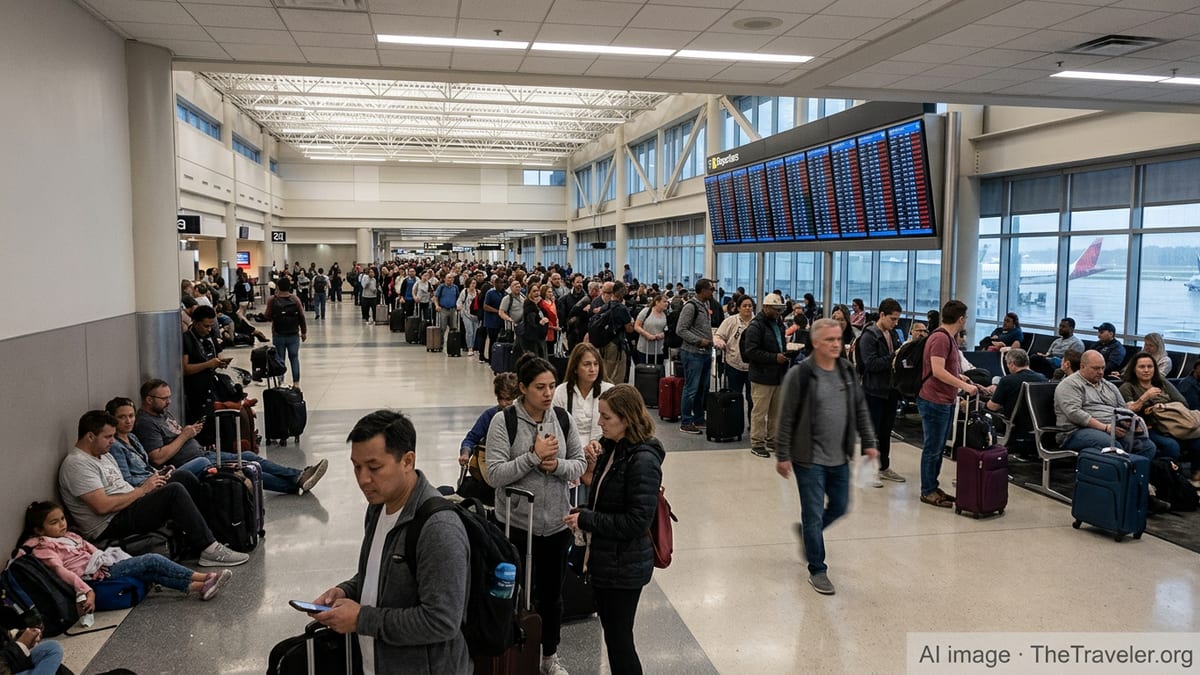
A new round of disruptions at three of the country’s busiest hubs Dallas Fort Worth, Atlanta and Chicago is sending shockwaves across the U.S. airline network, with hundreds of cancellations and more than 700 delays creating rolling gridlock for summer travelers.
Get the latest news straight to your inbox!
Weather, Staffing and System Strains Converge
Publicly available tracking data and airline operations bulletins indicate that a mix of convective storms, staffing shortfalls and technology issues has combined to push the system to a breaking point. Severe weather across the central United States and Midwest has repeatedly slowed traffic into and out of Dallas Fort Worth and Chicago O’Hare, while summer thunderstorms around Atlanta have narrowed available arrival and departure windows just as holiday and vacation demand peaks.
Industry trackers show that when hubs like Dallas Fort Worth, Hartsfield Jackson Atlanta and Chicago O’Hare each log dozens of cancellations and several hundred late departures in a single day, the impact quickly compounds. Connections misalign, aircraft and crews fall out of position, and recovery flights face their own delays as they enter already congested terminal airspace. The result is a wave of missed connections and overnight disruptions that can linger for days.
In parallel with the weather, staffing and scheduling remain tight. Airlines have added seats back into their networks faster than they have rebuilt fully experienced crews, leaving little slack when storms or operational issues hit. Air traffic control facilities serving these major hubs are also managing higher traffic levels with limited reserve capacity, which can lead to ground delay programs and flow restrictions that ripple far beyond the immediate storm zone.
Recent travel advisories and live tracker snapshots show that on peak disruption days this month, combined delays affecting Dallas, Atlanta and Chicago have exceeded 700 individual flights, with hundreds more across the broader network experiencing shorter holds on taxiways or in holding patterns. That scale of disruption effectively acts as a system wide speed limit, slowing passenger and aircraft movements across the country.
DFW: Weather Whiplash and Hub Dependence
Dallas Fort Worth has been at the center of several recent meltdowns, underscoring how dependence on a single fortress hub can amplify chaos. Reports from travelers and operational summaries describe evenings in which thunderstorms parked over North Texas forced arriving flights into long holding patterns or diversions, while departures sat at gates waiting for lightning holds to clear. Once ramp workers are pulled for safety, even brief downpours can translate into hours of knock on delays.
Because one of the nation’s largest carriers concentrates much of its domestic and international traffic through Dallas Fort Worth, a localized weather event can quickly become a nationwide problem. When dozens of departures from Dallas are scrubbed or pushed into the early morning hours, connecting passengers to smaller cities often find themselves without same day alternatives. As the backlog grows, overnight crowds accumulate in terminals, competing for limited hotel rooms and rebooking options.
In early June, widely shared firsthand accounts described passengers stranded for 10 to 12 hours inside the Dallas hub after sequential delays evolved into late night cancellations. These experiences align with broader data indicating that Dallas Fort Worth has been among the top contributors to national delay and cancellation totals on several recent days. With afternoon storms now common as temperatures climb, analysts expect the hub to remain a flashpoint throughout the summer travel season.
Operational guidance distributed within the industry emphasizes that airlines may categorize many of these Dallas cancellations as weather related, which can limit compensation obligations. However, schedule padding, crew time limits and aircraft routing decisions also play a significant role in whether a thunderstorm becomes a short lived inconvenience or a full day disruption.
Atlanta: Transatlantic Disruptions and Fuel Constraints
Hartsfield Jackson Atlanta, the world’s busiest airport by passenger volume, has been grappling with its own mix of thunderstorms and operational bottlenecks. Recent days have seen clustered delays on long haul departures, particularly transatlantic flights to major European gateways. Once early evening departures push back late, the knock on effect can strand travelers overnight in Atlanta or force tight connections to misalign at downline hubs.
Social media posts and airline community forums highlight instances in which nearly all transatlantic flights from Atlanta on a single day appeared delayed on departure boards, driven by upstream equipment and crew arriving late from other disrupted parts of the network. In some cases, ground operations issues such as fueling backlogs at Atlanta terminals have compounded the problem, with aircraft ready to board but unable to depart until servicing catches up.
Because Atlanta functions as a central interchange for both domestic and international traffic, delays frequently propagate in two directions. Passengers arriving from smaller southeastern cities to connect onto Europe bound flights risk missing their onward journeys if even modest delays accumulate. At the same time, late arriving transatlantic aircraft compress turnaround times for their next domestic segments the following morning, creating a fresh round of risk for early flights.
Travel analysts note that Atlanta’s role as a megahub means even a few dozen significantly delayed departures can distort schedules across a wide swath of the country. When combined with similar strains at Dallas Fort Worth and Chicago, the U.S. network effectively operates at reduced capacity until aircraft and crews can be fully repositioned.
Chicago: Storm Lines and Capacity Cuts
Chicago’s dual airport system, led by O’Hare International, has long been vulnerable to weather driven gridlock. This week has been no exception. Strong storm lines crossing the Great Lakes region have prompted ground delays at O’Hare, with the Federal Aviation Administration’s traffic management tools at times indicating arrival holds extending late into the night. When arrival rates are reduced, departures often face their own restrictions as controllers work to balance runway use and spacing.
Local coverage in Chicago has documented days when hundreds of flights at O’Hare and nearby Midway were either delayed or canceled due to torrential rain, gusty winds and the threat of severe thunderstorms. Ground delay programs and temporary halts on arrivals have contributed to growing crowds in terminals, as passengers wait for rolling estimates to firm up into confirmed departure times.
Adding to that complexity, Chicago based carriers have already been trimming schedules at O’Hare under previously announced capacity reductions designed to ease chronic congestion. While these cuts were intended to create more breathing room for air traffic controllers and ground operations, the current wave of storms shows that even a leaner schedule can quickly become unmanageable when multiple weather systems intersect with peak summer demand.
For passengers, the practical impact is similar to what has been seen in Dallas and Atlanta missed connections, unexpected overnight stays and a scramble for scarce rebooking options as popular routes fill. As with other hubs, disruptions in Chicago do not stay local: aircraft arriving late from the Midwest often operate onward segments to the coasts, spreading delays across time zones.
How Travelers Can Reduce Their Exposure
While individual passengers cannot control thunderstorms or system outages, experienced travelers and consumer advocates point to a handful of strategies that can reduce exposure to cascading disruption. Data from cancellation trackers and historical performance reports show that early morning departures tend to be less affected by downstream delays, since aircraft and crews are often already in place from the previous night. Booking the first flight of the day from a given airport, especially on critical legs into or out of Dallas, Atlanta or Chicago, can materially improve the odds of an on time arrival.
Another commonly cited tactic is to favor nonstop flights over connections whenever possible, even if the fare is slightly higher. Each additional hub introduces another potential failure point, particularly when that hub is one of the big three currently experiencing heightened volatility. For trips that must connect, building in longer layovers at known congestion points can provide a buffer against modest delays that would otherwise cause misconnects.
Travelers are also being advised to monitor their flights closely through both airline apps and independent tracking tools. In recent disruptions, passengers who rebooked proactively at the first sign of rolling delays often secured the limited seats available on earlier or alternative routings, while those who waited for formal cancellation notices found options far more constrained. Keeping flexible accommodation plans in major hub cities and understanding each airline’s specific rebooking and voucher policies can further reduce the stress of an unexpected overnight stay.
With forecasts pointing to an active summer for both severe storms and heavy passenger volumes, analysts expect bouts of gridlock at Dallas Fort Worth, Atlanta and Chicago to recur. For now, the combination of hundreds of cancellations and more than 700 delays on peak days is a reminder that the U.S. air travel system remains highly sensitive to disruption when multiple major hubs come under pressure at once.