


More news on this day
Hundreds of delayed and cancelled flights at Paris Charles de Gaulle and Orly on June 20 are rippling through global air networks, disrupting connections across Europe, North America, the Middle East and other long-haul markets at the height of the early summer travel season.
Get the latest news straight to your inbox!
Operational Disruptions Hit Both Major Paris Airports
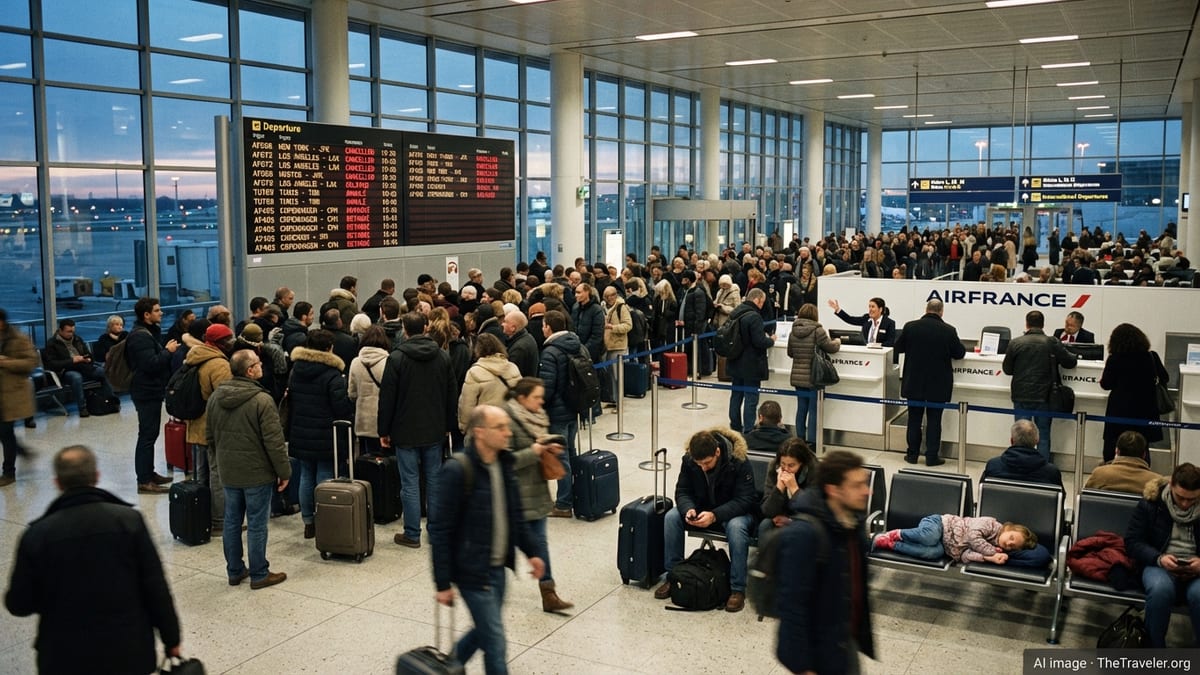
Real time tracking data and consumer-rights platforms show a sharp spike in disruption on Friday into Saturday at both of the French capital’s primary airports, Paris Charles de Gaulle and Paris Orly. Publicly available statistics indicate roughly 471 delayed departures and arrivals combined, along with at least 10 outright cancellations, affecting a mix of legacy carriers and low cost airlines.
Reports from flight status portals highlight a series of delayed Air France and partner services at Charles de Gaulle, including intra European routes and long haul operations that serve as crucial feeders for onward connections. At Orly, low cost and leisure flights have also seen cancellations and extended holds at the gate, compounding congestion in terminals that were already operating near peak summer capacity.
The disturbances follow months of steadily rising passenger volumes through the Paris airport system. Traffic bulletins from the Paris airports operator for early 2026 point to growth in both international and domestic segments, leaving little slack in schedules when weather, air traffic control constraints or airline specific issues collide with heavy demand.
As aircraft and crews fall out of position, schedules at Charles de Gaulle and Orly become increasingly fragile. Even short delays of 30 to 60 minutes during the morning wave can cascade into multi hour disruptions by afternoon and evening, particularly on hub routes that are tightly timed to bank connections.
Connections Disrupted Across Europe and Key Long Haul Markets
The concentrated wave of disruption in Paris is having an outsized impact because both airports act as major transfer points between continents. Charles de Gaulle in particular is a primary gateway for flights linking smaller European cities to long haul services bound for North America, the Middle East, Africa and parts of Asia.
Published flight status information on services between Paris and major North American destinations in June shows repeated patterns of delay, with some departures departing late in the day and arriving well behind schedule. When these flights leave late from Paris, onward connections in cities such as New York, Montreal or Los Angeles are placed at risk, forcing travelers into rebookings or overnight stays.
Within Europe, the knock on effects are visible on routes to and from cities like Berlin, Lisbon, Rome and Amsterdam, where delays on Paris originating flights translate into late inbound aircraft and reduced turnaround buffers. Low cost and hybrid carriers using Orly as a base are similarly affected when aircraft arrive out of sequence, obliging operators to swap equipment and crews where possible.
Connections to the Middle East and Africa, including services to major hubs and regional capitals, are also exposed. Even when long haul flights manage to depart roughly on time, the initial delay of feeder flights into Paris can leave passengers misconnecting, triggering a wave of rebookings across alliance and interline partners.
Strain on Airlines, Crews and Ground Operations
Airlines operating at Charles de Gaulle and Orly are confronted with a complex operational puzzle as they attempt to recover from the disruption. Flight tracking services show patterns of aircraft rotations being adjusted throughout the day, with some services cancelled in order to consolidate capacity and realign resources. This strategy reduces the number of severely delayed flights but increases the total of outright cancellations that travelers must navigate.
Ground operations are under similar pressure. Check in and security queues can lengthen when multiple delayed flights overlap with scheduled departures, while arrival halls fill with passengers waiting for updated information on missed connections and baggage delivery. Reports from consumer platforms that monitor airport performance show higher levels of delay compensation queries linked to Paris departures, an indicator of widespread schedule irregularities.
Airlines must also respect crew duty time limitations, which can force last minute cancellations when extended delays push pilots or cabin crew beyond legal operating windows. In some cases, aircraft may be ready to depart but are held back while operators secure a legal and rested crew, adding to the frustration felt by passengers who see aircraft on stand but cannot board.
For airport operators, the immediate challenge is to manage gate allocation and runway capacity as out of sequence movements pile up. Published airport data for the year highlights high utilization of infrastructure at both Charles de Gaulle and Orly, leaving little room to absorb large spikes in unscheduled traffic without knock on effects.
Passenger Rights and Practical Options Under EU261
The wave of delays and cancellations in Paris again brings European passenger protections into focus. Under EU261 rules, travelers departing from EU airports are entitled to care and, under specific circumstances, financial compensation when flights are significantly delayed or cancelled for reasons within an airline’s control. Consumer advocacy sites reporting on Paris disruptions have noted an uptick in travelers checking eligibility for claims for flights operating on June 20 and the surrounding days.
In practical terms, passengers facing delays at Paris Charles de Gaulle or Orly are advised by travel industry guidance to first monitor their flight status via official airline channels or airport displays, and then to seek rebooking on the earliest available service. For those who misconnect on itineraries involving North American or Middle Eastern hubs, options may include rerouting via alternative European gateways such as Amsterdam, Frankfurt or London, depending on alliance agreements and seat availability.
When cancellations occur, publicly available information on airline policies indicates that travelers are generally offered either a refund or re routing at no extra cost. In cases of long delays, carriers may also provide meal vouchers and hotel accommodation, particularly when overnight stays become unavoidable. Travelers are encouraged by advocacy groups to keep receipts for any additional expenses, which may be reimbursable under certain conditions.
Recent discussions at the European level on air passenger rights, reported in trade and policy outlets, suggest that compensation rules and the definition of extraordinary circumstances remain under scrutiny. The current episode of disruption at the Paris airports adds another data point to those debates, illustrating the complexity of attributing delays to controllable versus uncontrollable causes.
What Travelers Can Expect in the Coming Days
With the summer peak building, schedule volatility at Paris Charles de Gaulle and Orly may persist even after the immediate wave of delays and cancellations eases. Industry experience indicates that once aircraft rotations and crew patterns are disrupted on a large scale, several days of relatively smooth operations are often required to restore full stability.
Travel planners observing the situation in Paris note that early morning departures are often the most reliable, as they are less exposed to knock on delays from earlier legs. However, the tight connectivity that makes Paris an attractive hub can also amplify small disruptions, so travelers with critical same day connections may opt for longer layovers or nonstop options where available.
Airlines and airports are expected, based on past disruption patterns, to adjust staffing and resource plans to cope with the elevated demand and the risk of renewed irregular operations. This may include additional customer service support in terminals, expanded self service rebooking tools and closer coordination between carriers sharing terminals and ground handling resources.
For now, the figures emerging from Paris Charles de Gaulle and Orly capture a snapshot of a highly stressed system: hundreds of delayed flights, a notable number of cancellations and a global web of disrupted itineraries stretching from nearby European capitals to long haul destinations across North America, the Middle East and beyond.