


More news on this day
Flight delays and lengthy waits on the tarmac in the United States have climbed to their worst levels in years, according to newly compiled consumer data that suggest the post-pandemic travel boom is straining airline operations and existing passenger protections.
Get the latest news straight to your inbox!
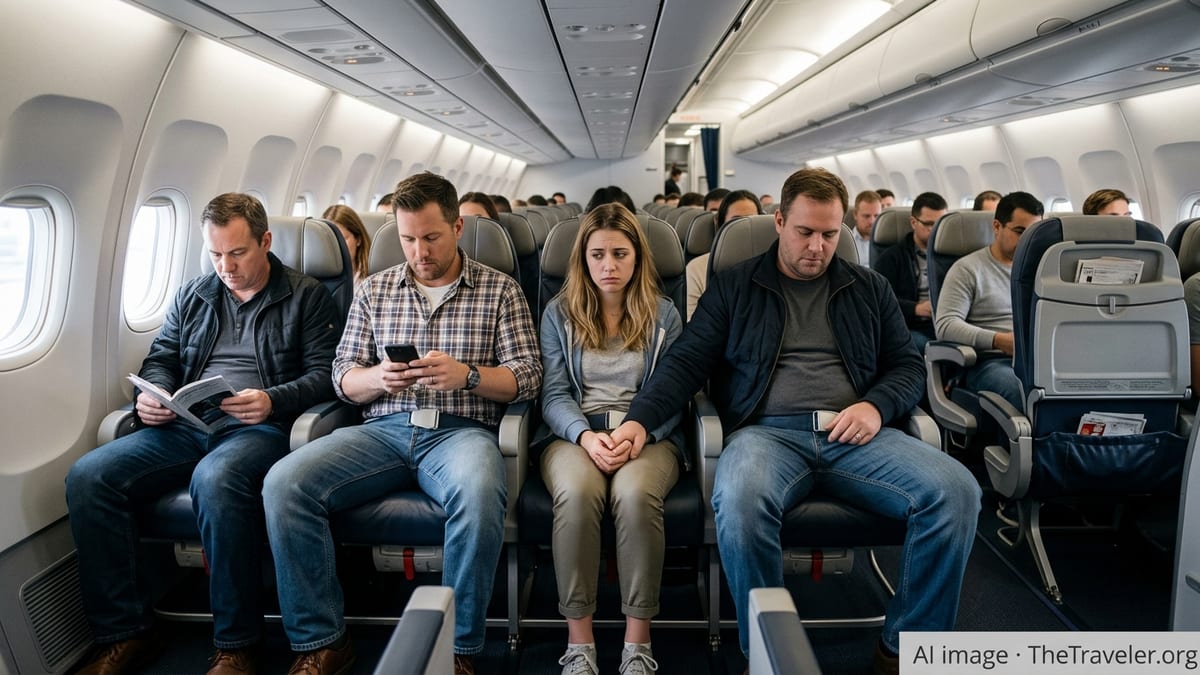
New report shows on-time performance sliding
Recent analysis of federal Air Travel Consumer Report data for 2024 and early 2025 indicates that U.S. airlines are getting passengers to their destinations on schedule less often than at any point since the mid-2010s. Publicly available summaries for 2024 show that roughly 78 percent of flights arrived on time, slightly worse than in 2023 and well below pre-pandemic highs. A new consumer study reviewing the same data concludes that 2025 is shaping up to be the poorest year for punctuality since 2014.
The findings draw on monthly statistics the U.S. Department of Transportation publishes on delays, cancellations and tarmac holds. While on-time performance improved briefly in 2023 compared with the disruptions of 2021 and 2022, the latest figures point to a renewed deterioration. Reports indicate that in several peak travel months of 2025, more than one in four flights arrived late, with some major hubs seeing even higher disruption rates.
Industry analysts say a mix of strong demand, tight airline schedules and recurring operational bottlenecks are behind the reversal. With carriers flying fuller planes and relying on complex aircraft rotations, even modest weather systems or crew shortages can ripple quickly across the network, turning what might once have been isolated delays into multi-day disruption patterns.
Tarmac delays surge despite long-standing rules
Most striking in the new report is the sharp increase in long tarmac waits. The consumer analysis, based on federal incident logs, finds that extended tarmac delays climbed by about 63 percent in 2025 compared with the previous year. According to published coverage, the number of incidents in which passengers remained on aircraft for hours awaiting takeoff or a gate reached its highest level since the government’s tarmac delay rule took effect in 2010.
Those rules were designed to sharply limit how long travelers can be kept on a plane with the doors closed. For domestic flights, airlines can generally be penalized if passengers are held on the tarmac for more than three hours without an opportunity to deplane, with slightly longer thresholds for international services. Federal data show that for much of the past decade, the number of violations and near-violations remained comparatively low.
The latest tallies suggest those safeguards are being tested more frequently. Government statistics for late 2024 already showed a jump in long ground holds, including several instances of international flights exceeding four hours between pushback and takeoff or between landing and access to a gate. The consumer report covering 2025 indicates that these events not only became more common, but also affected a wider range of airports and carriers than in prior years.
Weather, staffing and infrastructure under pressure
Publicly available information points to several overlapping causes for the worsening delays. Severe thunderstorms, heat waves and other disruptive weather patterns have been a recurring feature of recent summer travel seasons. When large swaths of airspace are temporarily restricted or ground stops are issued at busy hubs, flights can quickly stack up on taxiways, leading to extended tarmac waits even after conditions begin to improve.
At the same time, airline and airport staffing remain under strain. Although hiring has rebounded since 2020, reports indicate that shortages in key roles such as air traffic control, ground handling and maintenance planning continue to limit operational flexibility. When crews time out under safety regulations or when there are not enough ramp workers available to turn aircraft quickly, planes may be left holding short of gates or queueing for takeoff as schedules are reassembled.
Infrastructure constraints are another factor. Several major airports that experienced some of the longest delays in the latest data operate at or near capacity during peak hours, with limited spare gate space and crowded taxiway layouts. Even a single disabled aircraft or unexpected runway closure can bottleneck departures and arrivals, forcing other flights to wait on the ground while operations are gradually rebalanced.
Travelers feel the impact in missed connections and costs
For passengers, the statistical trends translate into very tangible frustrations. Longer tarmac waits often come on top of earlier schedule changes or rolling departure estimates, stretching travel days to the breaking point. When flights finally depart late, they can miss carefully timed connections, triggering a cascade of rebookings, overnight stays and additional expenses that are not always fully covered by carrier policies.
Consumer advocates note that while many U.S. airlines have improved their customer service commitments since 2022, the recent deterioration in performance highlights the gap between what is promised on paper and what travelers experience at the gate. Some policies offer meal vouchers, hotel stays or free rebooking during significant disruptions, but the availability of those benefits can vary by airline and by the cause of delay, leaving many passengers to navigate crowded service lines or smartphone apps in real time.
Industry observers add that long tarmac waits carry particular health and comfort concerns, especially in hot or cold weather, or when food, water and restroom access are limited. While many of the reported incidents remain within legal time limits, the sheer volume recorded in the latest consumer research has renewed debate over whether enforcement needs to be strengthened or thresholds revisited to reflect today’s crowded skies.
Calls grow for closer oversight and clearer protections
The worsening numbers have prompted fresh scrutiny of airline operations and government oversight. According to recent media coverage, consumer organizations are urging regulators to step up monitoring of tarmac incidents, arguing that the increase in long ground holds indicates that existing rules are not always acting as a sufficient deterrent. Some groups are also pressing for higher penalties when carriers breach delay limits or fail to provide required services during extended waits.
Federal officials have in recent years announced record civil penalties against airlines for violations related to refunds and customer treatment during mass disruptions, and have pushed carriers to adopt more generous passenger commitments. The latest delay statistics may influence whether additional regulatory changes are considered, including requirements for automatic compensation in certain situations or stricter reporting around gate availability and ground handling performance.
For now, experts advise travelers to build more buffer time into itineraries, particularly when connecting through busy hubs or during peak holiday and summer periods, and to review each airline’s published customer service plan before booking. If the current trajectory continues, the 2025 travel year could cement itself as one of the most challenging for U.S. air punctuality in more than a decade, keeping the spotlight firmly on how airlines and regulators respond.