


More news on this day
Air travel across the United States faced fresh disruption on June 26 as publicly available tracking data showed 2,612 flights delayed and 78 canceled nationwide, with weather and congestion affecting key hubs in Texas, Florida, Georgia, Illinois, Colorado, New York, Virginia and other states and impacting operations at major carriers including Southwest, Delta, United and Frontier.
Get the latest news straight to your inbox!
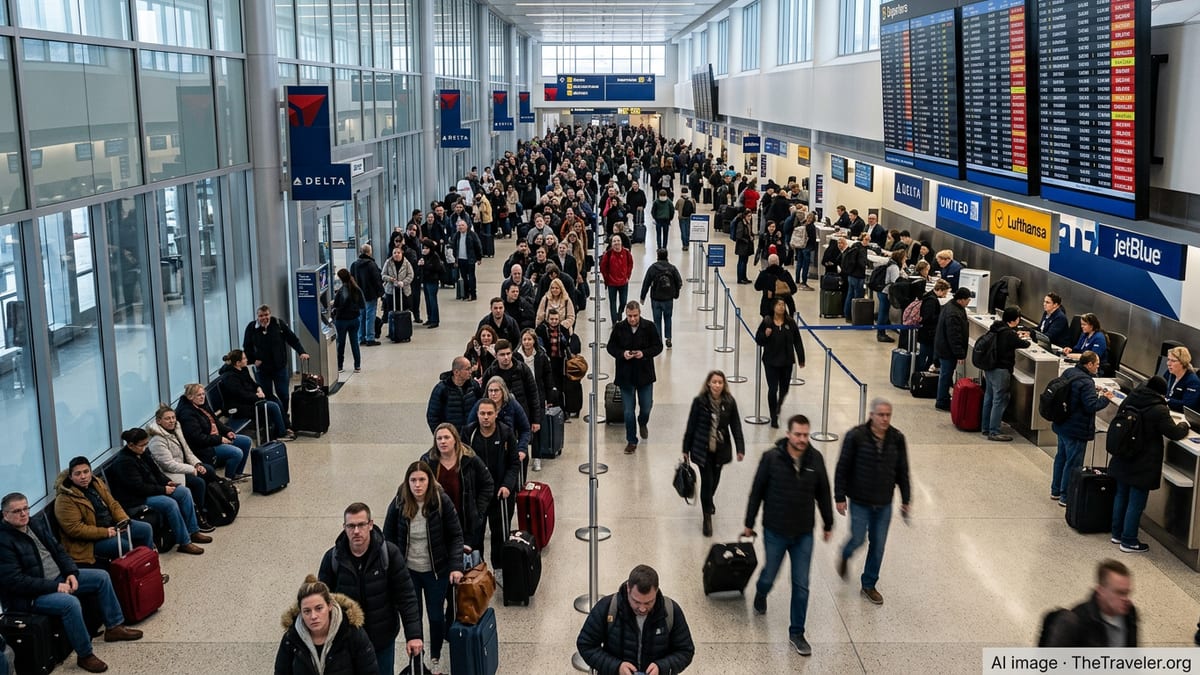
Widespread Delays Hit Major U.S. Airports
Tracking services and aviation status dashboards for June 26 indicated that delays were spread across a broad swath of the country, concentrating around major connecting hubs. Large airports serving Texas, Florida, Georgia, Illinois, Colorado, New York and Virginia reported elevated numbers of late departures and arrivals as thunderstorms, seasonal storms and airspace congestion combined to slow the system.
In the Southeast, heavy traffic through Atlanta and Florida airports contributed to knock-on delays across multiple routes. Publicly available information for Atlanta and Miami showed arrival and departure queues lengthening through the day as carriers adjusted schedules and aircraft rotations to manage local weather and traffic volume.
Further north, New York area airports again emerged as pressure points in the network. Reports of ground delays and extended taxi times translated into late departures on connecting flights, affecting passengers traveling onward to the Midwest, Mountain West and international destinations.
Airports in Illinois, Colorado and Virginia also experienced ripple effects, with delayed arrivals from earlier weather systems or congested corridors pushing back departure times. The pattern reflected a familiar scenario in which disruptions in one region quickly propagate through the tightly timed national air system.
Southwest, Delta, United, Frontier and Others Affected
The latest disruption touched a wide range of airlines, including Southwest, Delta, United and Frontier, all of which rely heavily on the busy hubs most affected. Public tracking feeds showed each carrier managing clusters of delays across their networks, from short-haul domestic flights to longer cross-country services.
For Southwest, whose operations are concentrated in large domestic markets and connecting points, delays at key airports in Texas and surrounding states produced schedule challenges for aircraft that operate multiple segments per day. Even relatively short initial delays can compound as aircraft and crews rotate through several cities.
Delta and United, both with extensive hub-and-spoke networks, were also navigating the impact of slowdowns in Atlanta, Chicago, New York and other core hubs. When departures from a major hub are held or slowed, passengers on connecting itineraries often face missed links or rebooked journeys, particularly in the busy summer period.
Frontier and other low cost carriers were not spared. With leaner schedules and fewer spare aircraft, these airlines can face particular strain when adverse weather and airspace constraints reduce flexibility. A single cancellation or extended delay may require reassigning aircraft and crews across multiple routes to restore the timetable.
Weather and Airspace Constraints Drive Operational Stress
Seasonal weather continues to be a central driver of delays and cancellations across the United States. Thunderstorms and convective weather systems common in late June can trigger ground stops, reroutes and spacing restrictions, all of which reduce the effective capacity of busy corridors and major airports.
National airspace status pages and airport delay maps for June 26 highlighted intermittent ground delay programs in several regions, signaling that air traffic flow managers were spacing arrivals and departures more widely to maintain safety during challenging conditions. Even brief restrictions can quickly back up departure queues at the largest hubs.
Beyond weather, the sheer volume of summer travel intensifies the impact of any disruption. With planes operating at high load factors and schedules tightly packed to meet demand, there is often limited slack in the system to absorb irregular operations. When a flight is significantly delayed or canceled, finding available seats on alternate services can be difficult, especially on popular routes.
Operational factors such as crew duty limits and aircraft positioning further complicate recovery efforts. Once delays stretch across several hours, carriers may need to reshuffle crews to comply with safety regulations on maximum working hours, which can in turn force additional schedule adjustments if relief crews are not immediately available.
Passengers Face Long Lines and Tight Connections
Passengers traveling through impacted airports on June 26 encountered the familiar symptoms of system-wide disruption: crowded departure halls, long check in lines and congested security and boarding areas as multiple flights bunched into similar time windows following earlier holds and slowdowns.
Those with tight connections at hubs in Atlanta, Chicago, New York and other cities were particularly vulnerable. When an inbound flight arrives significantly behind schedule, the window to transfer to an onward service narrows, and even modest gate changes can make the difference between boarding and missing a connection.
Travelers whose flights were among the 78 recorded cancellations faced a more complex process, often requiring rebooking onto later services or alternative routings. During peak travel periods, rebooking options may involve overnight stays or significant detours, especially for passengers traveling in large groups or on routes with limited frequency.
Airlines typically encourage passengers to use mobile apps and online tools for rebooking when irregular operations occur, both to reduce pressure on airport staff and to provide faster access to available alternatives. However, when multiple carriers experience concurrent disruptions, call centers and airport customer service desks can still see substantial surges in demand.
Tips for Travelers Amid Ongoing Summer Disruptions
The June 26 data underline the importance for travelers of planning for potential disruptions during the busy summer period. Aviation agencies and consumer advocates consistently recommend checking flight status frequently on the day of travel, as conditions can change quickly when weather and airspace constraints interact.
Arriving at the airport earlier than usual can provide a buffer when long lines or last minute gate changes emerge. Passengers with connections may benefit from selecting slightly longer layovers where possible, reducing the risk that a short delay on the first leg will cause a missed onward flight.
Travelers are also advised to familiarize themselves with airline policies on delays and cancellations, including options for rebooking, meal vouchers or lodging when disruptions extend into overnight hours. Understanding the distinctions between weather related disruptions and those attributed to controllable operational issues can help passengers navigate available remedies.
With forecasts indicating continued active weather patterns in several regions, similar episodes of widespread delays and localized cancellations remain possible in the coming days. Monitoring aviation status resources and remaining flexible with travel plans can help mitigate the impact when the national air system comes under strain.