


More news on this day
Travelers flying into Washington, D.C. in the coming days are being urged to brace for schedule disruptions at Ronald Reagan Washington National Airport as a dense calendar of America’s 250th anniversary events converges with one of the busiest summer travel periods of the year.
Get the latest news straight to your inbox!
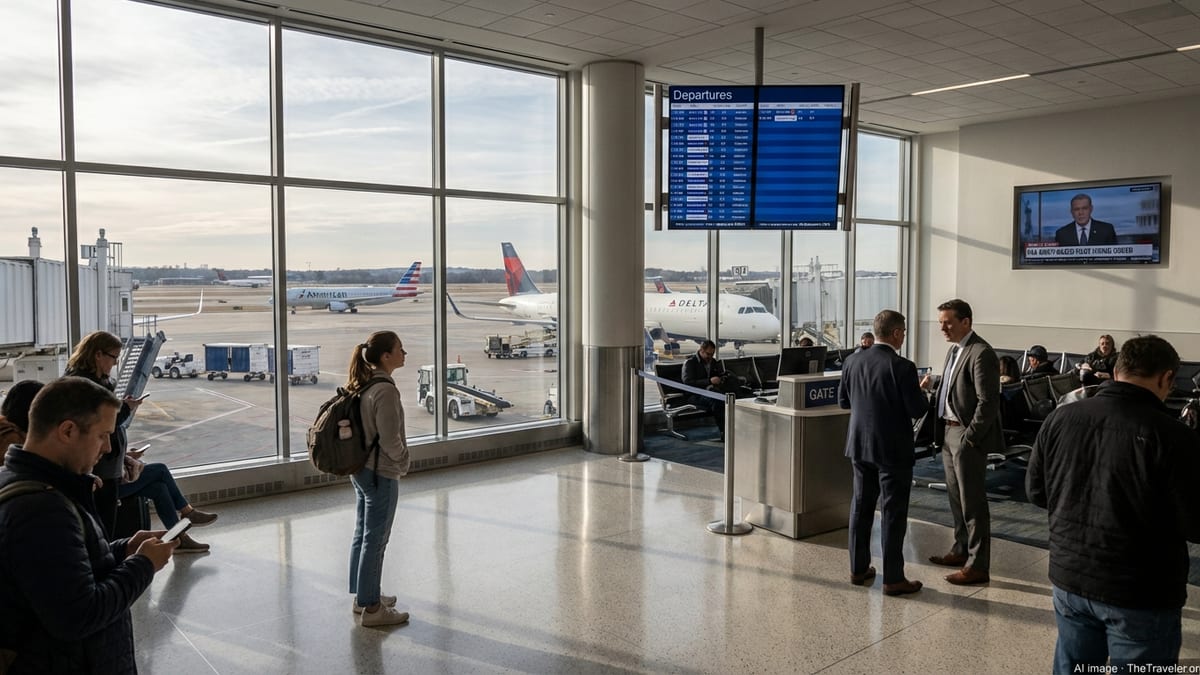
Why Reagan National Is Bracing for Disruptions
Ronald Reagan Washington National Airport, the closest major airport to downtown Washington, sits just across the Potomac River from the National Mall, where much of the America 250 programming is taking place. That proximity is a convenience for travelers, but it also places the airport directly under restricted airspace when military flyovers, fireworks and large civic events are held in central Washington.
Publicly available information from the Metropolitan Washington Airports Authority and recent aviation advisories indicate that temporary airspace restrictions tied to the semiquincentennial celebrations will affect normal flight operations on multiple days. These restrictions limit when commercial aircraft can arrive or depart from Reagan National, forcing airlines to compress schedules into narrower operating windows or reroute traffic through other airports.
Reports further show that, in addition to short-term pauses during flyovers and rehearsals, Reagan National will see an unusual half-day halt to operations on July 4, when the most elaborate Independence Day events are scheduled on and around the National Mall. That pause is being described in industry coverage as one of the most significant holiday-related interruptions to the airport’s operations in recent memory.
The result is a layered travel picture for the Washington region. While nearby Washington Dulles International and Baltimore/Washington International are expected to operate more normally, Reagan National is signaling in advance that passengers should plan for delays, schedule changes and reduced flight options during key celebration days.
Key Dates and Events Likely to Impact Flights
The America 250 festivities in Washington are centered on a 16-day “Great American State Fair” on the National Mall, which opened this week and runs through early July. Coverage from national and local outlets notes that the fair includes large crowd draws such as a Ferris wheel, live performances and special exhibits, in addition to related political and cultural programming nearby.
According to travel industry reporting, several of those marquee days are expected to have a direct effect on Reagan National’s operations. The opening days of the fair on June 24 and 25 were cited as early test cases, with airspace advisories coinciding with flyovers and evening events. Additional pressure points include a Military Appreciation Day on June 28, which is expected to feature aerial demonstrations that temporarily redirect or pause commercial traffic.
The most disruptive period, however, is clustered around the Independence Day holiday itself. Published airport and aviation notices show that rehearsal activities and ceremonial flyovers on July 3, followed by the main semiquincentennial celebrations and fireworks on July 4, will bring extended airspace closures over central Washington. On July 4, Reagan National is slated to stop most flight operations from midday through the afternoon while the airspace is reserved for special events.
Travel forums and local discussions have already flagged that some airlines are blocking out several-hour windows with no scheduled Reagan National arrivals or departures on July 3 and 4. That advance schedule thinning may soften the impact of the closures, but it also means fewer seats into and out of the capital on some of the busiest travel days of the summer.
How Airlines and Security Agencies Are Responding
Airlines serving the Washington region have begun adjusting timetables and issuing travel alerts ahead of the holiday and America 250 period. Major carriers’ public advisory pages reference U.S. 250th anniversary events and note that temporary airspace restrictions could lead to delays, particularly at Washington-area airports. In some cases, travelers booked on affected dates are being offered limited-fee or no-fee options to move their trips within a specified window.
Industry coverage indicates that many schedule changes are being made proactively, with airlines shifting flights to earlier or later in the day to avoid known closure windows. This strategy is designed to reduce the number of last-minute cancellations but can still result in inconvenient departure and arrival times, longer layovers and tighter connections for passengers traveling through busy hub airports.
At the same time, the Transportation Security Administration is preparing for what it describes in public statements as record-setting Fourth of July passenger volumes nationwide. Analysts point out that the overlap of Independence Day, America 250 observances and other major events, such as international sports tournaments, is driving a sharp spike in demand across the U.S. aviation system. That means even travelers whose flights are not directly affected by D.C.-area airspace restrictions could face crowded terminals and longer security lines.
For Reagan National in particular, aviation observers note that the combination of temporary runway closures and heavy summer demand may amplify knock-on effects. Delays in Washington can ripple through airline networks, especially for carriers that use the airport as a focus city or connect regional routes through the capital.
Alternatives and Strategies for Washington-Bound Travelers
Travel experts and recent destination coverage consistently suggest that passengers with flexibility consider Washington Dulles International or Baltimore/Washington International Thurgood Marshall Airport during the peak America 250 period. Both airports sit outside the most restrictive airspace over the National Mall and are expected to maintain more typical operations, even as celebrations unfold downtown.
Those who do choose to fly into Reagan National are being advised to build extra time and backup plans into their itineraries. This can include opting for morning flights, which historically face fewer weather and congestion issues, and avoiding tight connections on July 3 and 4 in particular. Travelers with nonessential trips are also being encouraged, in some public-facing guidance, to look at shifting their dates by a day or two on either side of the holiday.
On the ground, Washington-area transportation agencies are making their own adjustments for the semiquincentennial. State and local departments of transportation in Virginia and the District have announced lane-closure suspensions on certain highways and bridges over the July Fourth weekend to help traffic flow more smoothly to and from major events. While that will not eliminate congestion, it may provide some relief for travelers opting to drive between airports and the city instead of relying solely on public transit.
Hotel availability is another factor to consider. With the Great American State Fair, official America 250 programming and traditional Independence Day crowds all overlapping, accommodation demand in the capital region is expected to be intense. Travel industry analyses recommend booking lodging and airport transfers as early as possible, particularly for stays that include the nights of July 3 and 4.
What Travelers Should Do Now
For passengers already holding tickets to or from Reagan National around the July Fourth period, the most immediate step is to review existing reservations. Airlines are encouraging customers to use official websites and mobile apps to monitor for schedule changes, gate shifts and potential rebooking options tied to America 250 airspace restrictions.
Experts suggest confirming flight status repeatedly in the 24 hours before departure and again before leaving for the airport, since weather and operational issues can compound preplanned closures. Travelers connecting through Washington may also want to explore rerouting options through other hubs if their itineraries involve tight layovers on July 3 or 4.
Packing with security in mind can help ease the strain on checkpoints. Agencies and travel organizations are emphasizing familiar advice such as limiting carry-on liquids, having identification ready and using checkpoints appropriate to each terminal. For those using expedited screening programs, ensuring enrollment information is up to date can prevent last-minute complications during what is expected to be one of the busiest travel weeks of the year.
Finally, passengers who have not yet booked but hope to be in Washington for the semiquincentennial are being urged by travel planners to make firm arrangements soon, particularly if Reagan National is their preferred gateway. As America marks 250 years of independence, the nation’s capital is preparing for a rare convergence of civic celebration and peak-season travel, and air passengers are being encouraged to plan accordingly.