


More news on this day
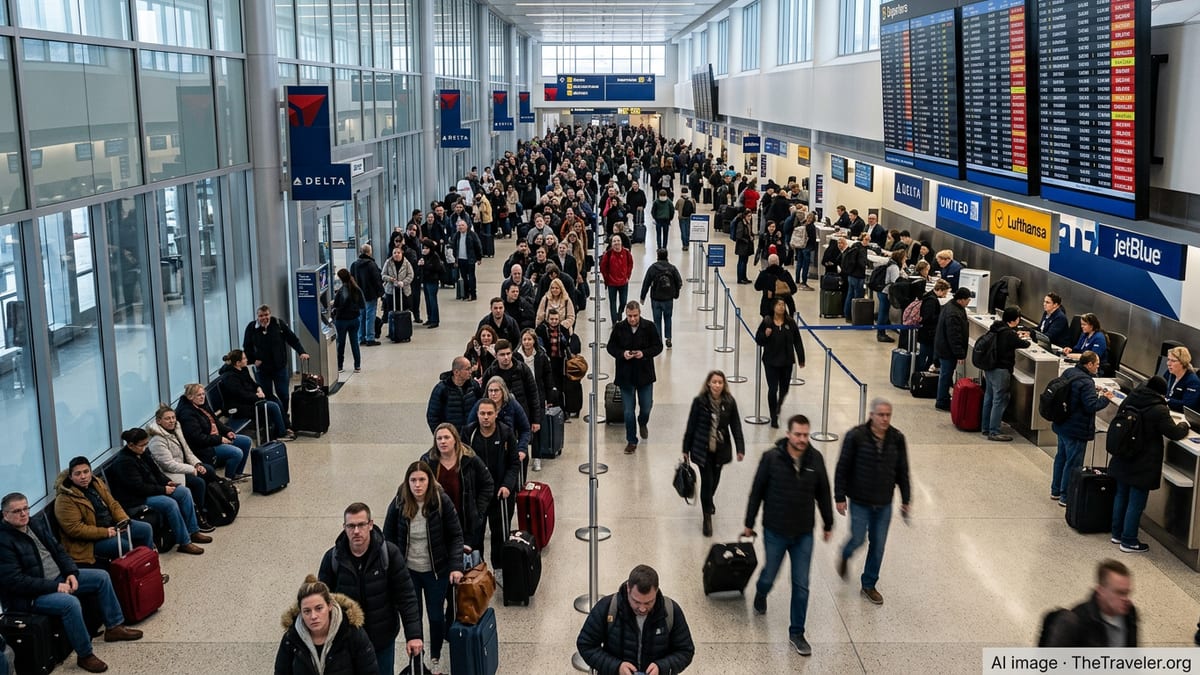
Thousands of air travelers across the United States are facing hours-long waits, missed connections, and last-minute cancellations as a fresh wave of flight delays ripples through major hubs from New York and Boston to Chicago and Houston, according to real-time tracker data and federal air traffic reports.
Get the latest news straight to your inbox!
Stormy Weather and Congested Hubs Drive Fresh Wave of Delays
Thunderstorms and low clouds over the Northeast, Mid-Atlantic, and parts of the Midwest have combined with already crowded schedules to trigger significant disruption at key U.S. airports in recent days. The Federal Aviation Administration’s daily air traffic report for Friday, September 4, 2026, flagged potential arrival and departure delays at New York area airports, Philadelphia, Washington, Chicago, Houston, Detroit, New Orleans, and several Florida gateways, as well as low cloud impacts in San Francisco.
Ground delay programs and flow restrictions at Boston Logan, New York’s John F. Kennedy, LaGuardia, and Newark Liberty, and Chicago O’Hare have intermittently slowed operations, limiting the number of flights allowed to land or depart each hour. Advisory summaries from the FAA’s Air Traffic Control System Command Center show that programs at Boston and Chicago have periodically capped arrivals and triggered rolling departure queues, with some measures extending into late evening periods.
While some of these programs were later scaled back as forecast conditions improved, the cumulative effect has been long lines at security, crowded gate areas, and heavy use of standby lists as airlines work through backlogs. The disruptions have been most visible at large hub airports that funnel passengers into connecting banks, increasing the likelihood that a delay in one city will cascade across the network.
Weather has also complicated recovery efforts. Even when airports have remained technically open, strong thunderstorms along key flight paths have forced reroutes and airborne holding, consuming extra fuel, crew time, and airspace capacity. This has contributed to a pattern in which flights that do operate often arrive behind schedule, further compressing turn times on the ground.
Thousands of Passengers Caught in a Multi-Day Disruption Cycle
Published disruption tallies indicate that the current wave of problems is more than a single bad-weather day. Air passenger rights organization AirHelp reported that on September 2, 2026, U.S. air travel saw nearly 900 delayed flights and roughly 200 cancellations by early afternoon, affecting passengers on large carriers including American, United, Delta, Southwest, and JetBlue. The group’s analysis of another peak on September 3 highlighted more than 2,000 delays and hundreds of cancellations linked to severe storms at major Northeast and Midwest hubs.
Separate coverage drawing on FlightAware data has pointed to New York area airports as some of the hardest hit, with Newark Liberty and LaGuardia repeatedly recording the highest combined totals of delays and cancellations on the busiest days. On some afternoons, dozens of departures from these airports have gone late, and double-digit cancellations have forced travelers onto later flights or entirely different routings.
For many passengers, the disruption stretches across multiple legs of a trip. Missed connections at connecting hubs mean that even flights still listed as on time at origin can become part of a longer chain of delays. Travelers arriving late into large hubs such as Chicago or New York frequently find that onward options are limited, especially in the late evening when aircraft and crew availability is tight.
These rolling effects help explain why crowding and operational strain can persist even after the most severe weather has moved on. Reports from advocacy groups note that knock-on delays often extend into next-morning departure banks, as airlines reposition aircraft and crews and attempt to clear residual backlogs.
Structural Strains: Tight Schedules and Staffing Limit Flexibility
Industry analysis suggests that the current spike in delays is interacting with longer-running pressures in the U.S. aviation system. Consultancy research on 2026 air travel demand indicates that air traffic control staffing constraints have increasingly contributed to bottlenecks, particularly in complex, high-volume airspace. Earlier studies cited in that work highlighted that staffing-related issues can account for a significant share of airport delays when combined with storms and heavy traffic.
Consumer-facing data from AirHelp’s 2025 U.S. Disruption Report underscores how common delays have become. According to that report, roughly a quarter of U.S. air travelers experienced some form of disruption last year, with more than 23 percent encountering a delay and about 1.5 percent facing outright cancellations. The report also identified Newark Liberty International Airport as the country’s most disruption-prone major airport in 2025, with nearly three in ten passengers there experiencing problems.
These trends appear to be persisting into 2026. Travel advisories and airline performance metrics point to a system operating close to its limits, where aircraft utilization is high, schedule buffers are slim, and spare crews are limited. Under those conditions, even short-lived thunderstorms or minor technical issues can quickly escalate into lengthy knock-on disruptions across multiple routes and carriers.
Passenger accounts shared on public forums mirror these systemic concerns, describing a pattern of frequent hour-plus delays and tight connections that leave little margin for recovery when weather or operational difficulties arise. While such reports are anecdotal, they align with aggregate data that show a steady background level of disruption even outside headline-grabbing storm events.
What Travelers Are Experiencing on the Ground
At airport level, the surge in delays has translated into crowded terminals and extended waits in customer-service lines. With ground delay programs and flow restrictions in place, departure boards at affected hubs have displayed clusters of flights pushed back by 30 minutes or more, often multiple times. Passengers on multi-stop itineraries have reported unexpectedly long layovers as they wait for rebooked flights or open seats on later departures.
Boarding processes have also become more complex on heavily disrupted days. Airlines frequently close boarding for flights while awaiting final clearance from air traffic control, only to reopen once updated departure times are issued. For travelers, this can create confusion over when to remain near the gate and when to seek alternative arrangements.
Customer-rights organizations advise that in these conditions, passengers should monitor airline apps and airport displays closely, and document any delays or cancellations along with the stated reasons. This information can help clarify eligibility for refunds, meal vouchers, or hotel accommodation, which depend on the cause and length of the disruption as well as the airline’s policies.
Travelers facing overnight misconnects or missed final flights of the day are often encouraged to contact airlines digitally through apps or messaging channels rather than relying solely on in-person service desks, which can be overwhelmed when multiple flights are affected at once.
Rising Disruptions Keep Air Passenger Rights in Focus
The persistence of large-scale disruptions has renewed attention on passenger rights and airline obligations when trips do not go as planned. Guidance from AirHelp and similar organizations emphasizes that compensation rules vary significantly depending on where a flight originates, what airline operates it, and whether the disruption is considered within the carrier’s control.
For flights departing U.S. airports, travelers are generally entitled to refunds if an airline cancels a flight and the passenger chooses not to travel, but compensation for delays is more limited and heavily dependent on individual airline policies. Consumer advocates therefore encourage travelers to familiarize themselves with carrier-specific commitments, including published customer service plans, before departure.
In the current environment of elevated disruption risk, some analysts also point to the potential benefits of flexible tickets, longer planned connection times, and travel insurance that covers missed connections and hotel costs. While these measures add to up-front expenses, they can soften the impact of multi-day disruption cycles such as those affecting U.S. hubs this week.
With federal air traffic planning reports signaling continued weather threats across several regions, travelers heading into the coming days of late-summer and early-fall flying are likely to remain vigilant. Publicly available forecasts and disruption reports indicate that, absent a broader easing in demand or a major expansion in capacity, even routine storms can continue to trigger systemwide ripple effects, keeping flight delays a central feature of the U.S. travel landscape.