


More news on this day
A wave of flight disruption spread across major North American hubs on June 17, with 24 withdrawals and more than 500 delays reported at Chicago, Atlanta, Miami, Philadelphia and Toronto Pearson, affecting passengers flying on SkyWest, Delta Air Lines, Air Canada, United Airlines and American Airlines.
Get the latest news straight to your inbox!
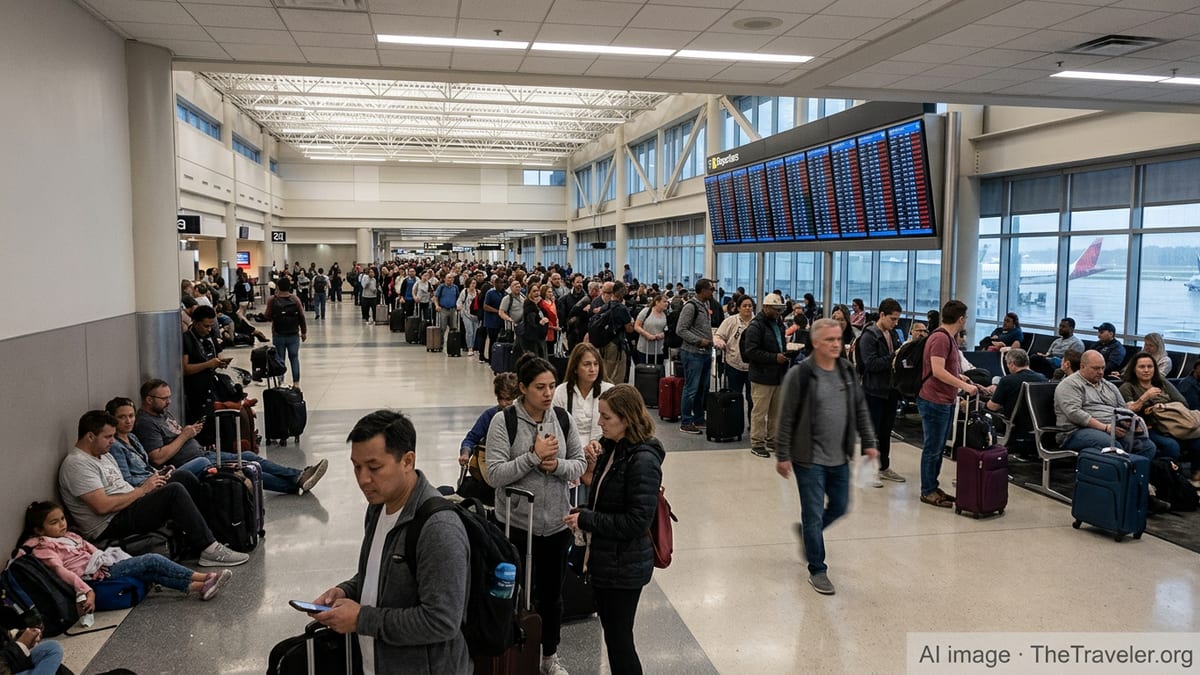
Pressure Builds at Key US and Canadian Hubs
The latest operational data for June 17 indicates that Chicago O’Hare, Atlanta Hartsfield Jackson, Miami International, Philadelphia International and Toronto Pearson are bearing the brunt of a fresh round of schedule problems. Publicly available boards and tracking services show a combined 24 flight withdrawals alongside 526 delayed departures and arrivals across these five airports, disrupting traffic on some of the continent’s busiest corridors.
The disruptions are concentrated in systems operated by Delta Air Lines, American Airlines and United Airlines, together with Air Canada and regional contractor SkyWest, which feeds passengers into the big carriers’ hubs. These airlines collectively handle hundreds of daily movements at the affected airports, so even modest percentages of schedule changes can displace thousands of travelers within hours.
Reports from aviation data providers show that the issues are not confined to a single route or carrier. Instead, they are spread across domestic links such as Chicago to Atlanta and key cross-border connections between US hubs and Toronto Pearson, underscoring how closely intertwined operations are between the United States and Canada.
With June already a high-demand month for business and leisure travel, the timing of the disruption is magnifying its effect. Full flights, limited spare seats and tight connection windows make it harder for airlines to rebook passengers quickly when flights are withdrawn or significantly delayed.
SkyWest and Major Network Carriers Feel the Strain
Publicly available airline schedules and aviation databases show that SkyWest, which operates regional flights under brands such as Delta Connection, United Express and American Eagle, has been a key player in the day’s turbulence. As a contract carrier linking smaller cities to major hubs including Chicago and Atlanta, any schedule changes for SkyWest can cascade quickly through the networks of its larger partners.
Delta Air Lines, United Airlines, American Airlines and Air Canada, which together form the backbone of long haul and trunk domestic services at the affected hubs, are also contending with extended turnaround times and rolling departure pushes. Tracking platforms for specific flights on June 17 between Chicago and Atlanta, as well as routes feeding into Toronto Pearson, illustrate how individual delays can build as the day progresses.
Industry data from recent Air Travel Consumer Reports has highlighted how tightly these carriers’ systems are run in peak season, with limited slack in aircraft and crew availability. When conditions deteriorate at several hubs simultaneously, that efficiency can work against them, leaving fewer options to absorb delays without resorting to flight withdrawals.
The mix of regional and mainline disruption is particularly challenging for travelers using smaller spokes in the network, where there may be only one or two daily departures. For those passengers, a single cancellation can transform a short delay into an overnight interruption.
Travelers Face Knock On Delays Across Networks
The operational difficulties recorded at Chicago, Atlanta, Miami, Philadelphia and Toronto Pearson on June 17 are creating classic knock on effects, where a single late inbound aircraft or crew misalignment forces subsequent flights to push back departure times. Data from real time tracking sites shows aircraft arriving late into hubs and then turning around behind schedule for their next sectors.
Because hubs operate as tightly timed banks of arrivals and departures, even a small shift can cause travelers to miss onward connections. Passengers connecting in Atlanta or Chicago to reach smaller cities in the Midwest, Southeast and Great Lakes region are particularly vulnerable when feeder flights arrive late from busy coastal airports or Toronto Pearson.
Reports indicate that late evening flights may be at heightened risk as delays accumulate through the day. In these final banks, airlines often have fewer options left to swap aircraft or crews, raising the chance that a severely delayed service is ultimately withdrawn from the schedule entirely.
The impact extends beyond airports directly reporting flight withdrawals and delays. When key hubs experience operational constraints, flights into and out of secondary airports that rely on those hubs for connectivity can also suffer extended waits as they vie for available gates, equipment and arrival slots.
Weather, Congestion and Operational Complexity Combine
Publicly available weather charts for June 17 point to unsettled summer conditions along parts of the eastern United States and Great Lakes region, where convective activity and low visibility episodes are common at this time of year. Even when storms are scattered or short lived, they can prompt air traffic control programs that slow the rate of arrivals and departures at major hubs.
At the same time, airline networks in June typically operate near peak capacity, with high load factors and dense schedules. This leaves limited room to reroute aircraft or crews when conditions deteriorate in multiple regions. Aviation analysts have long noted that the combination of summer thunderstorms, crowded skies and tight staffing can quickly translate into widespread disruption when several constraints overlap.
The current pattern across Chicago, Atlanta, Miami, Philadelphia and Toronto Pearson fits this profile. Airports that serve as primary connection points for domestic and international travel are especially exposed, because delays can ripple from one bank of flights into the next and then out across the network.
Operational data from previous summers underscores that such multi hub events can take a full day or more to unwind. Recovery often depends on weather stabilizing, air traffic control easing flow restrictions and airlines being able to reposition aircraft and crews to restore normal patterns.
What Passengers Are Being Advised to Do
Given the extent of delays and flight withdrawals on June 17, publicly available guidance from airlines and airport authorities emphasizes the importance of checking flight status frequently on official channels before setting out for the airport. Travelers with same day connections through Chicago, Atlanta, Miami, Philadelphia or Toronto Pearson are being encouraged in published advisories to allow extra time between flights where possible.
Airlines typically respond to disruption on this scale by issuing travel waivers, permitting affected customers to change their itineraries without standard fees, subject to fare rules and seat availability. Information posted on carrier channels indicates that some flexibility is being offered for journeys touching the hardest hit hubs and time periods.
For travelers already en route, airport monitors and gate announcements remain the primary sources of up to the minute departure information. Passenger rights regulations and carrier policies set out entitlements to rebooking and, in some jurisdictions, compensation when flights are significantly delayed or canceled, although specifics vary by country and ticket type.
As the day progresses, aviation observers will be watching to see how quickly operations at the five hubs return to more typical patterns, and whether the disruptions recorded on June 17 foreshadow a turbulent stretch for air travel as the peak northern summer holiday season accelerates.