


More news on this day
Air travel across Saudi Arabia is facing renewed turbulence as a wave of delays, diversions and cancellations disrupts schedules at major airports, with regional tensions and shifting airspace restrictions cascading through global flight networks.
Get the latest news straight to your inbox!
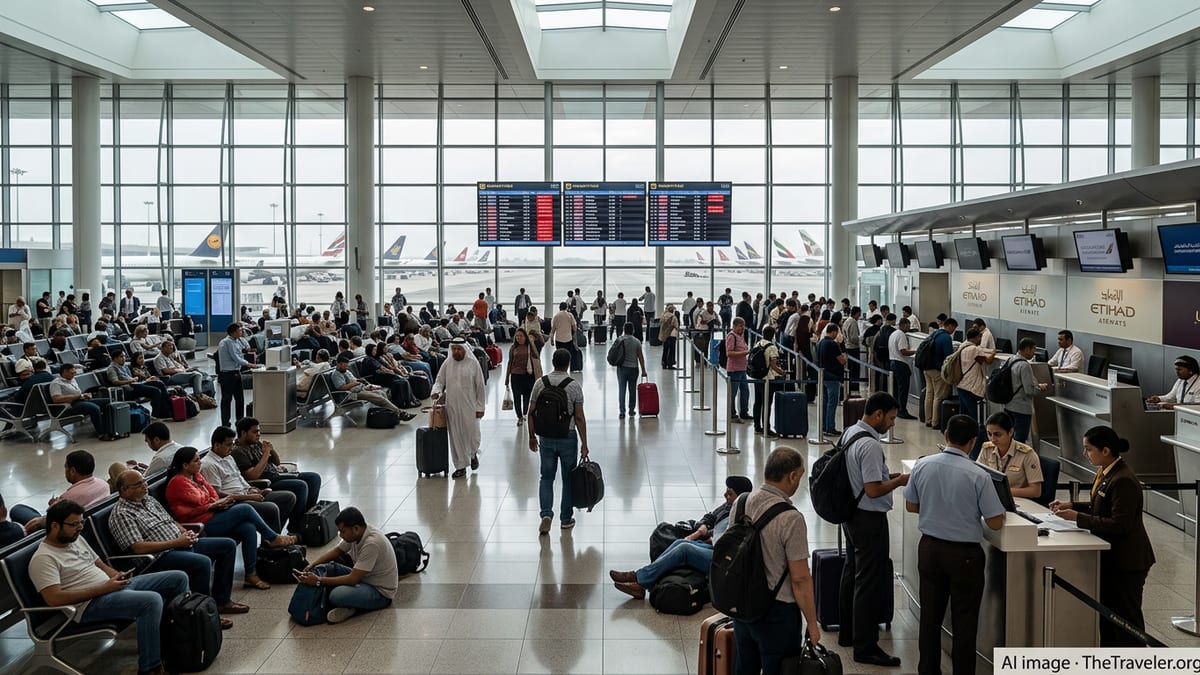
Regional Conflict Sends Shockwaves Through Saudi Airspace
Reports from aviation industry trackers and regional media indicate that the latest escalation in the wider Gulf conflict, particularly involving Iran and its neighbors, has introduced fresh uncertainty for airlines operating to and through Saudi Arabia. While the kingdom’s airspace has generally remained open, operators are frequently adjusting routings and schedules as risk assessments evolve and adjacent corridors periodically close.
Travel analysis from consultancies and logistics providers describes Saudi Arabia as one of the few major east–west corridors still functioning with significant capacity, even as airspace closures and restrictions elsewhere in the Gulf continue to disrupt long-haul connections between Europe, Africa and Asia. This role as a remaining transit option has amplified the impact when individual routes into or out of the kingdom are suspended or heavily modified.
The broader Middle East aviation crisis that intensified in early 2026, following attacks on infrastructure and airspace shutdowns in neighboring states, continues to shape airline decision making. Publicly available assessments suggest that carriers are balancing demand for access to Saudi hubs with higher fuel burn from longer routings, tighter crew rotations and expanded contingency planning for sudden operational changes.
Analysts note that the conflict’s effect on oil markets, including higher jet fuel prices, is adding cost pressure to airlines that are simultaneously managing rapidly shifting security advisories. This combination has left Saudi airports exposed to knock-on disruption even when local facilities and runway operations remain largely intact.
Suspensions and Cancellations on Key Routes to Riyadh and Jeddah
Recent schedule updates show a pattern of selective suspensions affecting flights into Riyadh’s King Khalid International Airport and Jeddah’s King Abdulaziz International Airport. According to published coverage from global news agencies and aviation data providers, several European and regional airlines have either extended pauses on services to Riyadh or removed Saudi routes from near-term schedules, citing operational and security considerations.
For example, some European flag carriers have maintained temporary suspensions on Riyadh routes through at least late July, while others have only gradually resumed operations after earlier cancellations. Budget and leisure-focused airlines have also scaled back or withdrawn certain services to Saudi destinations, with passenger reports highlighting last-minute cancellations on routes that previously offered direct access for religious travel and tourism.
Travel publications in the Gulf region describe an ongoing cycle in which airlines announce limited resumptions of flights to Saudi Arabia and other Middle Eastern hubs, only to readjust timetables again as the regional situation changes. This stop-start pattern has left many passengers facing rebookings, reroutings through alternative hubs, or extended layovers inside the kingdom when onward flights are disrupted.
Data from airport performance studies suggests that despite these external shocks, core Saudi hubs have maintained relatively high on-time performance compared with some neighboring airports, implying that much of the disruption is being driven by airline network decisions and airspace constraints rather than by airport-level operational breakdowns.
Knock-on Effects for Hajj, Umrah and Transit Passengers
The timing of the most recent disruptions has been particularly sensitive for Saudi Arabia, where Jeddah and Madinah play critical roles in handling Hajj and Umrah traffic. Official bulletins earlier in the summer highlighted that national carrier Saudia successfully completed intensive Hajj departure operations from Madinah, underscoring the system’s capacity to manage peak pilgrimage flows. However, rolling regional instability has since complicated travel plans for many religious visitors heading to or departing from the kingdom.
Travel columns and online forums used by pilgrims and expatriates document cases in which low cost carriers cancelled Saudi-bound flights entirely, forcing travelers to switch to full-service airlines or reroute through alternative hubs such as Doha, Istanbul or Cairo. In some instances, passengers report being offered itineraries that now involve longer ground transfers within Saudi Arabia, or overnight connections at Riyadh and Jeddah, due to reduced direct options.
Connecting passengers using Saudi hubs as a bridge between Europe, Asia and Africa are encountering similar unpredictability. Accounts shared on social platforms describe multiple schedule changes, rerouted connections between Riyadh and Jeddah, and occasional airport swaps where a long-haul departure is shifted from one Saudi city to another. While many flights are still operating, the overall experience has become less predictable, particularly for travelers with time-sensitive commitments.
Industry guidance from global mobility and corporate travel advisers urges organizations to factor in potential last-minute cancellations on Saudi routes, extend connection times, and maintain alternative routings for critical trips. Such recommendations indicate that widespread disruptions are expected to persist in the short term, even if headline airport closures are avoided.
Operational Strain on Airlines Using Saudi Hubs
Behind the visible cancellations and delays, airline networks serving Saudi Arabia are contending with a complex operational puzzle. Strategy papers and industry outlooks produced in recent months describe how carriers with high exposure to the Gulf region must continually redesign flight paths to circumvent sensitive airspace, often adding flight time and complicating crew scheduling.
Saudi airports’ role as among the more resilient hubs in the region means they have absorbed additional traffic flows that would once have passed through now-constrained hubs elsewhere in the Middle East. Airport council data and capacity projections point to a planned V-shaped recovery in scheduled seats across Saudi gateways through mid-2026, even as nearby airports operate at sharply reduced capacity.
This resilience, however, comes with strain. Reports from logistics and supply-chain operators show that as cargo and passenger flights are consolidated through Saudi territory, bottlenecks can appear in ground handling, turnaround times and slot availability, especially on days when diversions from other hubs are heaviest. When combined with the elevated security posture, the result is a fragile equilibrium in which even minor technical or weather issues can snowball into wider disruption.
National carriers based in Saudi Arabia have highlighted strong performance metrics during less turbulent periods, including leading global rankings for on-time operations. The current environment tests that record as they work to absorb additional demand while reacting to evolving international advisories and partner airline schedule changes.
What Travelers Using Saudi Airports Should Expect Now
For travelers planning to pass through Saudi airports in the coming weeks, publicly available advisories from travel platforms, insurers and corporate travel managers converge on a similar message: expect schedules to remain fluid and prepare for disruption. Passengers are being encouraged to monitor their bookings closely, rely on official airline communication channels, and remain cautious about unverified information circulating on social media.
Given the pattern of selective route suspensions, indirect routings and extended layovers, many experts recommend favoring itineraries with flexible change policies, especially for trips transiting Riyadh or Jeddah onward to other conflict-adjacent destinations. Longer connection windows are advised to allow for cascading delays when upstream flights are rerouted or slowed by congested airspace.
Travel risk assessments also point to the importance of contingency planning. For some passengers, this may mean holding backup routings that bypass the Gulf entirely, while for others it can involve securing accommodation options in case an unplanned overnight stay in Saudi Arabia becomes necessary. Insurance providers have updated policies in response to the evolving conflict, and travelers are urged to confirm coverage for disruption linked to regional instability.
Despite the challenges, flight tracking data and media coverage show that Saudi airports remain open and are handling substantial volumes of traffic each day. For now, the disruptions are characterized less by total shutdowns and more by an unpredictable patchwork of cancellations, diversions and schedule adjustments that are likely to continue shaping travel through the kingdom’s airspace throughout the current phase of the crisis.