


More news on this day
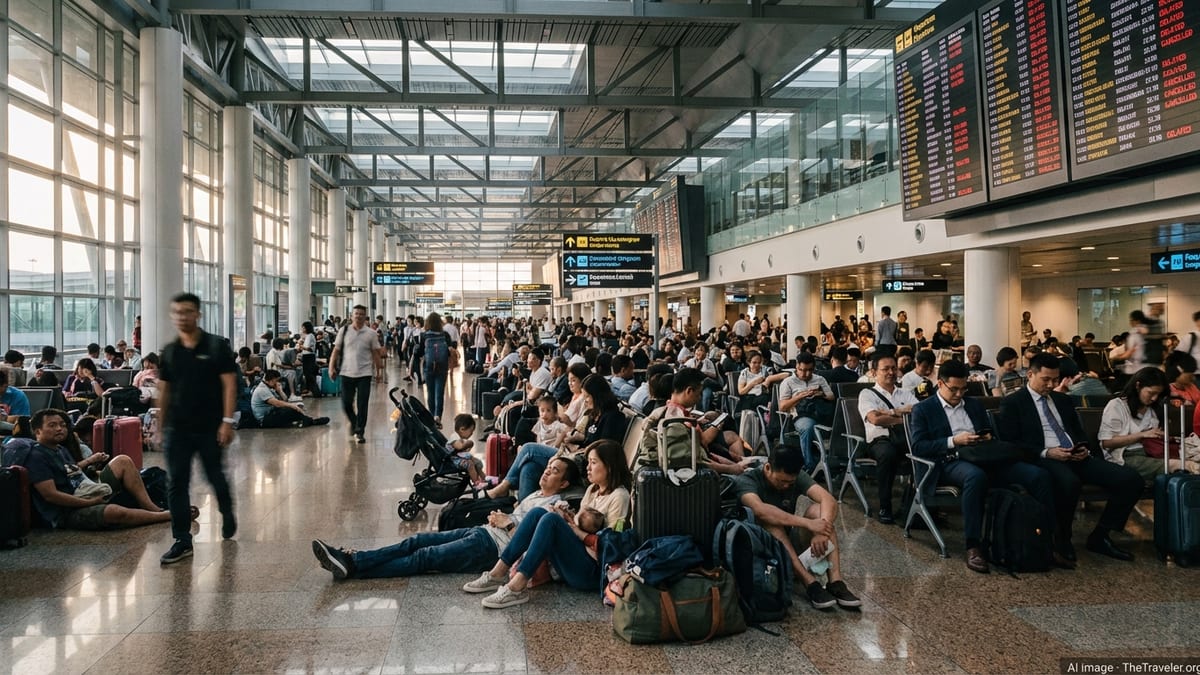
Air travel across Asia is facing significant disruption as a mix of severe weather, seasonal monsoon systems and capacity cuts trigger widespread flight cancellations and delays at major hubs from Japan to India and Southeast Asia.
Get the latest news straight to your inbox!
Typhoons Batter Japan’s Southern Gateways
Recent tropical systems in the western Pacific have led to large numbers of cancellations and delays across Japan’s southern airports, particularly in Okinawa and surrounding islands. Publicly available airline notices and local coverage describe mass schedule changes as carriers adjust or suspend flights in the path of strong winds and heavy rain, with some routes preemptively canceled for multiple days to protect crews and aircraft.
One of the most disruptive events came in early July, when Typhoon Bavi brushed southern Japan and prompted extensive groundings at Naha and other island airports. Local aviation reports indicate that Japan’s largest carriers canceled dozens of services on 9 and 10 July, affecting tens of thousands of passengers and creating knock-on delays for connecting flights across domestic and international networks.
Smaller regional airlines have also warned of “irregular operations” during the typhoon season, with advisory pages highlighting the risk of last-minute schedule changes on routes linking Japan, South Korea and nearby destinations. Travelers on these short sectors are being urged by airlines to monitor flight status tools closely, as changing storm tracks can trigger rolling adjustments throughout the day.
The cumulative effect is a more fragile operating environment for Japan’s summer travel season. Even when typhoons are not making direct landfall, outer rainbands and wind fields can force air traffic control restrictions, reducing runway capacity and causing holding patterns that ripple across the wider Asian network.
Monsoon Rains Disrupt Indian and South Asian Hubs
Further west, intense monsoon conditions are adding another layer of disruption for Asian travelers. In early July, heavy rainfall in Mumbai led to a temporary suspension of runway operations at Chhatrapati Shivaji Maharaj International Airport, with Indian media reporting multiple cancellations and diversions as aircraft were unable to land or take off safely during peak downpours.
Forecasts from regional meteorological services point to an uneven but occasionally intense monsoon pattern for August, with some eastern and northeastern parts of India expecting active rainfall spells that can quickly overwhelm airport drainage systems. When such bursts coincide with peak travel periods, even brief closures or low-visibility periods can cascade into hours of residual delays and missed connections.
Similar pressures are being seen at other South Asian gateways exposed to seasonal storms, including airports in coastal regions of the Bay of Bengal and the Arabian Sea. Publicly available advisories emphasize the growing challenge of maintaining on-time performance as climate variability increases the frequency of extreme rainfall events, pushing airport infrastructure and schedules to their limits.
For airlines, these weather patterns translate into higher operating complexity. Crews and aircraft can end up out of position after diversions, and tight turnaround times leave little margin when thunderstorms or low clouds suddenly reduce capacity at key hubs.
Capacity Cuts and Rerouting Add to Passenger Strain
Beyond weather, a tightening capacity environment is compounding Asia’s disruption picture. In India, Air India has significantly reduced its international schedule to several Southeast Asian cities through at least August, following higher fuel costs and rerouting pressures linked to airspace restrictions. Travel industry reporting suggests that more than 60 weekly flights across Singapore, Thailand, Vietnam and Malaysia routes have been cut or suspended, reducing options for both leisure and business travelers.
Across the broader region, analyses from aviation consultancies and industry associations describe a supply-side squeeze as carriers rebalance networks in response to geopolitical tensions and higher operating costs. Some long-haul flights between Asia and Europe are using longer routings to avoid conflict zones, increasing fuel burn and tightening aircraft availability for short- and medium-haul regional services.
This environment leaves less slack in the system when weather-related disruptions hit. With spare aircraft and crew already heavily utilized, airlines have fewer opportunities to mount extra recovery flights or quickly rebook passengers on alternative departures. The result is that a weather event affecting one hub can produce longer-lasting disruption for travelers trying to move between multiple Asian cities.
Industry economic briefings indicate that, although overall Asia Pacific passenger demand is still growing, the pace is being constrained by these operational and cost pressures. That imbalance between demand and effective capacity raises the risk of crowded rebooking desks and limited inventory when major cancellations occur.
Travel Hotspots: Japan, India and Southeast Asia Under Pressure
Several of Asia’s most popular tourism and business destinations are at the heart of this summer’s disruption. Japan’s southern islands, already experiencing storm-related shutdowns, are entering a peak travel period at the same time as typhoon activity typically intensifies. Major carriers are keeping prominent advisories online reminding customers that flights “may be cancelled or delayed” and directing them to digital tools for rebooking and refunds when weather affects operations.
In India, large metropolitan hubs such as Mumbai and Delhi are grappling with the dual challenges of monsoon rainfall and strong demand recovery on domestic routes. When intense storms hit, air traffic restrictions can quickly back up departure queues, leading to hours of delays and diversions to secondary airports where overnight accommodation and ground transport options may be limited.
Southeast Asia, meanwhile, is facing both weather volatility and schedule rationalization. Carriers serving cities such as Bangkok, Singapore, Kuala Lumpur and Hanoi are adjusting frequencies to reflect higher operating costs, even as regional weather forecasts for June to August suggest active monsoon patterns in parts of the maritime continent. That combination leaves travelers more exposed when thunderstorms or low clouds temporarily close runways and airspace sectors.
Popular connecting hubs that link short-haul Southeast Asian routes with long-haul services to Europe, the Middle East and North America are particularly sensitive. Disruptions on feeder flights risk causing passengers to misconnect onto once-daily or less frequent long-haul departures, leading to longer rebooking windows and additional nights away from home.
What Travelers Can Expect in the Weeks Ahead
Looking ahead through August, seasonal patterns indicate that Asia’s weather-related risks are likely to remain elevated. Climate outlooks for Southeast Asia point to a southwest monsoon that is near or slightly stronger than average in some areas, which can mean recurrent heavy showers and thunderstorms around key coastal hubs. In India, private and official forecasts highlight a complex monsoon picture with both regional rainfall deficits and localized intense events that can still prove disruptive for aviation.
For Japan and the wider northwest Pacific, forecasters are monitoring sea surface temperatures and atmospheric conditions that can influence typhoon formation during late summer and early autumn. While the exact number and track of storms cannot be predicted far in advance, historical patterns suggest that airlines and passengers should be prepared for further episodes of short-notice cancellations and schedule reshuffles.
Aviation analysts note that, in a constrained capacity environment, operational resilience becomes more difficult to maintain. Airlines across Asia are investing in more granular weather monitoring and schedule planning, but public information from carriers continues to stress that safety considerations will always lead to conservative decisions when strong winds, low visibility or waterlogged runways are involved.
Travelers using Asian gateways in the coming weeks are therefore likely to encounter a higher-than-usual risk of last-minute changes, longer connection times and crowded customer service channels when major storms or downpours occur. While the region’s aviation network remains robust overall, this summer has underscored how vulnerable even the busiest hubs can be when severe weather and tight capacity collide.