


More news on this day
Newly released federal statistics and industry analyses indicate that U.S. air travelers are facing the worst combination of flight delays and long tarmac waits in years, as booming demand, fragile airline operations and weather volatility strain an already congested system.
Get the latest news straight to your inbox!
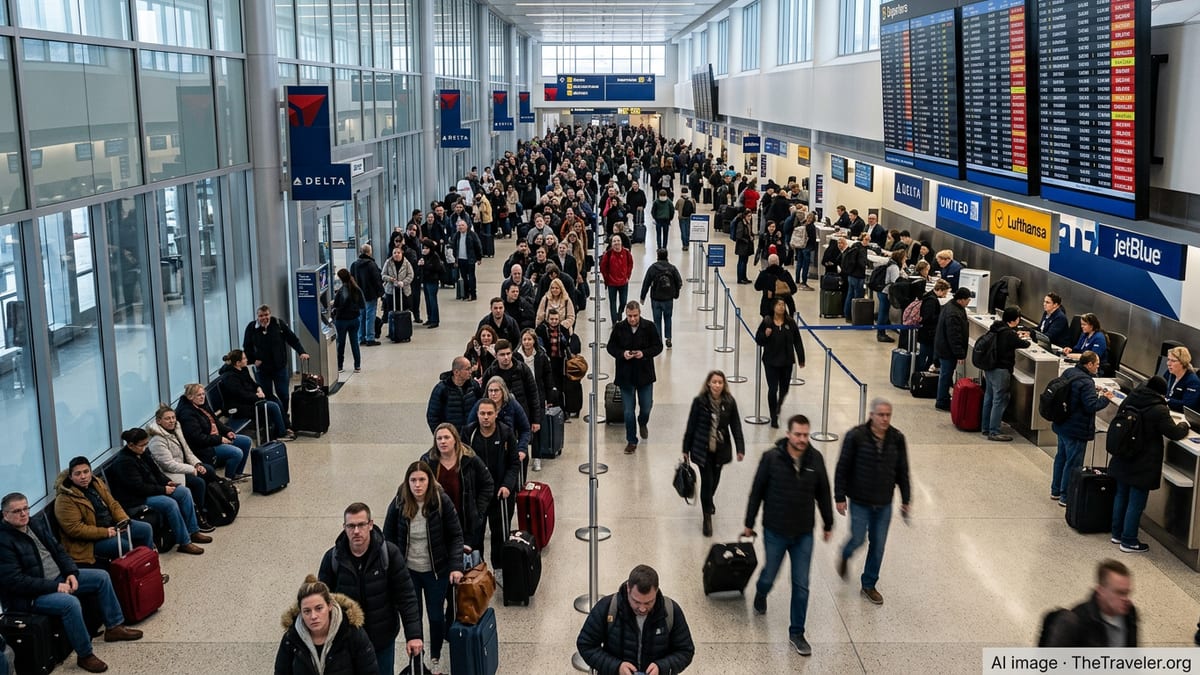
Data show delays rising even as cancellations fall
Recent summaries of Transportation Department data and independent industry reviews point to a steadily worsening delay picture across the United States, even though outright cancellations have dropped from the peaks seen earlier in the decade. Publicly available figures for 2023 show that roughly one in five flights arrived late, the highest share in many years and slightly above pre‑pandemic norms. Analysts tracking 2024 and early 2025 performance say that overall delay rates have not meaningfully improved, and in some cases have edged higher.
At the same time, federal reports highlight that U.S. carriers have pushed cancellation rates to their lowest levels in at least a decade, helped by added staffing and schedule adjustments that reduce the risk of scrubbed flights. That shift means more passengers are eventually getting to their destinations, but many are spending longer in terminals and on aircraft waiting for takeoff slots, gate space or connecting crews.
Travel data specialists describe this trade‑off as a “delay over cancellation” strategy that emphasizes keeping flights on the board. For travelers, the result can be longer days in transit, higher odds of missed connections and more time spent sitting on aircraft that are technically operating but going nowhere.
Long tarmac waits surge to decade highs
The clearest sign of deteriorating conditions is in the statistics for extended tarmac delays, a relatively rare but highly disruptive category that federal regulators track closely. An overview of 2023 and 2024 operations compiled from Transportation Department filings shows a jump of more than 50 percent in domestic flights that spent over three hours on the tarmac before takeoff or after landing.
One recent national summary of U.S. air travel performance reported that airlines logged 437 domestic tarmac delays exceeding three hours in 2024, up from 289 the year before. That total is among the highest since current reporting rules were introduced and is widely described by analysts as the worst level in many years. Each such incident can affect hundreds of passengers at a time, magnifying the impact of what remains a small slice of total flights.
Consumer advocates note that these prolonged waits are precisely the situations that federal passenger‑protection rules were designed to deter. Carriers generally face the choice of returning to a gate and potentially canceling a flight, or remaining in a departure queue and risking violation of tarmac time limits. The latest figures suggest that, as congestion grows and operations come under pressure, more flights are brushing up against that boundary.
Summer storms, staffing gaps and crowded skies
Operational data and seasonal analyses point to a familiar but increasingly potent mix of causes behind the recent spike in delays and tarmac waits. Summer 2024 reports from North American and European airspace managers describe some of the most disruptive warm‑weather patterns in years, with repeated rounds of thunderstorms, heat‑driven ground stops and smoke‑related visibility restrictions that forced airlines to slow or reroute traffic.
Those weather shocks have collided with infrastructure constraints and staffing gaps, particularly in air traffic control centers that manage the busiest corridors along the East Coast and in parts of the Midwest. Aviation researchers using federal data have identified national airspace bottlenecks and controller shortages as persistent contributors to delay growth since the pandemic era, especially during peak travel periods.
Airline operations themselves also play a substantial role. Industry analyses of delay causes for 2022 through 2024 show that issues within carriers’ control, including late arriving aircraft, maintenance holds and crew scheduling problems, account for a large share of total delay minutes. When a single flight runs late, the aircraft and crew often propagate disruption through the rest of the day’s schedule, a pattern that becomes more severe when hubs are already operating near capacity.
Airports and routes where travelers feel it most
The burden of delays is not evenly distributed across the network. Recent rankings of on‑time performance by airports indicate that the worst‑performing major U.S. facilities have seen their on‑time departure share dip below 70 percent, meaning nearly one in three flights is delayed. Large coastal hubs and heavily trafficked connecting airports tend to feature prominently on these lists, reflecting both their exposure to weather and the sheer volume of flights funneled through them.
Conversely, some mid‑continent hubs and secondary airports have maintained on‑time records closer to or above 80 percent, underscoring how geography, runway layout and dominant carriers’ practices can cushion or intensify systemic stress. Analysts say that for individual travelers, the difference between departing from a consistently punctual airport and a chronically congested one can translate into hours saved over the course of a trip.
Route structure also matters. Nonstop flights reduce the risk of missed connections, but on popular long‑haul and transcontinental routes, they may operate from the very hubs that see the highest congestion. Connecting itineraries can offer more flexibility and fare options, yet each additional leg adds another point of potential delay or a long sit on the apron waiting for a gate.
What the worsening metrics mean for travelers
For passengers planning trips in 2025 and into the peak summer months, the latest numbers suggest that while the odds of an outright cancellation are lower than in the recent past, the risk of significant delays and lengthy on‑board waits is elevated. Travel planners and industry observers emphasize that the “felt experience” of flying now is shaped less by whether a flight operates and more by how reliably it operates anywhere near its scheduled time.
Advisories from travel groups and consumer‑rights organizations highlight several strategies for navigating this new environment, including favoring early‑morning departures, building longer connection windows at known chokepoint airports and monitoring flight status through airline and third‑party apps well before heading to the airport. While such steps cannot eliminate the risk of disruption, they can mitigate the impact when long tarmac queues or ground delays ripple through the system.
With passenger demand expected to remain strong and major infrastructure upgrades years in the making, analysts anticipate that delay and tarmac‑wait statistics will remain under scrutiny. The latest reports indicate that, even as airlines tout progress on cancellations, the broader reliability story for U.S. air travel is more complicated, and for many flyers, more frustrating than headline figures alone might suggest.