


More news on this day
Greek airports are facing a fresh wave of disruption as air traffic over the country climbs to record levels, creating widespread delays at major gateways just as the peak summer holiday season intensifies.
Get the latest news straight to your inbox!
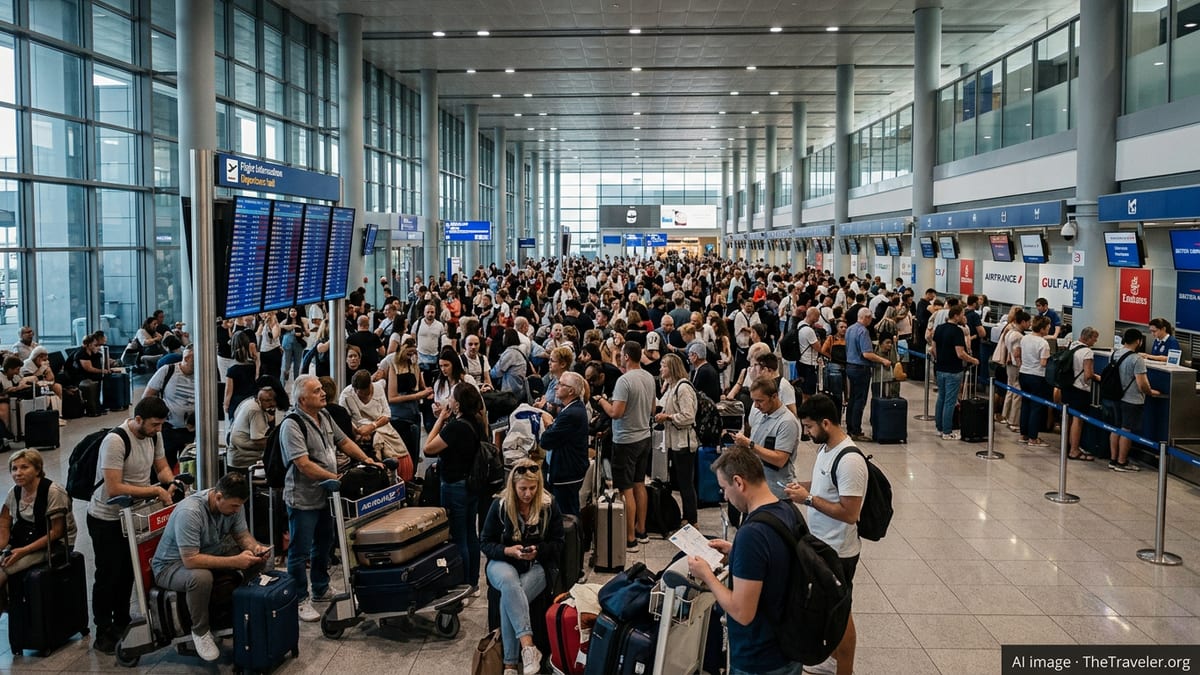
Record volumes challenge Greek airspace
Publicly available data show that flight activity in Greek airspace has reached unprecedented levels in recent days, with traffic in the Athens Flight Information Region surpassing previous records set in 2025. On 18 July, Greek airspace handled more than 5,000 flights in a single day, exceeding earlier peaks recorded both this summer and last year.
Eurocontrol reporting for early July indicates that Greece now accounts for a significant share of air traffic flow management delays across the European network. Recent weekly network briefings attribute around one in eight minutes of en route delay in Europe to traffic over Greece, highlighting how congestion in the country has become a key bottleneck for regional aviation.
This surge comes on top of already elevated activity at Greece’s largest airlines and airports. National carrier schedules for early July show record numbers of weekly flights, while the average daily number of movements in Greek airspace has edged higher than in summer 2025, underscoring how sustained demand is stressing infrastructure that was already under pressure.
The combination of overflying traffic linking Europe with the Eastern Mediterranean and Middle East, alongside heavy seasonal demand for island destinations, is placing a particular strain on the Athens area control center and the sectors managing traffic into northern Greece.
Delays ripple through Athens and island gateways
The sharp increase in movements has translated into longer waits on the ground and in the air at key airports. Network statistics for late June and early July show that Athens and the Makedonia control area, which covers traffic to and from Thessaloniki and several popular holiday islands, are among the highest contributors to en route delay minutes in Europe.
Domestic coverage from Greek outlets describes “summer gridlock” at major hubs, with reports of lengthening queues at check-in and security, as well as aircraft held at departure stands while air traffic control slots are reassigned. Passengers at Athens International Airport have faced extended turnaround times when morning and late-evening waves coincide with en route congestion constraints.
On peak Saturdays and Sundays, island airports that depend on tight arrival and departure banks for charter and low-cost services have also experienced knock-on effects. When capacity restrictions are imposed in the upper airspace sectors over Greece, local operations can be forced into holding patterns or short-notice schedule changes, compounding the disruption for travelers attempting to make same-day connections.
Travel forums and social media posts from early July echo these trends, with passengers recounting multi-hour delays on flights to and from Greek leisure destinations, and late-night arrivals that compress already short turnarounds for outbound services the following morning.
Capacity, staffing and aging systems under scrutiny
Analysis from Eurocontrol and Greek financial and aviation publications points to a combination of structural and operational factors behind the current wave of delays. Capacity limitations in key airspace sectors, shortages of fully qualified air traffic controllers and the slow renewal of critical systems are repeatedly cited as central challenges.
Recent European aviation overviews list Athens and Makedonia among the area control centers with the highest average delay per flight, with staffing constraints and strict sector capacity limits identified as primary drivers. While some improvement has been recorded in average delay per flight compared with last year at certain airports, the overall volume of traffic has risen fast enough to offset these gains on the most congested days.
Domestic business press coverage has also highlighted concerns about aging navigation and radar infrastructure supporting the main approach routes into Athens. Technical issues earlier this year, including radio communication problems that temporarily affected Greek airspace, have fueled debate over the resilience of the system at a time when both scheduled and overflying traffic are trending upward.
Authorities have previously announced recruitment programs and cooperation with European partners to enhance capacity, but those measures take time to translate into additional operational staffing and upgraded systems. In the interim, network managers are relying on tactical flow restrictions and re-routing to keep traffic moving, at the cost of punctuality.
Network-wide impact across southern Europe
The disruption in Greece is not occurring in isolation. Eurocontrol summer briefings describe a broader pattern of stress across southern Europe, with France and Spain also generating substantial shares of network delays due to capacity and staffing issues compounded by convective weather. Within this context, Greece consistently ranks among the top contributors to en route delay minutes.
Because Greek airspace sits on major north–south and east–west routes, constraints there can create secondary effects across the continent. Flights that would normally cross Greece at optimal times and altitudes are being rescheduled or rerouted, which can in turn disrupt slot sequences at departure airports in other countries and compress arrival waves at alternative waypoints.
Network managers have responded with measures designed to smooth traffic peaks, including encouraging airlines to distribute flights more evenly across the day and to use alternative routings where possible. Publicly available network planning documents note that such steps are intended to reduce bottlenecks over Greece and neighboring states while keeping en route delays within manageable limits.
Nevertheless, the cumulative impact is evident in rising average delay figures since mid-June and a higher proportion of flights experiencing some form of air traffic flow management restriction, especially on Fridays and weekends when leisure demand is strongest.
Travelers urged to plan for disruption
As air traffic over Greece remains at record levels, consumer and aviation advice platforms are urging travelers to build more flexibility into their plans. Guidance commonly recommends arriving at airports earlier than usual, allowing generous connection times between flights and monitoring airline notifications closely in the days leading up to departure.
Travel forums for Greece are filled with first-hand accounts from passengers who have encountered extensive queues at peak times and last-minute gate changes linked to air traffic control restrictions. Many contributors stress the importance of carrying essentials in cabin baggage, preparing for possible missed connections and checking whether travel insurance covers delays related to air traffic management.
Given forecasts that flight volumes over Greece will remain high through August and into September, further periods of disruption are likely. Airlines and airports are adjusting rosters and operational plans in an effort to accommodate the demand, but published traffic projections suggest that capacity margins will remain tight across the country’s airspace in the weeks ahead.
For millions of travelers heading to Greek beaches and islands, the current pattern means that leaving extra time in their itineraries may be the most practical response to a summer season defined as much by record-breaking skies as by crowded departure halls.