


More news on this day
Passengers flying from Manchester Airport on Tuesday, July 21, are being advised to check the latest status of their flights after a series of delays and a small number of cancellations affected services throughout the day.
Get the latest news straight to your inbox!
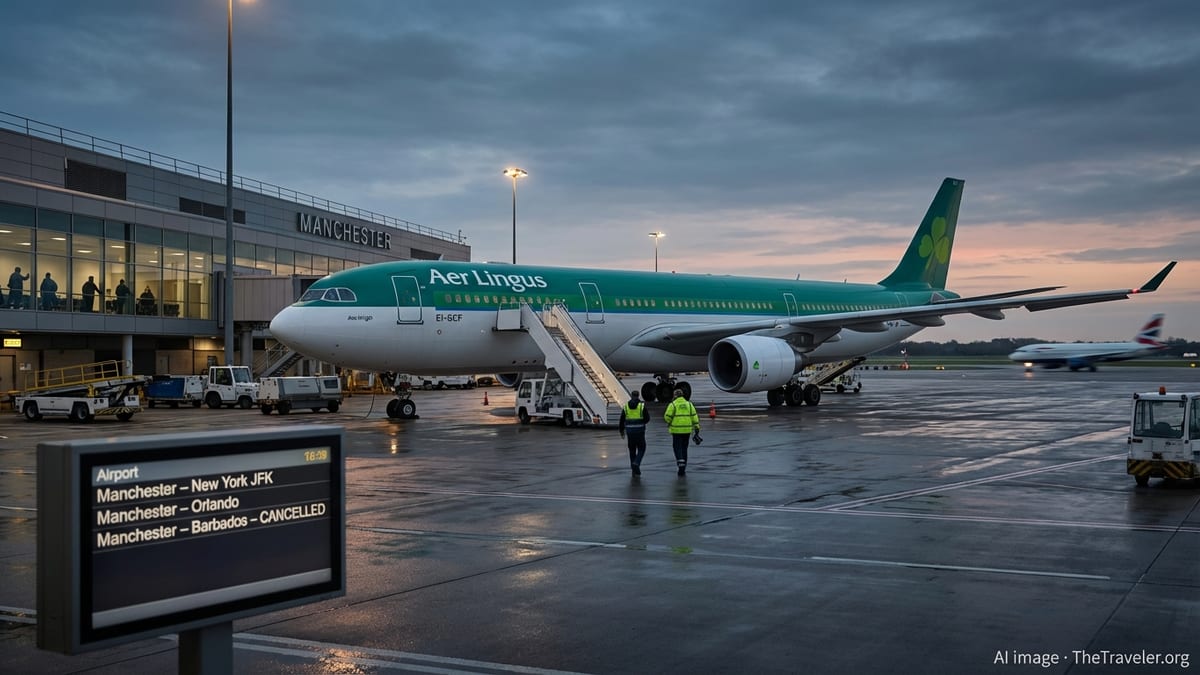
Live departure boards show patchy disruption
Live departure boards for Manchester Airport on Tuesday, July 21, show a mixed picture, with the majority of flights operating broadly on time but a noticeable cluster of services listed as delayed or cancelled. The airport’s own online departure tool for the date, set to Tuesday, July 21, indicates several flights with revised departure times alongside standard on-time departures.
Third party flight trackers that aggregate live data for Manchester corroborate that delays have been spread across the day’s schedule rather than concentrated in a single peak period. Services to Mediterranean holiday destinations, major European hubs and selected long haul routes all show instances of late departures compared with their scheduled slots. In most cases, recorded delays range from around 20 minutes to just over an hour.
Publicly available information also suggests that a small number of flights from Manchester have been cancelled outright on July 21. These cancellations appear to be isolated rather than part of a wholesale shutdown of a particular terminal or airline operation, with the live boards continuing to list hundreds of active departures for the day.
Because flight status information can change rapidly, especially later in the operating day, passengers are being reminded through airport and airline channels that the live boards and airline notifications remain the primary source of up to the minute detail on whether a specific service is running, delayed or cancelled.
Impact of Middle East airspace restrictions
Manchester Airport has highlighted the broader backdrop of airspace restrictions linked to the ongoing situation in the Middle East as one factor behind some of the disruption seen on July 21. A travel information notice published by the airport states that closures and restrictions affecting key air corridors have resulted in a small number of flights being delayed or cancelled as airlines adjust routings and schedules.
Carriers using Manchester to connect the UK with destinations in the eastern Mediterranean, the Gulf and parts of Asia face longer and more complex routings when airspace along traditional flight paths is restricted. Industry data and recent coverage on European air traffic conditions indicate that such detours can add to block times, disturb carefully planned aircraft rotations and contribute to late arrivals that then knock on to subsequent departures.
The same notice stresses that only a limited proportion of Manchester’s overall flight program is directly affected, which aligns with the live boards showing most flights still operating. However, even a relatively small number of heavily delayed or rerouted flights can place additional strain on airport infrastructure, ground handling and crew scheduling, sometimes leading airlines to consolidate or cancel selected services in order to keep the wider operation stable.
Travel industry analysis suggests that these airspace issues are feeding into a more complex summer operating environment for European airports, with Manchester among those seeing intermittent schedule adjustments as global events intersect with peak holiday demand.
What the data shows about today’s flight program
Data tools that compile live status information for Manchester indicate that the airport is handling several hundred departures on Tuesday, July 21, broadly in line with its peak season schedule. One widely used flight information platform notes that Manchester typically records more than 300 departing flights per day in the current season, and live tables for July 21 mirror that scale of activity.
Within that total, a subset of services is flagged as delayed, with scheduled departure times pushed back and estimated departure times adjusted accordingly. Examples visible on live trackers include short haul flights to European leisure destinations showing delays of around half an hour, as well as occasional longer delays on routes where the inbound aircraft has arrived late into Manchester.
Cancellation indicators on tracker sites and airline status pages point to a limited number of flights that will not depart as planned from Manchester today. These are spread across different airlines and destinations, and there is no sign from public information that a single technical fault or weather event at Manchester itself is driving a wave of cancellations.
Instead, sector wide challenges, including congested European airspace, crew availability and knock on effects from disrupted inbound rotations, appear to be the main factors. Historic performance data and recent analytical reports on European aviation underline that such network wide pressures often manifest at busy hub and regional airports as scattered delays across the daily schedule rather than large blocks of cancelled operations.
Advice for passengers travelling on July 21
With delays and cancellations on July 21 affecting only a fraction of Manchester Airport’s total departures but changing throughout the day, passenger advice remains focused on preparation and real time checking. Travel information pages associated with Manchester and airline channels consistently urge passengers to confirm the latest status of their specific flight before setting off for the airport.
Airlines flying from Manchester typically provide status updates via their own websites, mobile apps and SMS or email notifications to customers who have supplied contact details. These tools reflect gate changes, revised departure times and, where applicable, cancellations or rebooked services. For those already at the airport, terminal display screens and public address announcements remain central to keeping track of any late adjustments to boarding times.
Passenger rights information for UK and European flights, including entitlement to care, rebooking or compensation in certain circumstances, is available from airlines and consumer guidance portals. Recent regulatory and consumer body commentary stresses that airlines are expected to minimise disruption where possible and provide clear information when flights are significantly delayed or cancelled.
Given the combination of summer holiday demand and airspace related constraints highlighted in recent travel coverage, travellers passing through Manchester on Tuesday, July 21, may benefit from allowing extra time at the airport, staying closely informed about their flight’s status and remaining flexible if offered alternative routings or departure times.
Manchester’s summer operations under scrutiny
The pattern of disruption on July 21 comes at a time when Manchester Airport’s wider summer performance is under scrutiny from aviation analysts and passenger groups. Recent capacity declarations and operational briefings for the current season set out ambitious schedules, reflecting strong demand for both leisure and long haul travel from the North of England.
Industry reports published in recent weeks describe Manchester as one of the UK’s busiest airports, with hundreds of daily movements and intensive peak periods in the early morning and late afternoon. With runways and air traffic slots operating close to capacity at those times, even relatively minor shocks, such as an unexpected airspace restriction or a late inbound long haul arrival, can ripple through the schedule and amplify delays.
Research on airport punctuality and network resilience, including recent academic work on predicting on time performance, notes that factors such as weather, runway configuration, air traffic control capacity and airline scheduling strategies all interact to shape daily outcomes. Manchester’s experience on July 21, where a broadly intact schedule coexists with a scattered pattern of delays and a handful of cancellations, reflects those wider dynamics.
For passengers and airlines alike, the focus now is on how effectively the airport and its carriers manage these pressures across the remainder of the peak season, and whether operational adjustments, additional staffing or refined schedules can help limit the scale of disruption on days when external factors place added strain on the system.