


More news on this day
The United States has issued a fresh travel warning related to Iran as regional tensions continue to build, reinforcing long-standing guidance that Americans should not travel to the country and should plan for wider disruption across the Middle East.
Get the latest news straight to your inbox!
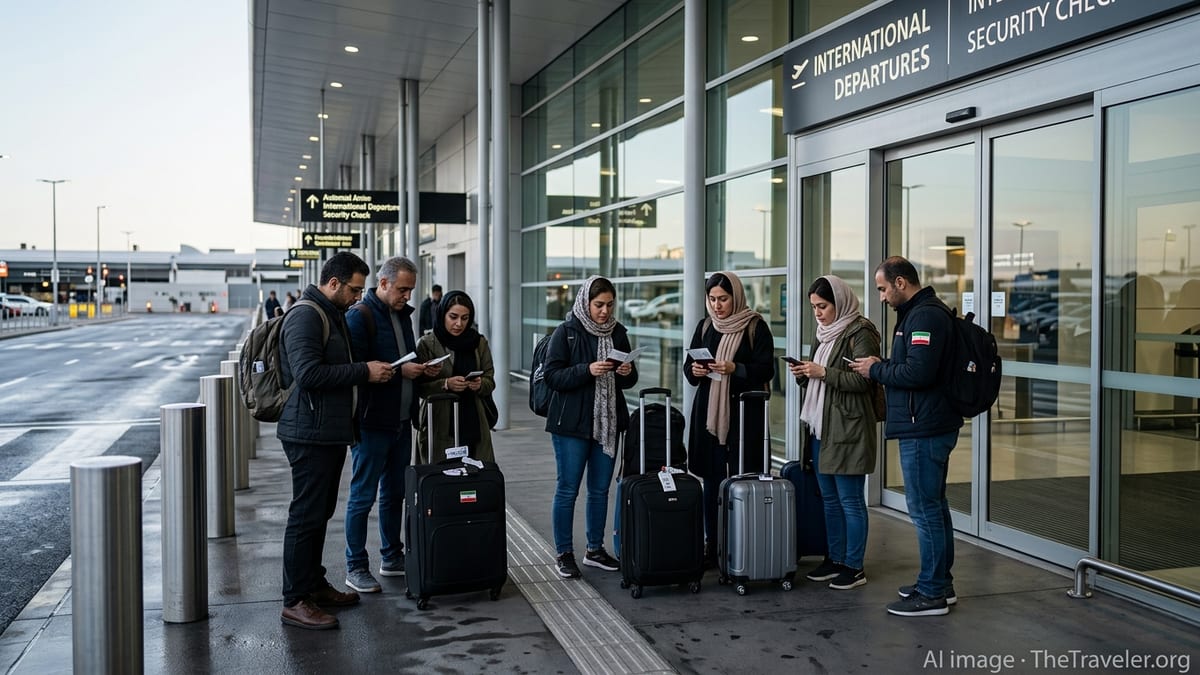
What the latest warning means for US travelers
Recent public updates from the US Department of State have again emphasized Iran as a Level 4 destination, the highest advisory tier, which advises Americans not to travel. The current Iran Travel Advisory is dated December 5, 2025, and remains in effect as of September 2026, with risk indicators that include wrongful detention, terrorism, kidnapping or hostage taking, unrest, and other concerns.
Alongside the country-specific advisory, the State Department has also circulated broader security messaging tied to regional conditions. A “Worldwide Caution” update dated July 22, 2026 advises Americans globally to exercise increased caution and highlights that the Middle East may see flight cancellations, periodic airspace closures, and other travel disruptions.
In addition, published coverage in recent days has described a renewed, region-wide alert for Americans in or traveling to the Middle East, warning that conflict involving Iran could escalate quickly. While not limited to Iran, the region-wide framing matters for travelers connecting through major Gulf hubs and for cruise and tour itineraries that rely on stable air routes.
Why Iran remains a Level 4 destination
Publicly available US government guidance continues to stress that consular assistance inside Iran is extremely limited. The United States does not maintain an embassy in Iran, and US interests have been handled through Switzerland’s protecting power role in Tehran. Travelers should understand that, in a crisis, options to receive in-country help can be constrained compared with destinations where the US has full diplomatic operations.
The advisory also continues to emphasize risks related to detention and legal processes, including the possibility of arbitrary arrest. These concerns can apply to dual nationals as well as US passport holders, and they can be heightened for travelers with perceived ties to US institutions or for those whose work or online activity draws attention.
The State Department’s advisory framework describes Level 4 as a category used when life-threatening risks are considered more likely and when the US government’s ability to provide routine or emergency services may be very limited. In practice, that means that even well-prepared travelers can face risks that are difficult to reduce through normal precautions.
Ripple effects: flight routes, airspace, and transit plans
Even for travelers who are not planning to enter Iran, Iran-related escalations can have knock-on effects across the Middle East’s aviation network. The State Department’s July 2026 worldwide caution notes the possibility of periodic airspace closures and flight cancellations, conditions that can force airlines to re-route and can lengthen travel times on transatlantic and Asia-bound itineraries.
Transit travelers should review their routing in detail, particularly if an itinerary involves multiple segments through the Gulf. When airspace constraints occur, connections can tighten, and same-day alternatives may be limited during peak travel periods. Travelers relying on a single long-haul connection may want to check whether their carrier has published flexibility options before arriving at the airport.
On the ground, heightened regional alerts can also affect event schedules, group tours, and cruise itineraries that include port calls or overland excursions in nearby countries. In fast-moving security environments, operators may adjust routes on short notice, which can influence refunds, rebooking timelines, and travel insurance claims requirements.
Practical steps travelers can take now
Americans currently in the broader region, or those with upcoming trips, can reduce risk by monitoring State Department security updates and enrolling in the Smart Traveler Enrollment Program (STEP) to receive location-specific messages from US embassies and consulates. This can be especially useful if commercial flights are delayed or if local conditions change quickly.
Travelers should also plan for documentation and communications contingencies: confirm that passports have ample validity for transit and entry requirements on every segment, keep digital and printed copies of key documents, and ensure roaming or local SIM access works in the countries on the itinerary. When disruptions are more likely, having airline confirmation numbers and hotel contacts easily accessible can shorten rebooking time.
For travelers who choose to proceed with trips that pass through the region, it is worth reviewing travel insurance terms in advance. Policies vary on coverage for disruptions linked to security events or government advisories, and documentation requirements can be strict. If coverage language is unclear, travelers may need to rely on the written policy text rather than assumptions about what is “typically” included.
What to watch next as tensions evolve
Travelers should expect that advisories and security alerts can change quickly, sometimes without much lead time, if conditions shift. The State Department’s travel advisory system notes that updates can occur when conditions change substantially, including changes to US government staffing levels or restrictions in a country.
Recent public reporting has also shown that US-Iran tensions can influence policy decisions beyond travel advisories, including diplomatic activity surrounding high-level UN meetings in New York. For travelers, the practical takeaway is that security messaging, airline operations, and regional travel guidance can move in tandem with diplomatic and military developments.
For now, the core message remains consistent: Iran is designated Level 4 with a “Do Not Travel” recommendation, and broader Middle East alerts emphasize the potential for rapid escalation and travel disruptions. Travelers with essential needs in the region should follow official updates closely and build flexibility into their plans.