


More news on this day
The United States has issued fresh security warnings for Americans in the Middle East as President Donald Trump abruptly returned to the White House from Camp David, fueling concern that regional tensions involving Iran, Saudi Arabia and Yemen’s Houthi movement could be entering a more dangerous phase.
Get the latest news straight to your inbox!
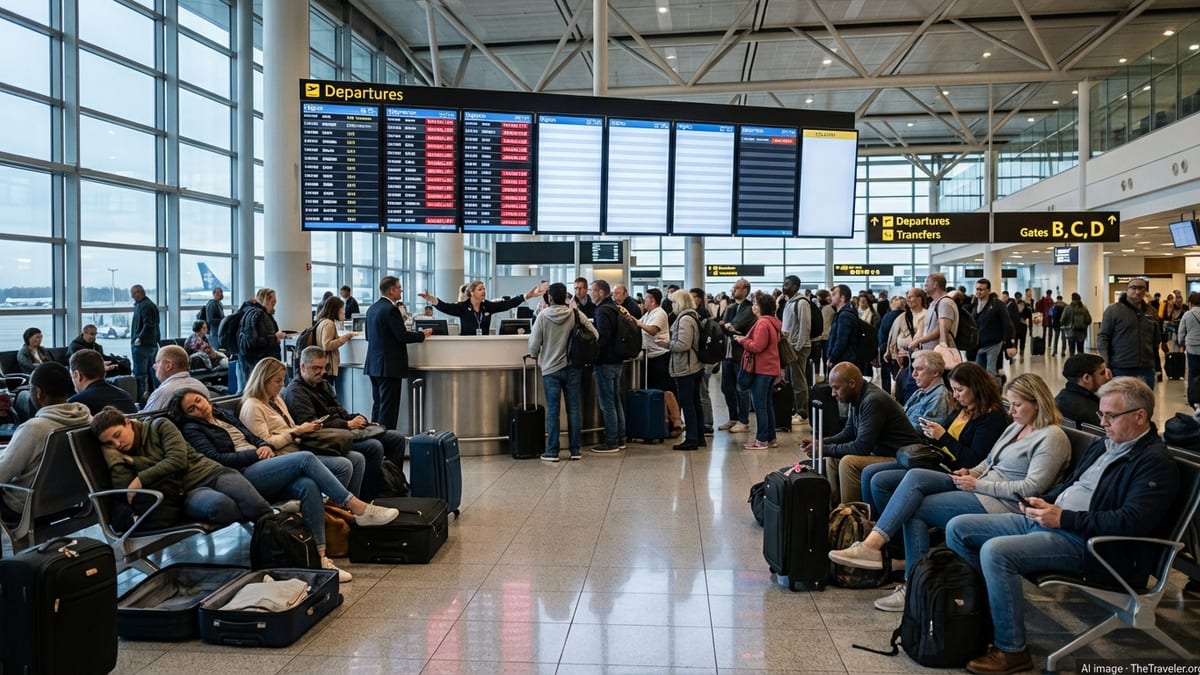
New Alerts Urge Americans to Reconsider Travel Plans
Publicly available guidance from the US State Department and affiliated channels indicates that Americans in several parts of the Middle East are being urged to exercise heightened vigilance, prepare for airspace closures and consider leaving if commercial options remain available. Recent communications circulated through the department’s Smart Traveler Enrollment Program and embassy security alerts reference the risk of missile and drone attacks, as well as sudden disruptions to flights across key regional hubs.
The government’s formal travel advisories for individual countries in the region had already reflected elevated concern through 2026, with destinations such as Saudi Arabia listed at Level 3, meaning travelers are urged to reconsider nonessential trips. Syria and several other conflict-affected areas remain under Level 4, advising US citizens not to travel at all. The latest messaging does not yet amount to a wholesale change in those long-standing ratings, but it underlines that the security environment is considered highly volatile.
In practical terms, the updated alerts tell Americans already in the region to monitor local media, keep travel documents up to date and plan for the possibility of temporary airport closures and route suspensions. Some notices specifically warn that consular assistance could be complicated if airspace is restricted or if fighting intensifies around major cities, a scenario that would leave commercial airlines cautious about overflying or serving certain destinations.
For travelers contemplating upcoming trips, the warnings highlight an increased risk of collateral impact from the Iran-related conflict and associated proxy clashes, even in countries that are not direct parties to the fighting. Travel risk analysts note that airlines and insurers often use US and allied government advisories as reference points when deciding whether to maintain routes or offer coverage, meaning these signals can quickly translate into higher costs and more limited options for passengers.
Camp David Weekend Cut Short as Houthi Attacks Intensify
Trump’s early return to Washington came after what multiple outlets describe as a coordinated missile and drone barrage by Yemen’s Houthi forces targeting Riyadh and other locations in Saudi Arabia. Reports indicate that Saudi air defenses intercepted several projectiles, but the attack reinforced fears that the conflict could spill further into vital energy infrastructure and major passenger-flight corridors.
Coverage of the president’s movements shows that he left Camp David on Saturday night, a day earlier than expected, arriving back at the White House as news of the latest Houthi strikes dominated regional headlines. While the administration has not issued a detailed on-the-record explanation tying the schedule change to the travel alerts, the timing has drawn widespread scrutiny against the backdrop of a months-long war with Iran and recurring proxy clashes across the region.
The Maryland retreat had been billed as a working weekend, but Trump’s shift back to Washington has been interpreted by analysts as a sign that senior national security officials prefer to manage the evolving crisis from the White House complex. Observers note that in previous Middle East flashpoints, presidents have often adjusted travel plans in response to new intelligence or to convene urgent meetings with defense and diplomatic advisers.
The optics of the early return have also resonated politically. Commentators across the spectrum are pointing to the juxtaposition of the president’s public focus on domestic disputes and media battles with the more sobering reality of missile launches, energy-market jitters and the possibility of an expanded regional confrontation.
Travel Disruptions and Insurance Gaps Confront Passengers
For air travelers, the new warnings revive memories of earlier rounds of disruption when carriers diverted or suspended flights following missile activity near key air corridors. Aviation trackers have already flagged a more cautious pattern over parts of the Red Sea and the Gulf region, with some airlines adjusting routings to avoid airspace considered at elevated risk.
Industry briefings prepared for corporate clients in recent months highlight a crucial but often overlooked impact of heightened advisories: travel insurance. Many standard policies include exclusions for trips to countries under the highest-level government warnings, potentially leaving leisure and business travelers without coverage in the event of cancellations, medical emergencies or evacuations linked to conflict.
Travel-management firms are encouraging clients with planned itineraries through Gulf and Levantine hubs to review the fine print of both airline tickets and insurance documents. Some carriers allow fee-free changes or credits when governments formally advise against travel, while others handle such situations under general disruption policies, which may provide fewer options for last-minute route changes.
Beyond immediate flight concerns, tourism-dependent destinations across the wider Middle East are bracing for the possibility that renewed Western caution could slow what had been a gradual recovery in visitor numbers. Conference organizers and large events scheduled for late 2026 are watching closely to see whether participants seek virtual alternatives or shift gatherings to locations perceived as lower risk.
Heightened Focus on Iran Conflict and Regional Spillover
The travel warnings and Trump’s early return unfold against a wider backdrop of an unresolved war with Iran and overlapping conflicts across Syria, Iraq, Yemen and parts of the Levant. Recent public commentary from the administration has suggested that Washington is at what one interview described as a crossroads in the Iran campaign, weighing how to balance pressure on Tehran with the costs of an open-ended confrontation.
Analysts point out that Iranian-aligned groups across the region, including the Houthis in Yemen and militias in Iraq and Syria, have repeatedly demonstrated an ability to strike targets of strategic and symbolic importance. Attacks on airports, oil facilities and shipping lanes along the Red Sea and Persian Gulf have periodically driven up energy prices and forced airlines to rechart long-haul routes between Europe, Asia and North America.
Diplomatic reporting from New York, where world leaders have gathered for the latest United Nations General Assembly, underscores how the Middle East’s overlapping wars are overshadowing broader global discussions. Trump’s speeches and meetings on the sidelines are closely watched for signals of any shift in US posture, whether toward intensified pressure, new negotiations, or a managed de-escalation.
Regional governments are likewise recalibrating. Gulf states that host large expatriate communities and major transit hubs are weighing how to reassure international partners while also responding to domestic concerns about security. Israel, Lebanon and Jordan are each dealing with their own complex internal dynamics, and security bulletins from embassies in those countries have stressed situational awareness, avoidance of demonstrations and readiness for transport disruptions.
What the Warnings Mean for Travelers and Residents
For US citizens living or traveling in the Middle East, the emerging picture is one of elevated but uneven risk. Major urban centers and established tourist corridors may continue to function relatively normally in day-to-day life, even as governments quietly raise alert levels and contingency planning intensifies behind the scenes.
Practical steps recommended in the publicly available advisories include enrolling in official traveler-notification systems, keeping family and employers informed of whereabouts, and maintaining a low profile in areas where anti-American sentiment or political protests are more likely. Travelers are also encouraged to carry backup copies of key documents and to maintain access to funds and communication tools in case of sudden itinerary changes.
Parents of students, contractors on rotation and Americans with family ties in the region are watching for further signals from Washington, including any shift from security alerts to mandatory departure orders for nonessential government personnel. Such a move would typically trigger a cascade of commercial responses, from airline schedule revisions to stricter corporate travel policies.
For now, the combination of a US president cutting short a retreat to return to the White House and a sharpened tone in Middle East travel warnings has reinforced a sense that the situation could evolve quickly. Travelers with imminent plans through the region face a difficult calculation between carrying on with carefully monitored trips and hitting pause until the trajectory of the crisis becomes clearer.