


More news on this day
The United States has taken the unusual step of issuing a red alert to its citizens in 12 locations across the Middle East, warning of potential attacks on U.S. interests, sudden airspace closures and significant travel disruptions as regional tensions spike.
Get the latest news straight to your inbox!
Coordinated Security Alerts Across 12 Middle East Locations
Publicly available notices from U.S. diplomatic missions indicate that the new red alert, dated October 18 and 19, 2026, was issued simultaneously across a dozen locations in the Middle East, including Saudi Arabia, the United Arab Emirates, Kuwait, Qatar, Bahrain, Oman, Jordan, Iraq, Lebanon, Yemen, Iran and Israel/Jerusalem. Coverage in international media describes the step as highly unusual, given that localized security messages are more common than a coordinated regional alert.
The alerts describe a complex and volatile security environment tied to the ongoing conflict involving Iran and armed groups aligned with it, including Yemen’s Houthi movement. Notices reproduced in regional reporting highlight that these actors could target U.S. interests both inside Saudi Arabia and beyond, and that the situation could escalate quickly beyond the areas currently experiencing direct hostilities.
U.S. missions in the region are reported to be using similar language in their alerts, advising Americans to exercise “heightened vigilance,” maintain a low profile and be prepared for a rapid change in conditions. The coordinated language has drawn attention from analysts who follow consular messaging, many of whom note that it mirrors the tone of earlier global cautions issued in mid-2026, but with a much sharper regional focus.
The red alert comes on top of existing country-level travel advisories that, in many cases, were already at Level 3, advising U.S. citizens to reconsider travel. For some destinations, such as Iraq and Yemen, the baseline advisories had already reached the highest Level 4 threshold, advising against travel altogether because of conflict, terrorism and the limited ability of U.S. officials to provide emergency assistance.
Heightened Risks Linked to Houthi Attacks and Iran-Backed Groups
According to current media coverage and State Department travel advisories, the immediate trigger for the latest alert appears to be a series of Houthi attacks targeting Saudi Arabia, alongside concerns that Iran and allied groups could widen the scope of their actions. Reports indicate that recent incidents have included attacks on civilian airports and critical infrastructure, causing casualties and significant disruptions to air traffic and logistics in parts of the Gulf.
The regional security picture has been strained for months by a broader confrontation between the United States and Iran, including naval deployments and aviation restrictions around the Persian Gulf and Gulf of Oman. Existing advisories for countries such as Saudi Arabia, the United Arab Emirates and Iraq already cite the threat of drone and missile attacks, as well as possible strikes on sites associated with Western and especially U.S. interests.
Public documents and travel advisories also highlight growing concern about locations associated with Jewish and Israeli communities, U.S.-branded businesses, diplomatic compounds and transport hubs such as airports and major highways. The new alerts draw these strands together, warning that groups supportive of Iran may aim at a broad range of targets seen as linked to the United States, including commercial and civilian sites.
While the red alert does not reference specific intelligence publicly, recent history in the region, including previous episodes of sudden rocket fire, drone strikes and airport shutdowns, provides a backdrop for the current warnings. The tone of the messaging suggests that officials are seeking to reduce the number of Americans exposed to fast-moving events in locations where evacuation or sheltering options could quickly become constrained.
Impact on Commercial Flights, Airspace and Travel Plans
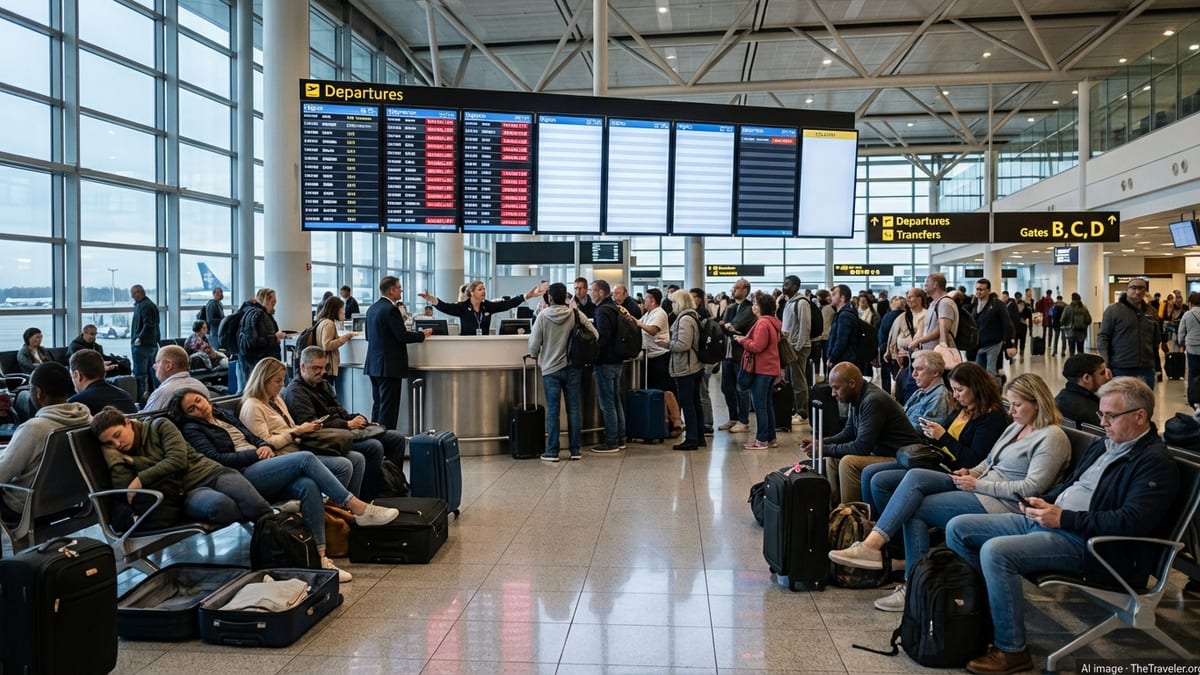
Reports from regional outlets and international news organizations state that the alerts explicitly warn of possible flight cancellations, airspace closures and broader disruptions to air travel in and out of the affected countries. Travelers are being urged to monitor airline announcements frequently, verify the status of their flights before heading to the airport and prepare alternative routes where feasible.
Previous alerts in 2026, including a worldwide caution in July, already flagged the possibility of changing flight schedules across the Middle East due to heightened tensions. The new red alert reinforces that message with more pointed language about the risk of sudden airspace restrictions, which could leave travelers temporarily stranded or require unplanned detours through third countries.
For U.S. citizens currently in the region, the alerts recommend keeping travel documents readily accessible, maintaining fully charged phones and backup power sources, and ensuring that friends, family or employers know their whereabouts. In some countries, advisory language encourages Americans to be prepared to depart on short notice if commercial options remain available, particularly from major hubs that still have regular long-haul connections to Europe, North America and Asia.
At the same time, official travel advisories for individual countries continue to note that emergency assistance may be limited in high-risk areas, especially in active conflict zones such as Yemen or parts of Iraq. For prospective travelers who have not yet departed, publicly available guidance emphasizes reconsidering nonessential trips to the region until the security picture becomes clearer and commercial flight patterns stabilize.
What the Red Alert Means for Different Types of Travelers
The practical implications of the red alert vary significantly depending on a traveler’s situation. Business travelers making short visits to financial centers such as Dubai, Doha or Riyadh may face disrupted flight schedules, enhanced security screenings and last-minute changes to meeting locations, but may still find that core city infrastructure is functioning normally. However, alerts underline that even in major hubs, the risk of targeted attacks cannot be excluded.
For tourists visiting religious sites, historic cities or coastal resorts across the region, the main challenges are likely to involve uncertainty around regional air links, changing entry and exit rules, and the potential for demonstrations or localized unrest that could affect access to certain districts or landmarks. Some tour operators may opt to reroute itineraries away from the most sensitive border areas or postpone departures while they assess developments.
Americans living long term in the affected countries, including those working in energy, aviation, education and aid sectors, face more complex decisions. Many of the new alerts highlight the importance of enrolling in official alert systems, maintaining adequate stocks of food, water and essential medications, and clarifying contingency plans with employers or schools in case movement becomes restricted.
Students and exchange visitors may also be affected if universities or program sponsors opt to suspend travel to certain destinations or require temporary relocation. Publicly available information from previous episodes of regional tension suggests that academic institutions sometimes adjust semester schedules or move teaching online when risk levels rise, a pattern that could reappear if the security situation deteriorates further.
Context: From Worldwide Caution to Regional Red Alert
The Middle East red alert builds on a series of warnings that have unfolded over the past year as confrontation with Iran and its allied groups has intensified. In July 2026, the United States issued a worldwide caution advising Americans abroad to exercise increased vigilance due to the possibility of anti-U.S. demonstrations and attacks, with the Middle East identified as a particular focus.
In the months since that global notice, individual embassy and consulate messages across the region have become progressively more pointed, especially in countries directly affected by drone and missile incidents. Advisories for Saudi Arabia, the United Arab Emirates, Iraq and neighboring states already referenced the risk of attacks on civilian infrastructure, disruptions to civil aviation and constraints on the ability of U.S. personnel to travel outside tightly controlled zones.
The decision to move from this pattern of country-specific caution to a coordinated regional red alert underscores how quickly security dynamics can shift across multiple borders at once. It also reflects the way air routes, shipping corridors and energy infrastructure link states across the Gulf and Levant, making it difficult to treat security concerns in one country as isolated from developments in another.
For travelers and residents alike, the latest alerts are a reminder that consular messaging has become an essential part of trip planning and daily life in parts of the Middle East. While conditions on the ground vary widely, the new red alert signals that, at least for now, Americans in the region should expect a period of heightened uncertainty, closer scrutiny at sensitive sites and the real possibility that plans may need to change with little notice.