


More news on this day
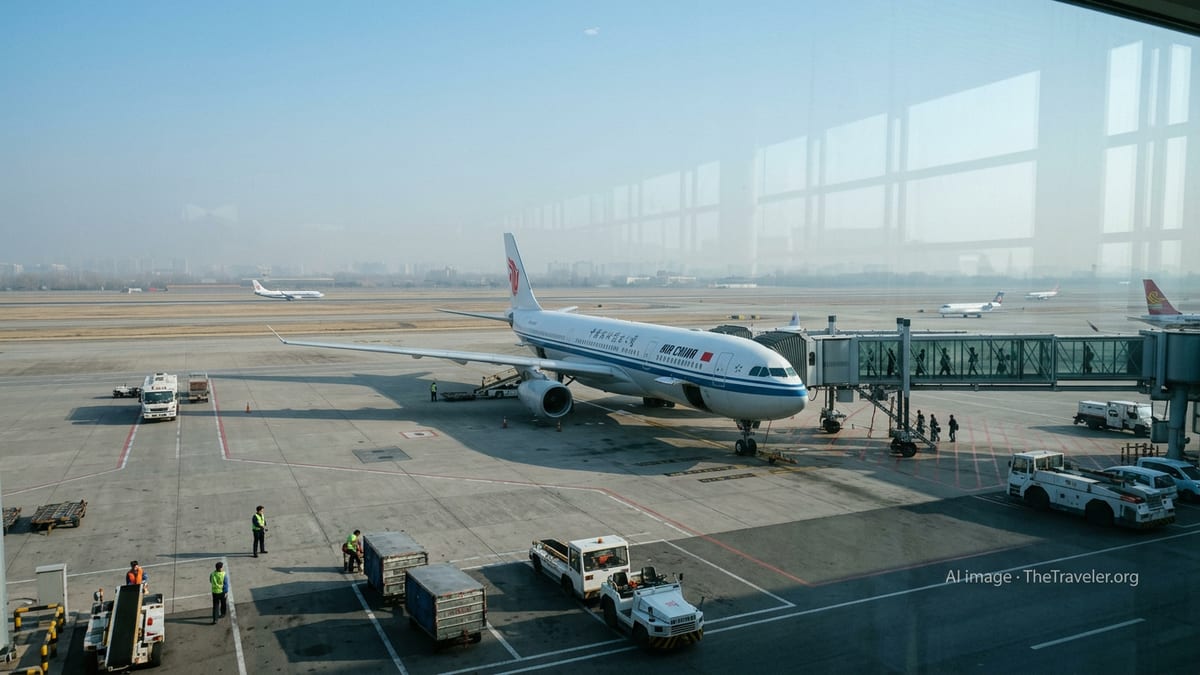
China’s flag carrier is scrambling to move stranded passengers out of fuel-starved Cuba this week, adding an emergency flight from Havana as the island’s jet-fuel shortages continue to cripple international air links and unsettle travel plans across the Caribbean.
Get the latest news straight to your inbox!
Emergency extra flight as regular Havana service falters
Publicly available information from China’s embassy in Havana shows that Air China has scheduled a temporary extra service, flight CA590, to depart José Martí International Airport on the night of 19 October 2026. The special flight is intended to accommodate passengers whose seats on regular flight CA866 between Havana, Madrid and Beijing were lost in a wave of schedule changes and cancellations earlier in the month.
The embassy notice indicates that travelers whose CA866 flights were canceled on or before 10 October can present themselves at the Air China counter at Havana airport on 19 October to be rebooked onto CA590 at no additional charge. Seats are limited, and affected passengers are being urged to arrive well ahead of departure time to secure boarding.
Flight-tracking platforms show that CA866, which normally connects Havana with Madrid and onward to Beijing, has faced repeated disruptions during the fuel crisis, including cancellations and revised timings on its Madrid–Havana and Havana–Madrid legs. These irregularities have left some passengers in Cuba waiting days for alternative arrangements and have complicated itinerary planning for travelers trying to connect to long-haul services in Europe and Asia.
By mounting an extra outbound flight from Havana, Air China joins a small group of international airlines operating ad hoc services to clear backlogs of stranded travelers and maintain at least a minimal level of connectivity from Cuba to major hubs.
Jet-fuel shortage grinds down Cuba’s air connectivity
The emergency operation by China’s flag carrier comes against the backdrop of a jet-fuel shortage that has plagued Cuba since early 2026. Notices to air missions issued by the Cuban air navigation authorities state that Jet A-1 fuel is unavailable at most of the country’s international airports, including Havana, and that the restrictions have been repeatedly extended, with some airports now listing unavailability into November.
International coverage of the crisis describes how Cuba informed airlines in February that it would soon run out of aviation fuel, triggering an immediate wave of schedule cuts and suspensions. Major carriers such as Air Canada, Iberia, Air France and Turkish Airlines have since halted their regular routes to the island, contributing to a sharp fall in visitor arrivals and depriving travelers of some of the most established long-haul links to Europe and North America.
Regional and specialist aviation outlets report that at least ten Cuban airports, including the main tourist gateways at Havana, Varadero and Cayo Coco, have been operating under prolonged “no fuel available” notices. Airlines wishing to continue serving the country must either tanker in sufficient fuel from their departure points to complete the round trip without refueling, or incorporate technical stops in third countries where jet fuel can be uplifted.
Industry analysis suggests that the fuel crunch, combined with wider economic pressures, has severely weakened Cuba’s tourism sector. Official tourism arrival figures for the first eight months of 2026 show a steep year-on-year decline, and travel advisers now routinely warn passengers to monitor flight status closely and be prepared for last-minute changes, diversions or additional refueling stops.
China–Cuba air link becomes a strategic lifeline
Air China’s Havana operation has particular significance because it provides one of the few direct bridges between Cuba and the vast Chinese market via Madrid and Beijing. The CA866 rotation typically functions as a so‑called fifth-freedom route, carrying passengers between Europe, the Caribbean and China on a single ticket and offering a relatively efficient option for business travelers, students and members of the Cuban and Chinese diasporas.
With many European and Canadian airlines suspending their services in response to the fuel shortage, this China–Cuba link has taken on the character of a strategic lifeline. The ability to move passengers out of Havana without relying on local fuel supplies, by tankering fuel from Madrid or other hubs, allows Air China to keep the route technically viable even as most airports on the island cannot refuel widebody aircraft.
Analysts following the crisis note that for travelers heading to or from Asia, options through Havana have narrowed considerably. Routes that once combined Cuban holiday stays with onward journeys to Europe or the Middle East have been replaced by more complex itineraries with added stops in the Dominican Republic, Panama, Mexico or the United States, depending on visa requirements and airline choices.
In this context, China’s decision to authorize an additional Havana departure underscores both the operational challenges carriers face and the political and commercial value of maintaining long-haul connectivity with the Caribbean nation despite the fuel constraints.
Stranded travelers confront uncertainty and workarounds
For passengers on the ground, the most visible impact of the jet-fuel shortage has been prolonged uncertainty. Reports from Cuban and international media show images of crowded check-in halls and departure lounges in Havana as travelers wait for information about delayed or reorganized flights, including those operated by airlines that have since suspended regular service.
Travel advisories now emphasize that itineraries involving Cuba carry a higher risk of disruption than before the fuel crisis. Airlines that have continued to serve the island have done so by redesigning flight plans, often adding refueling stops in cities such as Punta Cana or Panama City, or by operating with heavier fuel loads that may limit the number of seats or baggage they can carry on a given flight.
Publicly accessible data from airline scheduling systems indicate that, even where flights are still listed, last-minute changes are common. Carriers can adjust timings, swap aircraft types or consolidate departures in response to the availability of alternate refueling points and broader network needs. For travelers, this means that confirmed tickets are no longer a guarantee against overnight delays or rerouting through unexpected hubs.
In the case of Air China, the temporary CA590 flight offers a focused solution for a specific group of stranded passengers whose previous reservations were disrupted. However, with fuel shortages still in effect at Havana and other Cuban airports, aviation observers caution that similar contingency operations may be needed again if the crisis persists or intensifies.
What the crisis means for future travel to Cuba
The fuel emergency has introduced a new layer of complexity to planning trips to Cuba, particularly for long-haul travelers from Europe and Asia. Travel industry reports recommend that prospective visitors pay close attention not only to published schedules but also to recent operational history on their chosen routes, checking whether flights have been consistently operating, rerouted for fuel stops or subject to multiple cancellations.
Some airlines and tour operators have responded by scaling back their programs or suspending Cuba entirely for upcoming seasons, reallocating aircraft to destinations with more stable fuel supplies. Others, especially carriers from the United States and Latin America, continue to fly by relying on tankering strategies or technical stops, preserving a reduced yet still meaningful level of connectivity for Cuban residents and international visitors.
The short-notice introduction of Air China’s extra Havana departure highlights how quickly conditions can change and how carriers may pivot to repatriation-style services when regular schedules become untenable. For travelers, it illustrates the importance of staying in close contact with booking channels, monitoring announcements from embassies and airports, and preparing contingency plans, such as flexible accommodation or alternative exit routes through neighboring countries.
While there is no clear timeline in the public domain for full restoration of jet-fuel availability across Cuba’s airports, current notices and industry commentary suggest that constraints will continue at least into early November. Until those restrictions ease, long-haul links like Air China’s Havana–Madrid–Beijing service are likely to operate under continued pressure, and further ad hoc flights to move stranded passengers cannot be ruled out.