


More news on this day
The U.S. government has issued a fresh travel warning covering parts of West Asia, urging Americans to reconsider travel to and through the region amid heightened tensions that could trigger sudden security changes and disrupt commercial air travel.
Get the latest news straight to your inbox!
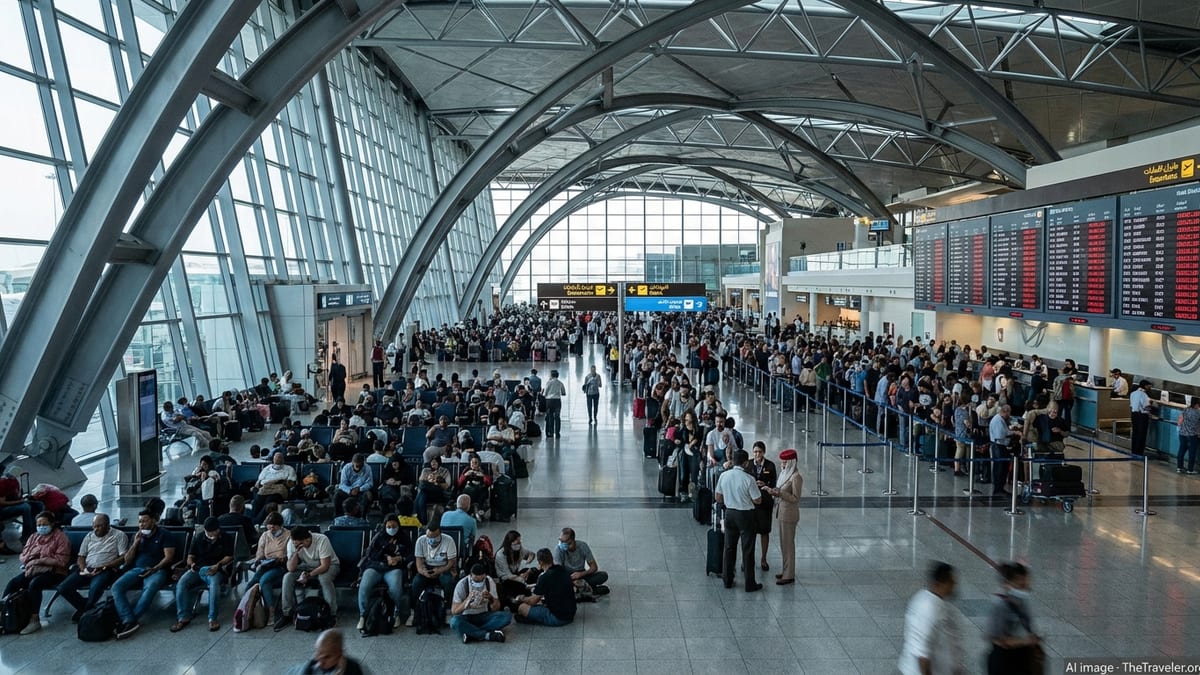
What the new warning says, and why it matters for travelers
Published coverage indicates the U.S. advisory highlights the possibility of rapid escalation across the Middle East and associated risks to U.S. interests, including disruptions to transportation networks. Recent State Department global guidance has also warned travelers already in the region to plan for flight cancellations, periodic airspace closures, and other interruptions that can affect itineraries with little notice.
For leisure travelers, the practical takeaway is that normal trip-planning assumptions may not hold: routings can change quickly, airports can become congested during irregular operations, and onward connections may be lost if schedules are altered. For business travelers and U.S. citizens living in the region, the warning underscores the importance of staying current on destination-specific alerts and being prepared for sudden changes in mobility.
The advisory comes against a backdrop of ongoing U.S.-Iran hostilities that began on February 28, 2026, according to publicly available State Department destination pages for the region. Those pages note an ongoing threat environment that can include drone and missile risks and broader disruptions to commercial flights.
Which destinations are most affected by U.S. advisory levels
Travel.State.gov continues to show elevated advisory levels across multiple destinations commonly grouped in U.S. government guidance on the Middle East and Gulf. In recent updates, Saudi Arabia is listed at Level 3 (Reconsider Travel) with a “Date issued” of September 15, 2026, reflecting ongoing security concerns and the potential for attacks occurring with little or no warning.
Other recent reissues include Jordan (Level 3; date issued August 29, 2026), Bahrain (date issued August 27, 2026), and Kuwait (date issued August 28, 2026). Country pages and related advisory summaries for the region emphasize the possibility of armed conflict-related disruptions, including impacts to aviation and other transportation infrastructure.
Israel, the West Bank and Gaza is also listed at Level 3 (Reconsider Travel) with a date issued of August 26, 2026. Separately, Lebanon is shown at Level 4 (Do Not Travel), with published advisory material pointing to constraints that can be imposed quickly, including additional restrictions affecting U.S. personnel.
For travelers trying to interpret the difference between a security alert and a country travel advisory, the State Department’s system generally treats advisories as the standing risk posture by destination, while alerts can be issued when conditions change quickly or when travelers need time-sensitive direction.
How this could affect flights, airspace, and regional connections
State Department global guidance updated this summer explicitly flagged the risk of flight cancellations, periodic airspace closures, and broader travel disruptions for Americans in the Middle East. That message is especially relevant for travelers using Gulf hubs to connect onward to South Asia, East Africa, or Europe, because even localized disruptions can ripple into missed connections and reroutes.
In recent months, publicly available advisory summaries for certain Gulf destinations have referenced significant disruptions to commercial flights tied to the broader security environment. These risks can affect both direct service and overflight routings, which airlines may change to avoid constrained corridors.
For travelers departing the United States, the most immediate effects are often logistical: last-minute schedule changes, extended layovers, and rebookings that can separate families or complicate group tours. Travelers with multi-stop itineraries may want to build extra time into connections and monitor airline notices closely in the days leading up to departure.
Published coverage has also pointed to heightened concern around maritime chokepoints tied to regional security dynamics, including the Red Sea corridor. While that is primarily a shipping issue, it can influence travel indirectly through knock-on effects in schedules, insurance costs, and operational caution around certain routes.
What travelers can do now: monitoring, enrollment, and contingency planning
Travel.State.gov’s Middle East consular information hub directs Americans to follow local embassy and consulate alerts and to enroll in the Smart Traveler Enrollment Program (STEP) to receive updates. For travelers already in the region, that guidance is positioned as a core tool for staying aware of rapidly changing conditions.
Because the advisory language emphasizes disruptions that can occur quickly, contingency planning matters more than usual: confirm that your passport validity and visa status support rerouting, keep essential documents accessible, and ensure you can receive airline notifications while abroad. Travelers may also want to verify how their travel insurance treats conflict-related disruptions, since coverage terms can differ by policy and by cause.
For those considering postponing travel, it can be helpful to cross-check the current advisory level for each stop on an itinerary, not just the primary destination. A trip that includes transits through multiple airports in the region can inherit risks and disruptions even if a traveler never leaves the terminal.
Finally, travelers should be cautious about relying on outdated social media summaries of advisories. The State Department routinely updates destination pages and global advisories, and those pages reflect the latest published dates and risk indicators that trip planners can use when deciding whether to go, reroute, or delay.