


More news on this day
Travel to Riyadh and Dubai remains possible, but the risk picture has changed again after fresh strikes and attempted attacks in the region, with multiple governments urging travelers to reassess non-essential trips and prepare for sudden flight disruption.
Get the latest news straight to your inbox!
What just happened, and why it matters for travelers
Over the weekend, published coverage described a new attempted attack on Saudi Arabia’s capital. Reports from the Associated Press indicated Saudi Arabia confirmed that Yemen’s Houthi movement attempted to target Riyadh with a ballistic missile on Saturday, September 19, 2026, marking a notable escalation for the capital after months of heightened regional tension.
Separate reporting the same day described smoke and flames near Riyadh’s King Khalid International Airport area, with flight-tracking platforms showing widespread delays and cancellations. Reuters video reporting summarized by other outlets showed a large dark plume near the airport complex, and multiple reports noted an overnight phone alert in Riyadh and nearby Al-Kharj followed by an all-clear message later that morning. The precise cause of the fire near the airport area was not consistently established across early reporting, and travelers should treat fast-moving social media claims with caution.
For Dubai, the immediate traveler impact has often been less about street-level safety and more about aviation knock-on effects. Recent weeks have brought repeated warnings from governments and airlines that the wider Gulf security environment can trigger short-notice reroutes, cancellations, and periodic airspace constraints even when airports remain open.
Latest official advice for Riyadh and Dubai: what it says now
As of mid-September 2026, the U.S. Department of State lists Saudi Arabia at Level 3, “Reconsider Travel,” citing risks that include armed conflict and the potential for drone or missile activity alongside other concerns. In practical terms, this does not mean travel is banned, but it does mean U.S. travelers should weigh the necessity of the trip, plan conservatively, and expect that conditions can change quickly.
The U.S. Department of State also lists the United Arab Emirates at Level 3, “Reconsider Travel,” with the advisory referencing terrorism and armed conflict risks and noting that hostilities in the region have contributed to disruptions to commercial flights. The UAE advisory also highlights added restrictions and authorization requirements that apply to U.S. government employees in specific categories of locations, which is a signal of how official risk assessments are being applied to critical sites.
Other major governments have published similarly cautionary language in recent updates. The U.K.’s UAE travel advice has emphasized that regional tensions can lead to unpredictable escalation and to travel disruption such as flight cancellations or airspace closures. Canada’s travel advice has urged avoidance of non-essential travel to the UAE in the current volatile security environment, reflecting a more conservative stance for Canadian travelers.
Air travel is the biggest variable: disruptions, reroutes, and what to check
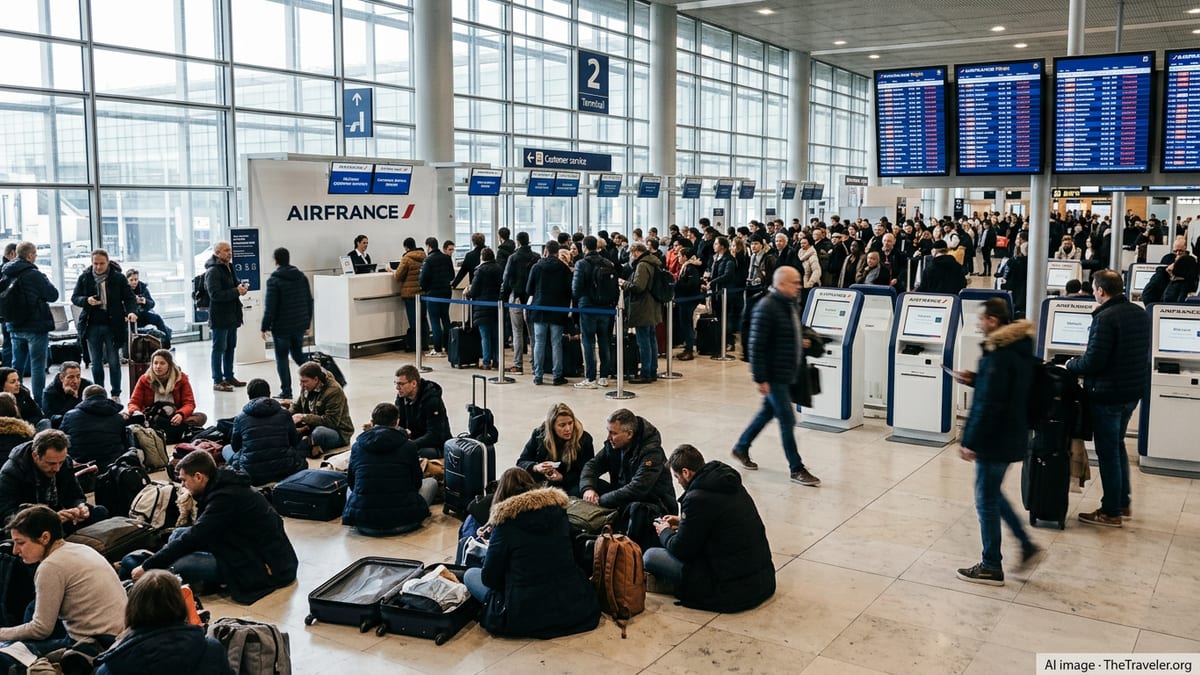
For most visitors, the most immediate practical risk is not necessarily day-to-day movement in central Riyadh or Dubai, but the possibility that flights are delayed, cancelled, rerouted, or rescheduled at short notice. After the September 19 incident near Riyadh’s airport, flight trackers showed major disruption at King Khalid International Airport, a reminder that a local incident or wider alert can ripple through a hub’s schedule for many hours.
Dubai’s role as a major global connector adds another layer: when international carriers adjust schedules or avoid certain corridors, passengers can face missed connections and longer routings. In late August 2026, published coverage reported that Dubai International Airport saw a sharp decline in second-quarter passenger traffic, linking the dip to the region’s conflict-driven air travel disruption and to travelers and airlines favoring routings that avoided the Middle East during periods of heightened risk.
U.S. aviation guidance also underscores that the region’s airspace can be complex for civil operations during military activity. The FAA maintains a standing advisory notice for the Middle East and surrounding waters, warning that U.S. and allied military units may operate broadly across the region and that civil operators should be prepared for evolving conditions. For travelers, this translates to practical steps: confirm your flight status repeatedly in the 24 hours before departure, avoid tight connections, and keep your airline’s app notifications enabled.
Airlines regularly publish operational updates when disruptions occur. Emirates, for example, maintains a travel-updates page advising passengers to check flight status and monitor notifications before going to the airport. Even if a flight remains scheduled, knock-on delays can affect check-in times, gate assignments, and arrival connections.
How to decide whether to go: a traveler-focused safety checklist
For travelers still considering Riyadh or Dubai, the key question is not whether either city is uniformly “safe” or “unsafe,” but whether your itinerary can tolerate uncertainty. If your trip is time-sensitive (a wedding, a cruise connection, a fixed-date business meeting), the current environment argues for building in buffer days and flexible tickets when possible, because disruption may occur with limited warning.
It also matters where you plan to be and what your travel profile looks like. Government advisories and public reporting repeatedly flag heightened concern around military sites, government facilities, and energy infrastructure across the region. Travelers who stick to typical tourist and business corridors may face fewer day-to-day complications, but they are still subject to airport and airspace changes that can affect everyone.
Before departure, travelers should review the current travel advisory text for Saudi Arabia and the UAE, confirm passport and entry requirements, and consider whether their travel insurance covers conflict-related disruption and cancellation. Policies vary widely, and many travelers only discover exclusions after an incident triggers cancellations.
Finally, plan communications and contingencies. Keep digital and paper copies of key documents, know how to contact your airline from abroad, and identify backup routing options through alternative hubs if your original flight path is suspended. In the current environment, being prepared for a sudden schedule change can matter as much as any on-the-ground precaution.