


More news on this day
A Chandigarh consumer disputes commission has upheld a compensation award of around Rs 1.34 lakh against Air India and a travel agency after a Toronto-bound flight from Delhi was cancelled at the last minute, leaving three passengers stranded overnight and forcing them to buy fresh tickets to complete their journey.
Get the latest news straight to your inbox!
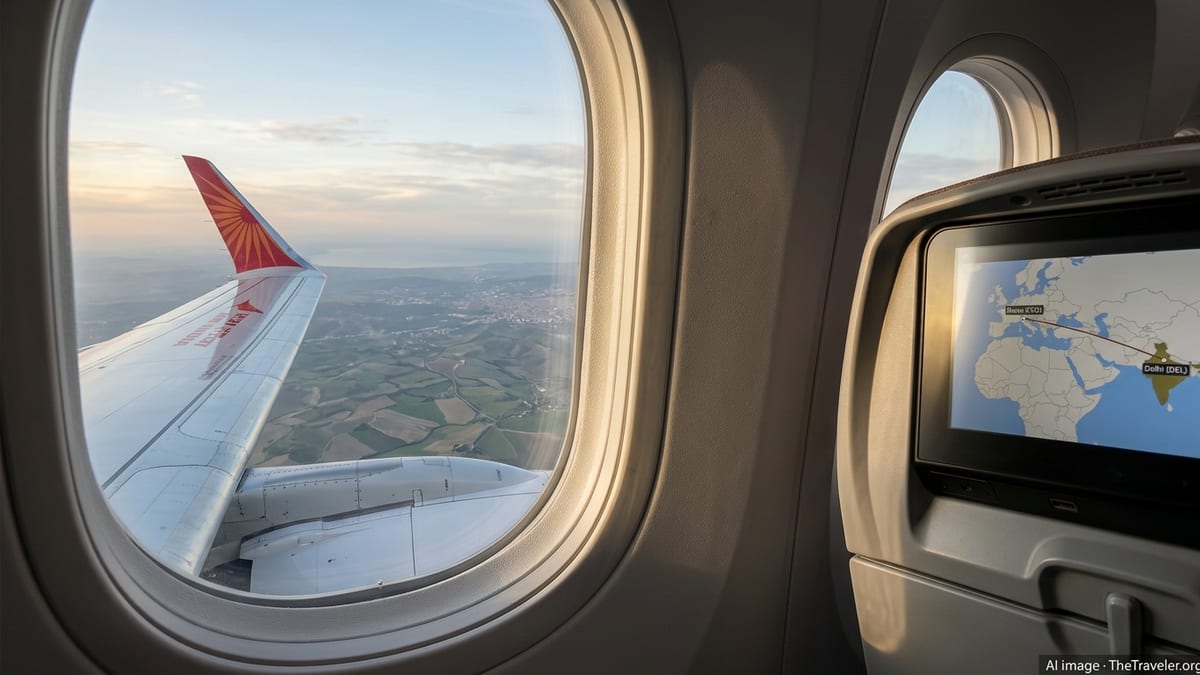
Late-night cancellation leaves Toronto passengers marooned
According to publicly available orders of the Chandigarh State Consumer Disputes Redressal Commission, the case stems from a family itinerary originating in Chandigarh and connecting via Delhi to Toronto. The passengers reached Delhi airport with confirmed tickets for a late-night Air India flight to Canada, only to learn at the boarding gate that the onward Toronto service had been cancelled.
Published coverage indicates that the cancellation information was communicated at the last moment, after the passengers had already completed their domestic leg and passed through formalities in Delhi. With no immediate alternative provided that would allow them to reach Toronto on schedule, the complainant purchased new tickets on another carrier at a cost of approximately Rs 4.37 lakh to avoid missing onward commitments in Canada.
The consumer complaint later filed in Chandigarh described the ordeal of being left in the terminal at odd hours with elderly family members and luggage, scrambling to secure seats on a long-haul route that typically operates with high load factors. The commission noted that the circumstances effectively left the passengers stranded in Delhi without a workable solution from the original airline or its booking intermediary.
The dispute eventually centred on whether the airline and the travel agency had taken reasonable steps to inform the passengers of the cancellation in advance and to assist them once the disruption occurred. The panel concluded that the travellers had not been given timely notice or adequate support at the airport, leading to substantial additional expense and inconvenience.
Commission upholds refund and Rs 1.34 lakh payout
The Chandigarh consumer commission upheld an earlier district forum decision ordering a full refund of the unused Air India tickets along with compensation and litigation costs, taking the total payout to about Rs 1.34 lakh. The panel rejected challenges brought by the airline and the travel agency, finding no basis to interfere with the lower forum’s assessment of deficiency in service.
Publicly available information shows that the compensation was granted on multiple heads, including mental agony, harassment, and the financial burden of arranging last-minute travel on an alternate airline. While the cost of the fresh Toronto tickets far exceeded the compensation amount, the commission held that the airline and agent were at least liable for the original fare and an additional sum in recognition of the hardship caused.
The order underscores that consumers are entitled to expect basic standards of care once they have been accepted for carriage, particularly on international itineraries involving long-haul overnight flights. The commission took note of the late-hour disruption and the practical difficulties of securing new seats on a transcontinental route at short notice.
Although the consumer forum did not direct reimbursement of the entire Rs 4.37 lakh reportedly spent on alternate travel, the ruling affirms that partial compensation and full ticket refunds can still be ordered when passengers demonstrate clear financial loss and inconvenience linked to last-minute cancellations.
Consumer law and airline obligations highlighted
The Chandigarh case adds to a growing body of decisions by consumer forums across India examining airline conduct in situations ranging from delayed or cancelled flights to missed connections and downgraded cabins. The National Consumer Disputes Redressal Commission, India’s apex consumer forum, has in recent months upheld several significant awards against carriers in matters involving defective business-class seats and long delays on international routes.
Under India’s consumer protection framework, passengers can approach district, state or national commissions depending on the value of their claim. Recent rulings emphasize that failure to provide timely information about cancellations, or to offer reasonable alternatives such as rebooking or refunds, may constitute both deficiency in service and unfair trade practice.
Separately, Air India’s publicly available conditions of carriage outline entitlements in the event of cancellations and long delays, including options for re-routing and, in some cases, fixed-sum compensation. Consumer forums have increasingly scrutinized how these contractual obligations are implemented in practice when flights are withdrawn at short notice and passengers are left to fend for themselves.
Legal commentators note that while international conventions and aviation rules cap or structure liability in some scenarios, the Consumer Protection Act allows Indian passengers an additional avenue of redress. Orders like the Chandigarh ruling signal that panels are prepared to examine individual fact patterns closely and hold airlines and intermediaries responsible where gaps in communication or assistance are evident.
Implications for India–Canada air travelers
The dispute comes at a time when travel between India and Canada remains sensitive and often heavily booked, with routes such as Delhi–Toronto serving large student, family and business communities. Cancellations on these segments can quickly translate into substantial costs for passengers who hold onward domestic connections in North America or face strict reporting dates for work or studies.
Travel industry reports indicate that last-minute long-haul tickets from Delhi to Toronto can run into several lakhs of rupees, particularly during peak seasons when seats in economy cabins fill quickly. In this context, even a partial compensation order of around Rs 1.34 lakh represents a significant acknowledgment of the pressures travellers face when they must rebook at the eleventh hour.
The Chandigarh ruling also highlights the shared responsibilities of airlines and travel agencies that market and ticket such itineraries. Consumer forums have repeatedly stated that passengers should not be left without remedy because of internal arrangements between carriers and booking intermediaries, stressing that both may bear liability when disruption is not handled transparently.
For prospective India–Canada passengers, the case serves as a reminder to retain detailed records of bookings, payment receipts and any correspondence or airport documentation in the event of disruption. Such evidence often forms the backbone of successful claims before consumer commissions, especially where the central issues involve late notification and the absence of meaningful on-the-ground support.
Stronger scrutiny of passenger service standards
The Toronto-bound cancellation case aligns with a broader pattern of closer scrutiny of passenger service standards in India. In recent decisions, consumer forums around the country have addressed not only cancellations and delays, but also complaints involving onboard conditions, rescheduling of direct flights onto longer indirect routes, and inadequate assistance during extended airport stays.
Publicly reported rulings show awards ranging from tens of thousands of rupees for missed connections to higher amounts where passengers have shown substantial financial losses or prolonged distress. While each order turns on its particular facts, the cumulative effect has been to put airlines on notice that lapses in handling disruptions can carry financial and reputational consequences.
As more travellers become aware of their rights, legal practitioners expect a continued flow of complaints arising from long-haul operations, including services linking Indian hubs with North America and Europe. The Chandigarh commission’s affirmation of compensation in the Delhi–Toronto case is likely to be cited by future complainants seeking redress when cancellations leave them stranded and out of pocket.
For now, the decision stands as another reference point in the evolving relationship between India’s expanding aviation market and its consumer protection regime, illustrating how travel disruptions on busy international corridors are increasingly being tested in quasi-judicial forums rather than left unresolved at the departure gate.