


More news on this day
Travelers with plans to transit Saudi Arabia are facing mounting uncertainty after the United States issued a new airport security warning and Riyadh’s main international gateway confirmed its suspension of passenger flights through October 17 following a string of deadly Houthi attacks.
Get the latest news straight to your inbox!
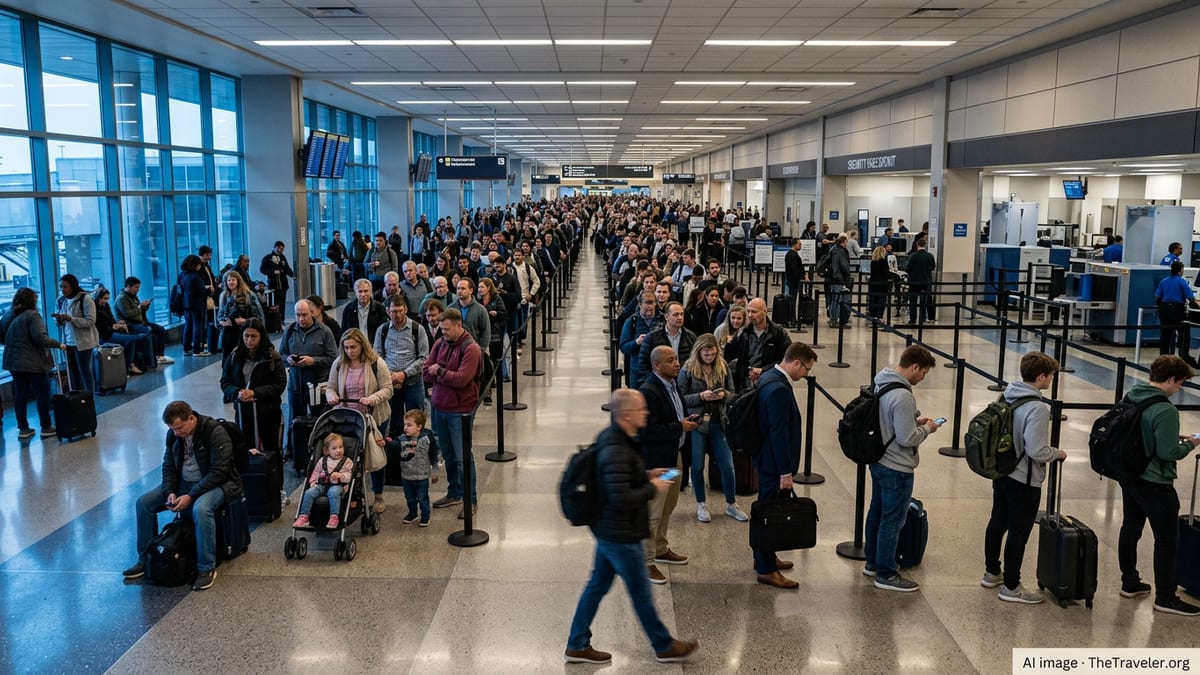
US mission tightens guidance on Saudi airports
Publicly available information from the US Mission in Saudi Arabia shows that, as of October 13, 2026, US government employees in the kingdom now require special authorization from the Chief of Mission to use any Saudi airport, reflecting concern over missile and drone strikes on aviation infrastructure.
The same alert urges US citizens to exercise “extreme caution” if they choose to fly in or out of Saudi Arabia, warning of the potential for further attacks on airports, sudden flight cancellations, and airspace closures. The guidance highlights that travelers could face disruption with limited notice and advises close monitoring of airline communications and airport operations before departure.
The State Department’s broader travel advisory for Saudi Arabia remains at Level 3, “Reconsider travel,” updated on October 12 to incorporate current aviation safety information and additional transportation guidance for private travelers. The advisory cites the risk of drone and missile activity, armed conflict, terrorism, and other security concerns that could affect both residents and visitors.
The mission has also reminded travelers that Saudi regulations restrict photographing missile or drone interceptions, impact sites, and sensitive facilities such as airports. According to the advisory, foreign nationals have been detained for violating these rules, underscoring that visitors are fully subject to local law while in the kingdom.
Riyadh’s King Khalid airport closure extended to October 17
Saudi Arabia’s General Authority of Civil Aviation has extended the suspension of operations at Riyadh’s King Khalid International Airport after multiple attacks linked to Yemen’s Iran-aligned Houthi movement. Notices to Air Missions indicate that the airport will remain closed until 2100 GMT on October 17, with the shutdown described in regional coverage as necessary to complete safety and operational readiness checks.
Reports from regional outlets and aviation-focused publications state that King Khalid International, Saudi Arabia’s second-busiest airport after Jeddah, is currently not accepting regular commercial passenger traffic. The closure follows missile and drone strikes that caused fatalities and hundreds of injuries, as documented in recent coverage of the attacks on passenger terminals in the Saudi capital.
While Riyadh’s airport is shut, public reports indicate that King Abdulaziz International Airport in Jeddah and King Fahd International Airport in Dammam remain operational, though with delays and cancellations linked to the wider security situation. Travelers are being advised to verify departure times directly with airlines and to be prepared for last-minute schedule changes even at airports that remain open.
Industry data cited in regional business media show that nearly half of Saudi Arabia’s scheduled departures were cancelled on October 12, illustrating the wider knock-on effects of the Riyadh closure across the country’s air network. Further adjustments remain likely as authorities continue to evaluate the security picture and as international carriers adapt their schedules.
Airlines cancel and reroute services across the region
According to summaries based on airline statements compiled by international news agencies and aviation trackers, a growing list of carriers from Europe, Asia, and the Middle East has suspended or curtailed operations to Riyadh in response to the attacks. Lufthansa Group and Air France are among those reported to have halted services to the Saudi capital, with some suspensions extending beyond the October 17 airport closure date.
Coverage of the Riyadh disruption indicates that several Gulf and South Asian airlines have cancelled flights not only to Riyadh but in some cases to other Saudi gateways such as Jeddah, citing operational and security considerations. Budget carriers serving labor and pilgrimage markets have also announced suspensions or reductions on Saudi routes through at least mid-October.
The US Federal Aviation Administration has separately advised American carriers to exercise caution when operating to or over Saudi territory, referring to a potentially hazardous environment for civil aviation. European regulators have widened guidance on the use of Saudi airspace, with the European Union Aviation Safety Agency noting the risk from missile and drone activity in official communications to airlines.
These combined regulatory advisories and commercial decisions have led to a patchwork of cancellations, diversions, and longer routings. Even airlines that do not serve Riyadh directly are having to evaluate flight paths and overflight permissions, which can add time and cost to journeys linking Europe, Asia, and Africa through the Gulf and Red Sea corridors.
What the disruption means for travelers
For passengers holding tickets to or through Riyadh up to October 17, publicly available airline notices make clear that almost all regular passenger services to King Khalid International have been cancelled or redirected. Travelers are being encouraged to rebook via alternative Saudi airports or regional hubs such as Bahrain, Doha, Abu Dhabi, Dubai, Muscat, and Amman, which currently remain open according to embassy advisories and airport statements.
The US Mission’s alert points to private car, rail, and bus services as possible alternatives for movement within Saudi Arabia when air options are limited. The kingdom’s main intercity rail links and long-distance bus networks connect Riyadh with coastal cities including Jeddah and Dammam, offering overland options for travelers who are already in the country and need to reach an operational airport.
Travelers are being advised to check fare rules and rebooking policies, which vary by carrier but in many cases now include options for no-fee date changes or route changes away from Riyadh within a defined window. Travel insurance providers may treat missile or drone attacks as acts of war or terrorism, and specialist media note that coverage outcomes can differ significantly between policies, making a careful review of policy wording essential.
Given the possibility of additional strikes or extended airport restrictions, analysts quoted in industry coverage suggest that transit passengers with flexible itineraries may wish to route around Saudi airspace in the near term. Those with essential travel to the kingdom are urged in official and consular advisories to maintain a low profile, follow local security instructions, and remain prepared for evolving restrictions affecting both domestic and international transport.
Heightened risk backdrop shapes near-term outlook
The latest Riyadh airport attacks form part of a broader escalation involving Iran-backed Houthi forces and Saudi-led coalition operations, with regional media documenting repeated attempts to target critical infrastructure. Aviation experts cited in public reports have underscored the challenge such missiles and drones pose to standard air defense systems and the difficulty of guaranteeing the safety of high-traffic civil hubs during periods of heightened conflict.
Travel and tourism industry observers note that the closure of a major gateway like King Khalid International has immediate consequences for business travel, religious tourism, and labor flows, particularly from South and Southeast Asia. Airlines and tour operators with significant exposure to Saudi routes are now reassessing capacity plans for the final quarter of 2026, adjusting schedules and sales strategies in line with regulatory guidance and passenger demand.
Oil market coverage has also linked the airport attacks and related security jitters to rising energy prices, reflecting investor concern about potential disruption to Saudi infrastructure more broadly. While aviation disruptions do not directly affect oil output, the concentration of missile and drone activity in and around major cities has sharpened debate about the stability of vital transport and energy corridors.
Looking ahead, the published closure end time of 2100 GMT on October 17 is being treated by airlines and analysts as a provisional marker rather than a guaranteed reopening. Carriers and travelers alike are watching for further updates from Saudi aviation authorities and foreign governments, aware that any extension of the suspension or new security incidents could prolong the period of uncertainty for flights into and across Saudi airspace.