


More news on this day
A consumer dispute body in Chandigarh has upheld a compensation order against Air India and a travel agency after a Toronto-bound flight from Delhi was cancelled at the last minute, leaving three women stranded overnight and forcing their family to spend more than four lakh rupees on new tickets.
Get the latest news straight to your inbox!
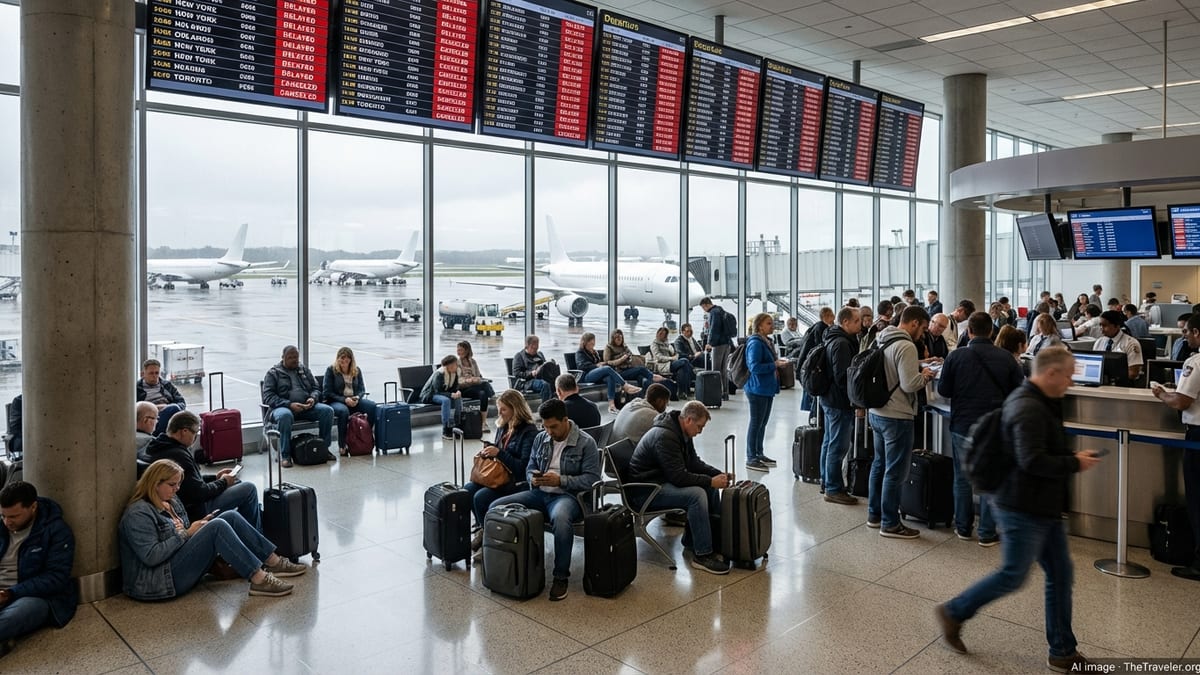
Last-minute cancellation leaves Toronto travelers stranded
According to case records and Indian media reports, the dispute stems from an April 2021 journey planned from Chandigarh to Toronto, routed via Delhi. The complainant had purchased tickets for his daughter and two other women to travel from Chandigarh to Delhi and then onward on an Air India flight scheduled to depart for Toronto at 3:45 a.m. on April 16, 2021.
Upon arrival at Delhi’s Indira Gandhi International Airport for the early morning departure, the passengers reportedly learned that their Toronto-bound flight had been cancelled. Coverage of the case indicates that the cancellation information reached them only at the airport, leaving the group with no immediate alternative arrangements in place.
With connecting travel to Canada already in motion and visas in place, the family faced a difficult choice. The complainant later told the consumer forum, as reflected in its order, that in order to ensure that the women could still reach Toronto close to their planned date, he arranged new tickets at a cost of roughly Rs 4.37 lakh.
The Chandigarh District Consumer Disputes Redressal Commission subsequently found deficiency in service on the part of both the travel agency that issued the tickets and Air India, opening the door to financial relief for the stranded travelers.
Commission upholds refund and compensation award
In a recent decision, the Chandigarh State Consumer Disputes Redressal Commission reviewed challenges to the district forum’s findings and chose to uphold the core relief granted to the complainant. Publicly available information on the order indicates that the state commission confirmed a total payout of about Rs 1.33–1.34 lakh, including refund and compensation.
The award primarily covers the unused portion of the original booking, which the family could not take due to the last-minute cancellation, along with compensation for inconvenience and litigation costs. Reports indicate that the commission viewed the sudden disruption, the odd hours at which the passengers were left at the airport, and the additional expenditure on fresh tickets as sufficient grounds to sustain the relief previously ordered.
The commission’s reasoning, as summarized in legal coverage, emphasized that consumers who have purchased confirmed tickets and completed check-in formalities should not be left to bear the financial and practical consequences of abrupt cancellations that are within the control of service providers. The forum maintained that responsibility in such cases can extend to both the airline and the intermediary travel agency, depending on how the booking and communication were handled.
While the exact breakdown between refund and compensation varies slightly across reported figures, the state body’s decision confirms that the earlier order will stand, with the parties directed to make payment to the complainant.
What the case signals for Indian air passengers
The Chandigarh ruling arrives amid a growing volume of air travel in and out of India and a corresponding rise in consumer disputes involving cancellations, schedule changes, and long delays. Consumer commissions at the district and state level routinely see complaints from passengers who say they were not informed in time about cancellations or were unable to secure timely alternatives without significant extra cost.
India’s consumer protection framework allows passengers to approach such forums when they believe there has been a deficiency in service by airlines, travel agencies, or online booking platforms. Orders issued in these cases are specific to the facts brought before each commission, but patterns in recent decisions suggest a readiness to hold service providers accountable where communication has been inadequate or where travelers have been left stranded with little assistance.
In the Chandigarh case, the commissions noted, as reflected in published reports, that the passengers were at the airport during late-night and early-morning hours when support options can be particularly limited. The financial burden on the family in securing last-minute tickets for an international journey played a role in shaping the compensation amount that was upheld.
Legal analysts have pointed out that while such awards may not always cover the full cost of disruption, they serve as a deterrent and encourage more proactive communication and contingency planning by airlines and intermediaries.
Global backdrop: passenger rights and last-minute cancellations
The dispute also highlights broader questions about passenger rights in the event of late cancellations on international routes. Jurisdictions such as the European Union and Canada have adopted detailed passenger-protection regimes, setting out specific obligations for airlines in cases of delays and cancellations, including rebooking timelines, duty-of-care provisions like meals and accommodation, and cash compensation in certain circumstances.
In Canada, for example, the Air Passenger Protection Regulations require carriers to provide rebooking or refunds when flights are cancelled and to offer accommodation and transportation if overnight waits become necessary in many scenarios. The precise entitlements depend on factors such as the size of the carrier, whether the disruption is within the airline’s control, and whether it was required for safety reasons.
While the Chandigarh case was adjudicated under Indian consumer law and not foreign aviation rules, it underscores the shared concern among travelers on long-haul routes between India and North America. Cancellations on such journeys can trigger knock-on costs for accommodation, connecting flights, and missed work or study commitments in the destination country, raising the stakes for both passengers and carriers.
Observers note that as more Indian travelers fly to destinations such as Toronto, Vancouver, New York, and London, expectations are increasing that international service standards, including timely notifications and meaningful assistance during disruptions, will be consistently met.
Implications for airlines, agents and travelers
The Chandigarh commission’s decision reinforces that accountability for disrupted journeys can extend beyond the airline itself. Travel agencies and online platforms that sell tickets are also being scrutinized for the accuracy of the information they provide about schedules, eligibility to travel, and real-time changes that affect passengers.
For airlines, the case is another reminder of the potential financial and reputational impact when cancellations are communicated late or when stranded passengers perceive that they have been left to fend for themselves. Even in situations where operational or regulatory constraints play a role, consumer forums may focus on how the disruption was handled at the passenger interface.
For travelers, the decision highlights the importance of keeping complete documentation, including booking confirmations, emails or messages about cancellations, and receipts for any additional expenses incurred while arranging alternative travel. These records can be crucial if a dispute eventually reaches a consumer forum.
The Chandigarh ruling does not set nationwide legal precedent in the way that a higher court judgment would, but it contributes to a growing body of consumer decisions that collectively shape expectations in India’s rapidly expanding aviation market. For many passengers planning complex itineraries to hubs such as Toronto, it offers a measure of reassurance that abrupt disruptions can, in some cases, be met with meaningful redress.