


More news on this day
The United States has revoked more than 6,000 visas linked to so-called birth tourism, marking a sharp escalation of a campaign that targets both travelers and commercial networks accused of exploiting the country’s citizenship rules for profit.
Get the latest news straight to your inbox!
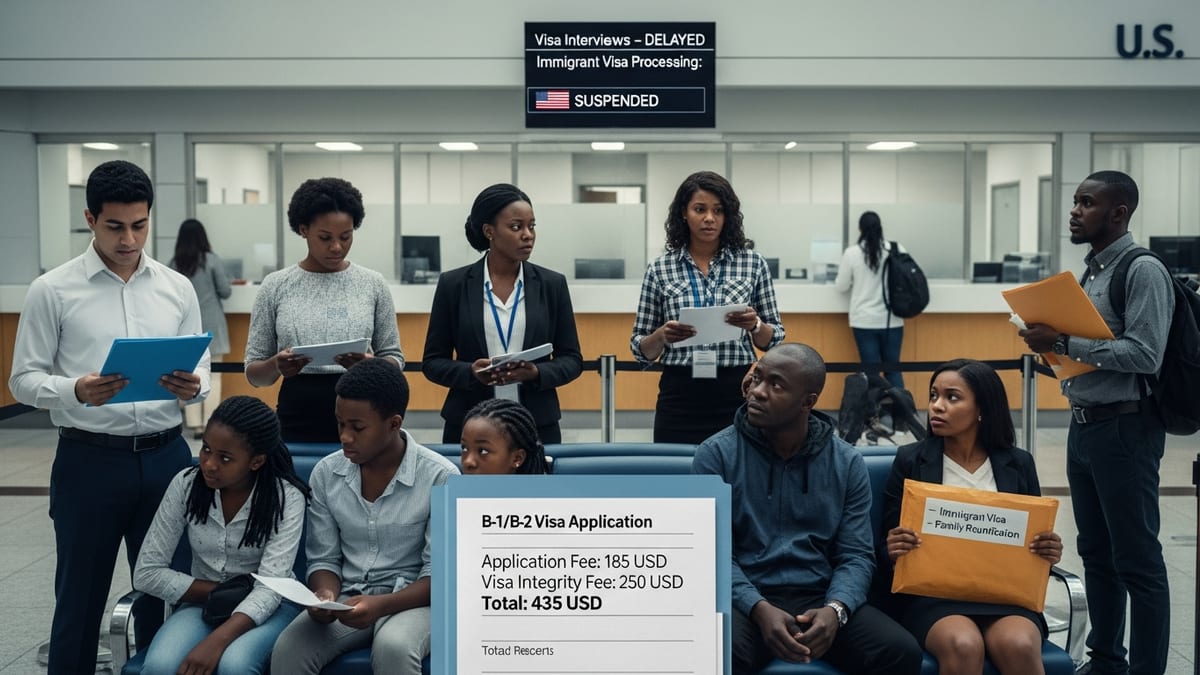
Latest Visa Revocations Mark New Phase In Enforcement
Recent coverage of U.S. visa policy indicates that the State Department has now revoked more than 6,000 visas in connection with birth tourism, a term used for travel to the United States primarily to give birth so a child acquires U.S. citizenship. Reports describe this figure as a running total, building on a previous announcement on October 31 that more than 4,000 visas had already been pulled for suspected birth tourism links.
Follow up reporting notes that these are not precise counts but thresholds, described as “more than” 4,000 and “over” or “more than” 6,000, suggesting that the actual number of affected travelers is higher. Publicly available information indicates that some of the revoked visas were held by nationals of multiple countries, with earlier figures highlighting several hundred Chinese travelers among those flagged in birth tourism investigations.
The revocations are part of a broader review of visitor visas, especially B category visas used for tourism, medical treatment, and business trips. A State Department rule already specifies that travel with the primary purpose of obtaining U.S. citizenship for a child by giving birth in the country is not a permissible basis for issuing a B nonimmigrant visa, and the recent wave of revocations appears to apply that standard retroactively to people who already held visas.
For travelers, the immediate consequence is that a visa can be canceled even before boarding a flight, in transit, or while they are already in the United States. Public guidance notes that a revoked visa typically becomes invalid for future travel, and holders may need to depart or seek legal advice on their options if they are physically present in the country when the decision is made.
Executive Order And New Policy Target Commercial Birth Tourism Networks
The latest enforcement push comes in the wake of an August 6, 2026 executive order titled “Ending Birth Tourism,” which set out a policy to restrict the use of nonimmigrant visas by people believed to be traveling to the United States to give birth. The order depicts birth tourism as a misuse of visa categories that strains consular resources, undermines public confidence in immigration enforcement, and raises national security concerns.
The order defines birth tourism broadly as entering the United States on a nonimmigrant visa to give birth or helping another foreign national do so. It references long running concerns about commercial operators who sell packages that include accommodation, hospital arrangements, and coaching on how to present travel plans to consular and border officers, often advertising U.S. citizenship and access to public benefits as key selling points.
A subsequent State Department announcement in September 2026 on a “new visa restriction policy for those who engage in or facilitate birth tourism” further details who may be affected. Publicly available information shows that the policy allows consular officers to deny or revoke visas not only for travelers suspected of intending to give birth in the United States for citizenship purposes, but also for people who are described as facilitators, including owners and managers of commercial birth tourism agencies, visa consultants who allegedly coach clients to misrepresent their plans, and medical providers who knowingly support such arrangements.
The combined effect of the executive order and the new restriction policy is to give consular posts a broad mandate to scrutinize visa applications and past travel records for signs of birth tourism. Policy summaries indicate that this includes reviewing past entries going back several years, particularly where patterns of late stage pregnancy travel, repeated short term visits around due dates, or links to known commercial operators can be documented.
How Rules On Birth Tourism Have Evolved Since 2020
Although the current wave of revocations is unfolding under policies introduced in 2026, tighter scrutiny of birth tourism has been building for several years. A rule published in January 2020 already instructed consular officers to treat travel with the primary purpose of giving birth in the United States to obtain citizenship for a child as an impermissible basis for issuing a B visa. That rule pointed to federal prosecutions of birth tourism operators who charged tens of thousands of dollars for packages that included housing and hospital arrangements for pregnant travelers.
During that period, investigators documented cases where operators allegedly coached clients to conceal their pregnancies, misstate the purpose of their trips, or make partial payments in cash to avoid detection. Court filings from earlier prosecutions describe networks that moved millions of dollars through multiple bank accounts, highlighting the scale of the industry even before the most recent executive order.
Under current policy, consular and immigration agencies have been instructed to use available records to identify past instances of possible birth tourism. Public reporting notes that an internal State Department cable directed diplomats to review visa and travel files from 2020 onward to flag cases where individuals may have entered the United States ostensibly as tourists but later gave birth in U.S. hospitals.
These developments mean that the 6,000 plus visa revocations announced now may cover a mix of newly identified cases and older trips that are being reassessed under stricter standards. Travelers who used visas issued before the 2020 rule took effect may still find their records reviewed in light of the newer policies.
Impact On Global Travelers And Consular Processing
Travelers planning visits to the United States on B category visas are likely to face additional questions and documentation requirements as the birth tourism crackdown expands. According to recent policy explanations and media coverage, consular officers may ask more detailed questions about family plans, access to medical insurance, and the availability of maternity care in the applicant’s home country, especially if the traveler is visibly pregnant or indicates plans to seek medical treatment abroad.
Visa applicants can expect closer scrutiny if they apply during late pregnancy or indicate that they plan to stay for several months with family or at short term rental properties near major medical centers. Public information highlights that officers are instructed to deny visas where they conclude that the main purpose of the trip is to obtain U.S. citizenship for a future child.
The crackdown is also affecting processing times and appointment availability in some consular posts with high demand for visitor visas. Separate reporting on U.S. visa trends under the current administration notes that overall numbers of business and tourism visas have fallen compared with previous years, as expanded vetting and staffing constraints contribute to longer waits. For would be visitors, that can translate into months of delay before an interview slot becomes available, followed by more intensive questioning about travel histories and ties to their home countries.
For travelers already holding long term multiple entry visas, the risk is that a visa can be revoked without a new interview if later information suggests possible involvement in birth tourism. Publicly available guidance stresses that the U.S. government can cancel a visa at any time if it believes a holder is no longer eligible, and airlines are required to deny boarding to passengers whose visas appear in government databases as revoked.
Broader Context Of U.S. Immigration And Citizenship Debates
The 6,000 plus visa revocations are unfolding against a wider political debate in the United States about immigration, border security, and birthright citizenship. The August 2026 executive order on ending birth tourism was part of a package of immigration actions from the current administration, which also included efforts to narrow eligibility for birthright citizenship and to expand vetting across several visa categories.
Advocates of the crackdown, as reflected in official documents and supportive commentary, frame birth tourism as a form of fraud that exploits constitutional guarantees of citizenship for those born on U.S. soil. They argue that commercial networks profit by advising clients to mislead consular and border officials about the true purpose of their trips, and that such practices erode trust in the visa system.
Critics, including some legal analysts and migrant rights groups cited in public reports, argue that the policies risk sweeping in legitimate travelers, including those seeking lawful medical care during pregnancy or visiting family while expecting a child. They warn that aggressive use of visa revocations and retroactive reviews may deter pregnant travelers with bona fide reasons for visiting, and could raise questions about discrimination if certain nationalities or regions are targeted more heavily.
For international travelers and the tourism sector, the immediate takeaway is that U.S. visitor visas now carry more conditionality than in the past. People planning travel during pregnancy are being advised by immigration specialists and university international offices to document medical coverage, return plans, and nonimmigrant intent carefully, and to be prepared for additional screening. As the tally of revoked visas continues to rise beyond 6,000, the birth tourism crackdown appears set to remain a prominent feature of the U.S. travel landscape.